What Makes Muffins Rise: Baking Soda or Baking Powder?
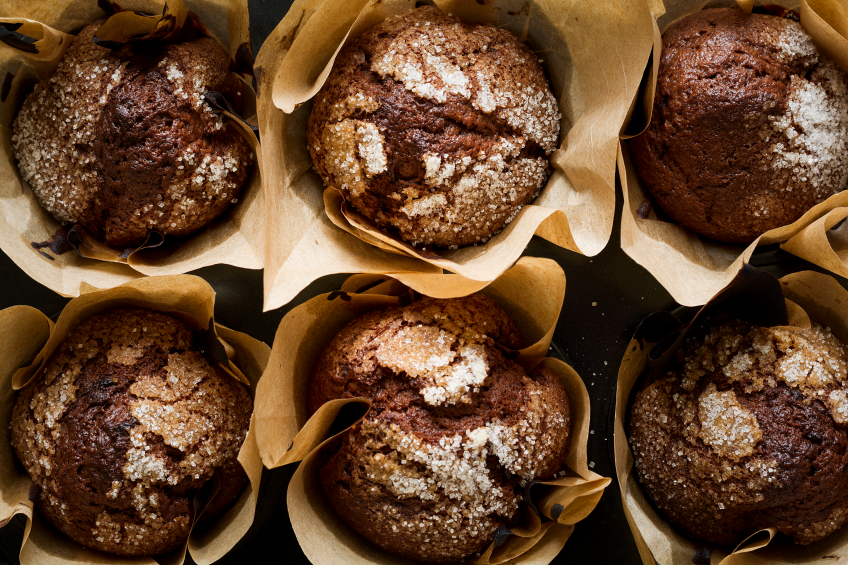
Muffins get their rise from a chemical reaction, not magic.
Both baking soda and baking powder can make muffins rise, but they work differently and aren’t interchangeable in most muffin recipes.
Understanding which one your recipe calls for—and why—will help you avoid dense, flat, or oddly flavored results.
Baking soda needs an acidic ingredient, like buttermilk or yogurt, to activate it and produce carbon dioxide. Baking powder already contains its own acid, so it works on its own once mixed with liquid. Both are leavening agents, but they respond to different conditions in your batter.
The type of leavening agent your recipe uses affects more than just height. It also shapes flavor, crumb structure, and how light and fluffy your muffins turn out. Knowing the difference gives you more control the next time you’re standing in your kitchen with a recipe in hand.
The Quick Answer: Match the Leavener to the Batter
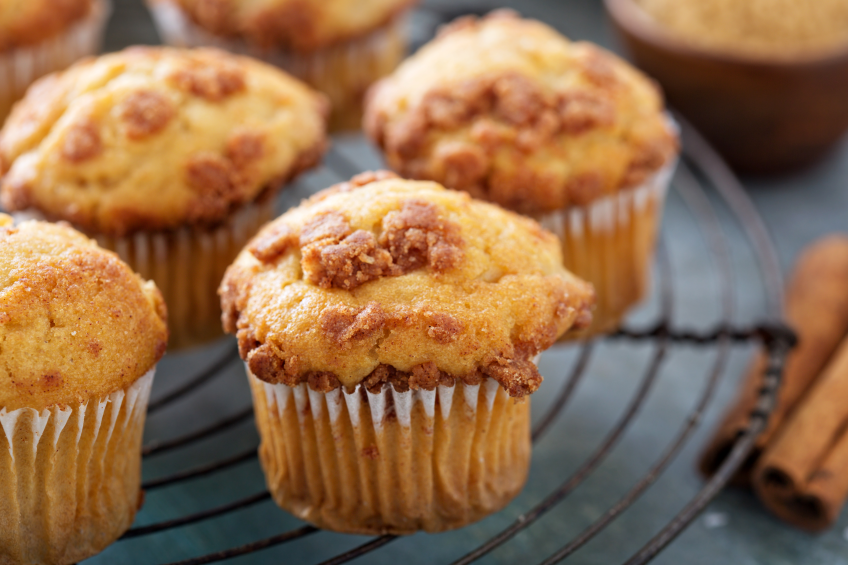
The choice between baking soda and baking powder comes down to one factor: the acid content of your muffin batter. If your recipe includes enough acidic ingredients, baking soda alone will do the job; if not, you need baking powder.
Use Baking Soda When the Recipe Has Enough Acid
Baking soda is a base, and it needs an acid to produce carbon dioxide. In muffin batter, that acid usually comes from buttermilk, yogurt, sour cream, molasses, or citrus juice.
When you have enough acidic ingredient in the mix, baking soda reacts quickly once it’s combined with liquid. This creates lift as the batter bakes.
Here’s a simple gauge:
½ teaspoon baking soda neutralizes roughly 1 cup of an acidic ingredient like buttermilk or yogurt.
If your recipe falls short of that ratio, the soda won’t have enough acid to fully react.
Leftover, unreacted baking soda leaves a bitter, soapy aftertaste in your muffins. It can also affect color, since excess alkalinity is what turns cocoa reddish and can shift blueberries toward green.
Use Baking Powder When the Batter Is Mostly Neutral
If your muffin batter relies on milk or water instead of buttermilk or yogurt, there isn’t enough acid present to activate baking soda. This is where baking powder takes over.
Baking powder already contains its own acid, usually cream of tartar or a similar compound, plus baking soda and a bit of cornstarch. Because the acid and base are packaged together, baking powder doesn’t depend on what else is in your batter to work.
Most baking powders sold today are double-acting. They release gas twice: once when liquid is added, and again when the batter hits oven heat. This staggered release helps muffins build structure before they expand fully, giving you a more even rise and consistent texture.
Why Some Muffin Recipes Use Both
Many muffin recipes call for baking soda and baking powder together, and this isn’t a mistake. It’s a way to balance two separate needs.
The baking soda’s job is to neutralize the acid in ingredients like buttermilk or yogurt, which also tempers their sharp flavor. The baking powder’s job is to provide additional lift for the rest of the flour, since the acidic ingredient alone often isn’t enough leavening agent for the whole batch.
For example, a batter with 2 cups of flour and ½ cup of yogurt might use ¼ teaspoon of baking soda to handle the yogurt’s acidity, plus 1 teaspoon of baking powder to lift the remaining flour.
This combination gives you controlled flavor and reliable muffin texture, rather than relying on one leavener to do both jobs at once.
How Chemical Leavening Creates Lift
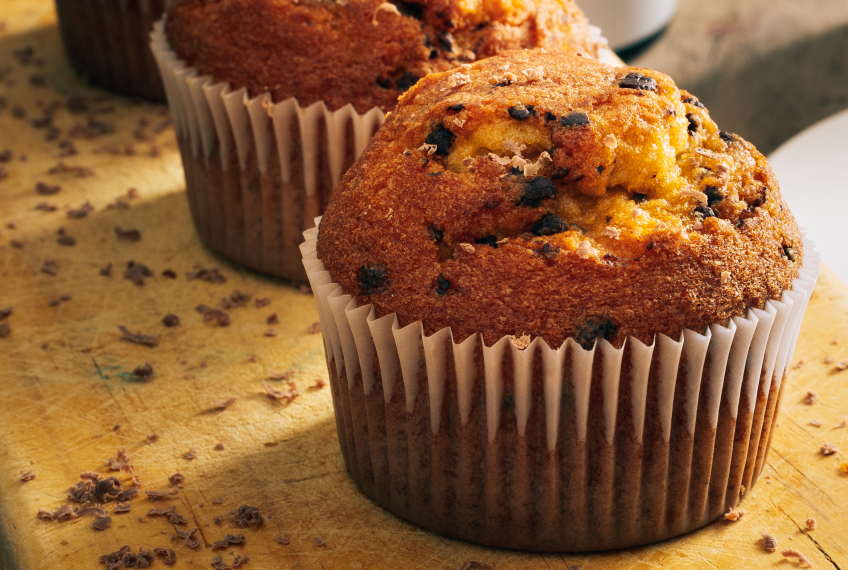
Chemical leaveners work through an acid-base reaction that produces carbon dioxide gas. This gas expands as your muffins bake, and the batter’s protein and starch structure sets around it to hold the shape permanently.
Carbon Dioxide Bubbles and Oven Spring
When baking soda or baking powder meets liquid, a chemical reaction begins immediately. Baking soda reacts with an acidic ingredient in your batter, while baking powder carries its own acid, so it activates on contact with moisture alone. Either way, the result is the same: tiny bubbles of carbon dioxide gas form throughout the batter.
Once your muffins hit the oven, heat causes these trapped bubbles to expand rapidly. This burst of expansion is called oven spring, and it accounts for much of the height gain you see in the first several minutes of baking. The gas pushes against the batter from every direction, creating the domed top you expect from a well-made muffin.
How the Crumb Sets Around the Gas
Gas alone won’t give you a finished muffin. As the batter heats up, two structural processes lock the expanded bubbles into place. Starch gelatinization occurs when starch granules in the flour absorb moisture and swell, thickening the batter around the gas pockets.
At the same time, protein coagulation sets the gluten network your mixing method created. The proteins firm up and form walls around each air pocket. Together, these two processes transform a loose, wet batter into a stable crumb structure.
This is why mixing technique matters so much. A gluten network that’s too developed traps gas unevenly, while a properly minimal gluten structure allows for a light and airy texture and a tender crumb.
Why Heat and Timing Matter
Heat controls the speed and timing of the entire leavening process. Baking soda reactions happen fast once liquid is added, so batters relying mainly on baking soda should go into the oven without delay.
Baking powder is more forgiving because its double-acting formula releases gas twice: once when mixed, and again once oven heat kicks in.
Oven temperature also affects the outcome directly:
Oven Temperature
Effect on Rise
Too low
Gas escapes before crumb sets; muffins turn out flat or dense
Correct range (usually 350–425°F)
Gas expands while crumb firms up at the right pace
Too high
Outer crust sets before interior fully rises, causing uneven texture
Preheating your oven and getting the batter into the pan quickly preserves as much carbon dioxide gas as possible before it has a chance to dissipate.
Baking Soda: Acid, pH, Flavor, and Browning
Baking soda cannot leaven your muffins on its own. It needs an acidic ingredient to trigger its reaction, and that same reaction affects the color, taste, and texture of your finished batch.
Sodium Bicarbonate Needs an Acid Partner
Baking soda is pure sodium bicarbonate, a base with a high pH. On its own, it does very little when mixed into batter.
It requires an acid to neutralize it. Once combined with moisture and an acidic ingredient, it releases carbon dioxide gas almost immediately.
This is why baking soda works fast and why you need to get your muffins into the oven quickly after mixing. If you wait too long, the gas escapes before the batter sets, and your muffins won’t rise properly.
Without enough acid in the recipe, some baking soda remains unreacted. That leftover soda turns into sodium carbonate, which changes both flavor and appearance.
Acidic Ingredients That Activate Baking Soda
Your muffin recipe needs enough acid to fully neutralize the baking soda.
Common acidic ingredients include:
Buttermilk
Yogurt
Sour cream
Vinegar
Lemon juice or other citrus juice
Natural cocoa (not Dutch-processed)
Brown sugar
Molasses
Honey
If your recipe lists any of these, baking soda is likely doing the leavening work. A general ratio is ¼ teaspoon of baking soda per cup of flour, with about ½ teaspoon needed to neutralize each cup of acidic liquid.
Gingerbread muffins are a good example: molasses provides both acidity and flavor, making baking soda the natural choice over baking powder.
How Soda Changes Color and Flavor
When baking soda isn’t fully neutralized, it leaves behind sodium carbonate, an alkaline compound with a soapy, bitter taste. You may notice this flavor in muffins where too much baking soda was used relative to the acid available.
Alkalinity also affects color. Excess baking soda can turn blueberries green and give chocolate baked goods a reddish tint, which is the same chemistry behind traditional red velvet and devil’s food cakes.
Baking soda promotes browning through the Maillard reaction, the chemical process responsible for the golden-brown crust on baked goods. Because alkaline environments speed up this reaction, muffins made with baking soda often brown faster and darker than those relying only on baking powder.
Cocoa powder reacts differently depending on processing. Natural cocoa is acidic and pairs well with baking soda, while Dutch-processed cocoa has already been neutralized and works better with baking powder instead.
Baking Powder: Built-In, Double-Acting Lift
Baking powder gives you a complete leavening system in one ingredient, combining an acid and a base so you don’t need to add anything extra to activate it. Most brands sold today are double-acting, meaning the rise happens in two separate stages rather than all at once.
What Baking Powder Contains
Baking powder is a premixed blend of sodium bicarbonate, one or more dry acids, and a starch such as cornstarch.
The starch keeps the powder dry and stable during storage by absorbing stray moisture before it triggers an early reaction. Common acids include monocalcium phosphate and sodium aluminum sulfate, each reacting at a different point in the baking process.
This is different from baking soda alone, which needs an acidic ingredient like buttermilk or yogurt in your batter to work. You can also make a single-acting version at home using baking soda and cream of tartar, but it won’t behave the same way as a commercial double-acting product.
Why Double-Acting Formulas Rise in Two Stages
The first reaction starts the moment your wet ingredients meet your dry ingredients. Monocalcium phosphate dissolves quickly at room temperature and releases a small amount of carbon dioxide gas right away.
The second reaction depends on heat rather than moisture. Once your batter reaches the oven, sodium aluminum sulfate (or a similar heat-activated acid) triggers a stronger release of gas as temperatures climb.
This staged timing is why double-acting baking powder tolerates a short wait between mixing and baking. You get an early lift to start the process, then a bigger push in the oven that builds most of the final volume. Rumford, one of the earliest commercial baking powder brands, helped popularize this approach in American kitchens.
When Baking Powder Produces the Best Results
Baking powder works best in recipes that don’t include enough natural acidity to activate baking soda on its own. Cakes, scones, and quick breads all rely on it for a steady, even rise.
Because the second reaction happens in the oven, you have some flexibility to fill pans, smooth batter, or preheat your oven without losing your rise. This makes double-acting baking powder a practical choice for everyday baking, where timing isn’t always exact.
Using the correct amount matters. Too little gives you a flat, dense result; too much can leave a bitter, metallic aftertaste from the leftover acid-base reaction.
Practical Mixing and Baking Choices for Taller Muffins
The height and texture of your muffins depend on how you combine ingredients, the oven conditions you use, and the flour and pan you choose. Small adjustments in each of these areas have a direct effect on how much your muffins rise and how tall the finished muffin tops look.
Mix Wet and Dry Ingredients Without Overmixing
Combine your wet ingredients and dry ingredients separately before folding them together. This helps distribute the leavening agent evenly through the muffin batter without overworking the flour.
Overmixing activates gluten formation, creating a tighter gluten network in the batter. That structure traps the batter down instead of letting it expand upward, resulting in dense, tough muffins with flat tops.
Stir just until the flour disappears into the wet mixture. A few lumps are fine and expected. Stop mixing as soon as the dry streaks are gone, even if the batter looks slightly uneven.
This limited mixing time preserves air pockets and keeps the batter light enough for the leavening agent to do its job during baking.
Bake Promptly and Use the Right Oven Temperature
Once you combine wet and dry ingredients, get your muffins into the oven quickly. Baking powder and baking soda begin reacting as soon as they contact liquid, so delays reduce the gas available for rising.
Preheat your oven fully before the muffin batter goes in. A cold or partially heated oven slows the initial rise and lets the batter spread instead of climb.
Oven temperature also affects the shape of muffin tops. Starting at a higher temperature, such as 400–425°F, for the first several minutes helps set the exterior quickly, which supports a taller dome as the interior continues to expand.
If you use a convection oven, lower the temperature by about 25°F compared to a standard recipe, since the moving air bakes faster and can dry out or firm the crust before the muffins finish rising.
Choose Flour and Pan Conditions That Support Height
Flour type affects how much structure your muffin batter can hold. Cake flour is a low-protein flour that produces a softer, more tender crumb, while bread flour is a high-protein flour that creates a stronger gluten network, better suited to chewy baked goods than fluffy muffins.
Most muffin recipes rely on all-purpose flour, which sits between these two in protein content and provides enough structure to support a rise without becoming dense.
Pan choice matters too. Metal muffin pans conduct heat faster than silicone, helping the outer batter set sooner and hold its shape as it rises.
Filling cups close to the top, rather than halfway, gives the batter room to dome rather than spread flat across the pan.
Substitutions and Troubleshooting Common Muffin Problems
Most muffin failures trace back to one issue: using the wrong leavener, using too little of it, or using an expired one. Understanding how to substitute correctly and diagnose common texture problems will help you fix flat, dense, or oddly flavored muffins.
Why Baking Soda and Baking Powder Cannot Be Swapped Directly
Baking soda is pure sodium bicarbonate. It needs an acidic ingredient—buttermilk, yogurt, brown sugar, or natural cocoa—to produce carbon dioxide and create lift. Baking powder already contains its own acid plus a buffer, so it works with plain milk or water.
If you swap 1 teaspoon of baking soda for 1 teaspoon of baking powder, you get roughly a quarter of the leavening power. Go the other way, and you introduce excess acid and starch that weakens structure and dulls flavor.
If you must substitute: use 3 teaspoons of baking powder for every 1 teaspoon of baking soda called for, and remove or reduce the acidic ingredient in the recipe. This rarely produces identical texture, but it prevents a flat result.
How to Fix Flat, Dense, or Collapsed Muffins
Flat or dense muffins usually come down to a handful of repeatable causes. Check these first:
Expired leaveners. Baking soda and baking powder lose potency over time, especially once opened.
Incorrect measuring. Too little leavening won’t produce enough carbon dioxide; too much can cause muffins to rise fast and then collapse.
Overmixing. This develops gluten, making muffin texture tough and dense instead of fluffy muffins with a tender crumb.
Oven temperature too low. Muffins need a strong initial burst of heat to set their structure before the batter deflates.
Test your leaveners before you bake again. Drop ¼ teaspoon baking soda into vinegar—it should fizz immediately. Drop ½ teaspoon baking powder into hot water—it should foam right away. Weak or delayed reactions mean it’s time to replace them.
How to Avoid Soapy Flavor and Excessive Browning
A soapy or metallic aftertaste happens when baking soda has no acidic ingredient to react with. Leftover, unreacted soda turns into sodium carbonate, which tastes bitter and can leave a yellowish tint in the crumb.
This is a common problem when a recipe calls for natural cocoa but you substitute dutch-processed cocoa (or dutch-process cocoa) without adjusting the leavening. Natural cocoa is acidic and reacts with baking soda; dutch-processed cocoa is alkalized and does not, so the soda has nothing to neutralize.
Excessive browning is related: baking soda raises batter pH, which speeds up the Maillard reaction. If your muffin tops are browning too fast while the centers stay raw, reduce the baking soda slightly or swap part of it for baking powder, which keeps pH closer to neutral.
Adjusting Leavening for High-Altitude Baking
At elevations above 3,000 feet, air pressure drops, and gases like carbon dioxide expand faster and escape more easily from batter. High-altitude baking generally requires less leavening, not more.
For baking powder, reduce the amount by ⅛ to ¼ teaspoon per teaspoon called for at sea level. Baking soda typically does not need to be reduced, but you may need to add a small amount of extra acidic ingredient (such as an additional tablespoon of buttermilk) to make sure the reaction still completes fully.
Some bakers also add a small amount of potassium bicarbonate or cream of tartar as a stabilizing acid when adjusting recipes at altitude, since these ingredients help control the speed of the reaction without adding sodium. Testing one muffin from a batch before committing to a full tray is the most reliable way to confirm your adjustments worked.
FAQ: What Makes Muffins Rise: Baking Soda or Baking Powder?
Both baking soda and baking powder can make muffins rise, but they work differently. The right leavening agent depends on the other ingredients in the recipe and the amount of acidity present.
What Makes Muffins Rise: Baking Soda or Baking Powder?
Both can make muffins rise. Baking powder contains its own acid and base, while baking soda requires an acidic ingredient to produce carbon dioxide gas that helps the batter expand.
Is Baking Powder Better for Muffins?
Baking powder is commonly used in muffins because it can produce carbon dioxide without requiring a separate acidic ingredient. It is particularly useful in recipes containing relatively neutral ingredients.
What Does Baking Soda Do in Muffins?
Baking soda reacts with acidic ingredients such as buttermilk, yogurt, lemon juice, or brown sugar. The reaction produces carbon dioxide, which helps the muffins rise.
Can You Use Both Baking Soda and Baking Powder?
Yes. Many muffin recipes use both to provide sufficient leavening and balance the acidity of the batter.
What Happens If You Use Too Much Baking Powder?
Too much baking powder can cause muffins to rise rapidly and then collapse. It may also leave an unpleasant chemical or bitter taste.
What Happens If You Use Too Much Baking Soda?
Excess baking soda can cause excessive browning and leave muffins with a soapy, bitter, or metallic flavor if there is not enough acid to neutralize it.
Can Muffins Rise Without Baking Soda or Baking Powder?
Yes, but they need another source of leavening. Whipped eggs, steam, or yeast can provide lift in certain baked goods, although the resulting texture will differ from conventional muffins.
Why Didn’t My Muffins Rise?
Poor rising can be caused by expired leavening agents, incorrect measurements, overmixing, or an oven that is not hot enough. The balance between wet and dry ingredients also affects muffin structure.
Does Baking Soda Make Muffins Fluffier Than Baking Powder?
Not necessarily. Both can produce light muffins when used correctly. The best choice depends on the recipe’s acidity and the desired flavor and texture.
How Do You Know Which Leavener to Use?
Follow the recipe’s specified leavening agent and ingredient ratios. As a general rule, baking soda needs acid, while baking powder already contains the components needed to generate carbon dioxide when activated by moisture and heat.
 Muffins get their rise from a chemical reaction, not magic.
 The choice between baking soda and baking powder comes down to one factor: the acid content of your muffin batter. If your recipe includes enough acidic ingredients, baking soda alone will do the job; if not, you need baking powder.
 Chemical leaveners work through an acid-base reaction that produces carbon dioxide gas. This gas expands as your muffins bake, and the batter’s protein and starch structure sets around it to hold the shape permanently.
 Baking soda cannot leaven your muffins on its own. It needs an acidic ingredient to trigger its reaction, and that same reaction affects the color, taste, and texture of your finished batch.
 Baking powder gives you a complete leavening system in one ingredient, combining an acid and a base so you don’t need to add anything extra to activate it. Most brands sold today are double-acting, meaning the rise happens in two separate stages rather than all at once.
 The height and texture of your muffins depend on how you combine ingredients, the oven conditions you use, and the flour and pan you choose. Small adjustments in each of these areas have a direct effect on how much your muffins rise and how tall the finished muffin tops look.
 Most muffin failures trace back to one issue: using the wrong leavener, using too little of it, or using an expired one. Understanding how to substitute correctly and diagnose common texture problems will help you fix flat, dense, or oddly flavored muffins.
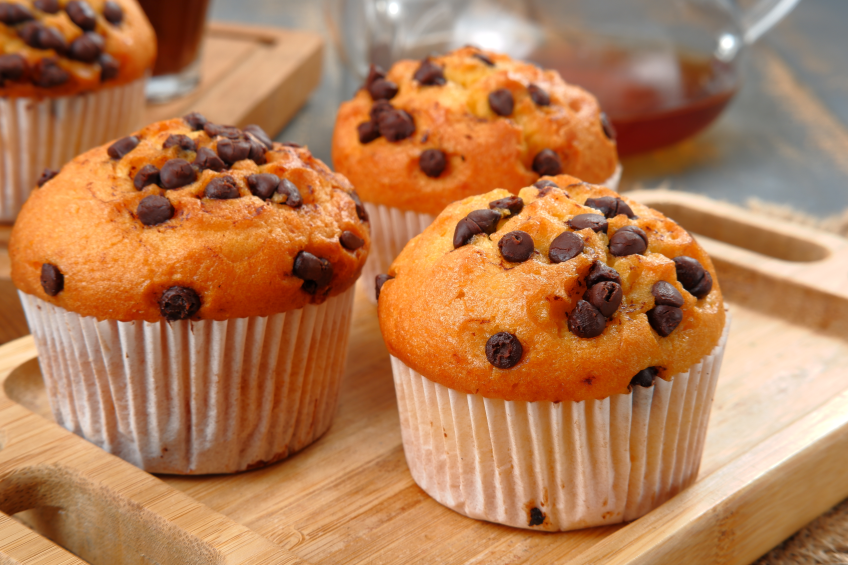 Both baking soda and baking powder can make muffins rise, but they work differently. The right leavening agent depends on the other ingredients in the recipe and the amount of acidity present.