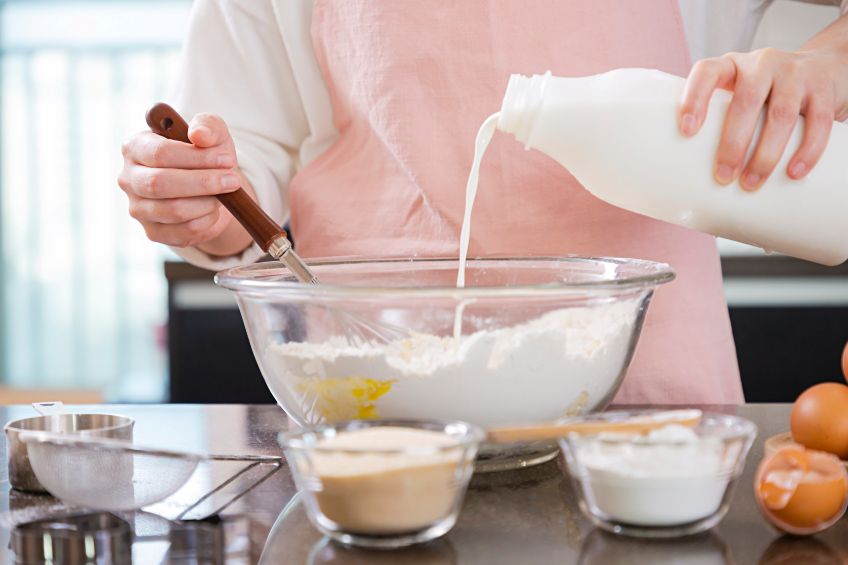
You can substitute half-and-half for milk in most baking recipes, usually at a 1:1 ratio. Because half-and-half contains more milkfat than milk, the result may be richer, more tender, slightly denser, and prone to faster browning.
Half-and-half is made from milk and cream, so it has more fat than regular milk. This extra fat can make your baked goods richer and more tender. In recipes where milk provides much of the liquid, diluting half-and-half with water can produce a closer match.
Whether you’re making cookies, cakes, or muffins, this milk substitute can save your baking session. In this article, you’ll learn how to swap half-and-half for milk, when the substitution works best, and what to watch for so your final result turns out right.
Yes, You Can Substitute Half-and-Half for Milk: Best Ratios
Yes, you can substitute half-and-half for milk in baking. Use it 1:1 in most recipes, or dilute it with water when you want to approximate the lower fat content and thinner consistency of milk.
When a Direct 1:1 Swap Works
For most baking recipes, you can use a straight 1:1 substitution. Swap one cup of half-and-half for one cup of milk without changing anything else.
This works well in recipes like muffins, quick breads, cakes, and pancakes. The extra milkfat in half-and-half adds richness and may produce a slightly denser texture, but it usually will not ruin your baked goods.
Half-and-half typically contains about 10% to 12% milkfat, compared with whole milk’s approximately 3.25%. Product labels vary, so check the carton when the exact fat content matters. This higher fat content can make your final product more tender and moist.
A direct swap works best when milk is not the main liquid in your recipe. If your recipe calls for only a small amount of milk, you likely will not notice much difference.
How to Dilute Half-and-Half for Whole Milk
If you want a closer match to whole milk’s fat content and consistency, dilute the half-and-half with water first. This gives you more control over the final texture of your baked goods.
Mix these amounts to replace one cup of whole milk:
- 1/2 cup half-and-half
- 1/2 cup water
This mixture contains about half as much fat as the original half-and-half, or roughly 5% to 6% milkfat when using a 10% to 12% product. That is still higher than whole milk’s approximately 3.25%, but the mixture has a closer liquid consistency. It can be useful in recipes that depend on a specific liquid consistency, such as custards or delicate cakes.
Diluting also helps stretch your half-and-half if you’re running low. You still get some creamy richness without using as much of the dairy product.
Adjusting for 2% Milk or Skim Milk
If your recipe calls for 2% or skim milk, you’ll need to dilute half-and-half even more to approximate the original fat level. These lower-fat milks have less richness, so matching them closely means adding more water.
For 2% milk, try this ratio:
- 1/3 cup half-and-half
- 2/3 cup water
For skim milk, which contains little to no fat, use:
- 1/4 cup half-and-half
- 3/4 cup water
These adjustments help prevent your baked goods from becoming unnecessarily rich or dense. Skim-milk recipes may depend more on a lighter liquid base, so the ratio matters more here than in many whole-milk substitutions.
Why Half-and-Half Changes Baked Goods
Half-and-half has more fat and milk solids than milk, and those components change how your batter mixes, bakes, and tastes. The substitution can affect moisture, structure, browning, and flavor at the same time.
Fat, Moisture, and Tenderness
Whole milk contains about 3.25% fat. Half-and-half typically contains about 10% to 12% fat, although the amount varies by brand and product.
This extra fat can partially coat flour particles and proteins as you mix the batter. It can limit gluten formation, which may make baked goods more tender. King Arthur Baking explains that fat coats flour and limits gluten development, contributing to a more tender texture.
The higher fat content can also improve the perception of moisture and richness. Your cakes and muffins may seem softer after baking, although the exact result depends on the complete recipe and storage conditions.
Butter and other fats can affect tenderness in similar ways. When you add half-and-half, you’re adding extra fat compared with the milk specified in the recipe. This can make your final product richer and, in some formulas, denser than the original recipe intended.
Effects on Structure and Browning
Flour needs the right amount of liquid to build structure in your dough or batter. Half-and-half is thicker than milk, so it can change how the dry ingredients hydrate and how easily the batter spreads.
Your baked goods may rise differently because the substitution changes the batter’s fat-to-liquid balance. This matters most in recipes that depend on a light, airy texture, such as sponge cakes or delicate pastries.
Milk and half-and-half contain lactose and proteins that can contribute to browning during baking. Half-and-half may contribute to greater browning than lower-fat milk because it contains more milk solids, although the result also depends on the recipe, oven temperature, and baking time. King Arthur Baking notes that the protein, fat, and sugar in milk can affect browning in baked goods.
Watch your bake time and color closely. If the surface browns too quickly, tent the item loosely with foil or reduce the oven temperature only as the recipe permits; do not assume it always needs to be removed several minutes early.
Flavor, Richness, and Mouthfeel
Half-and-half adds noticeable richness to many finished products. Its higher fat content gives a fuller mouthfeel, similar to what you’d get from adding more butter or cream.
You may notice a slight creamy sweetness, but half-and-half is not necessarily sweeter than milk. The perceived sweetness can come from its richer flavor and greater concentration of milk solids.
This richness works well in recipes like pound cake, custards, and dense muffins. It may feel out of place in recipes built around a lighter taste, such as basic biscuits or plain white cake.
Dairy products vary in how much richness they add. Half-and-half sits between milk and heavy cream, so your results may taste creamier than a milk-based recipe but lighter than one made with straight cream.
How Half-and-Half Performs in Different Baking Recipes
Half-and-half affects each type of baked good a little differently. Fat content, mixing method, and the recipe’s total liquid balance all play a role in the final result.
Cakes and Muffins
Half-and-half works well in most cakes and muffins. The extra fat can give you a softer crumb and a richer taste. For a closer match to milk, dilute it first. Use ½ cup half-and-half plus ½ cup water for every cup of milk the recipe calls for. If you prefer a richer result, a direct 1:1 swap is usually suitable for standard cakes and muffins.
If you use full-strength half-and-half, your batter may be thicker than intended. This can make your cake or muffins denser instead of light and fluffy, depending on the formula.
For delicate cakes, such as angel food or sponge cake, use the recipe’s specified milk or a diluted substitution when possible. These recipes depend on a carefully balanced batter and may be more sensitive to changes in liquid and fat.
Cookies, Pancakes, and Quick Breads
Cookies usually contain little to no milk, so half-and-half will not make much difference when the recipe calls for only a small amount. If a recipe does call for milk, you can swap in half-and-half or diluted half-and-half, depending on how closely you want to match the original.
Pancakes can benefit from the added richness of half-and-half. Your pancakes may taste richer and brown somewhat more on the griddle.
Quick breads, such as banana bread or zucchini bread, also generally handle half-and-half well. These recipes are often forgiving because they rely on baking soda or baking powder, rather than yeast, to rise.
Use the standard ½-cup half-and-half plus ½-cup water dilution when you want to keep the liquid balance close to what a recipe expects. A direct substitution is also reasonable when a richer result is acceptable.
Yeast Breads and Other Delicate Doughs
Yeast breads need more care when you swap ingredients. The added fat in half-and-half can affect dough handling and crumb tenderness, while richer formulas may alter fermentation time. It does not necessarily slow yeast activity directly, so dough rise should be judged by its volume and appearance rather than by the clock. King Arthur Baking recommends watching the dough’s rise rather than relying strictly on the time given in a recipe.
Dilute the half-and-half before using it when you want to stay close to the original milk formula. This keeps the fat and liquid balance closer to the recipe, although it will not exactly reproduce the composition of milk.
Delicate doughs, such as croissants or brioche, are more sensitive to changes in fat and moisture. Small changes can affect texture, dough handling, and layering.
For best results, follow the recipe’s intended dairy ingredient when possible. If substituting, use diluted half-and-half for a closer match and monitor the dough’s consistency and rise rather than relying on an exact timing change.
Custards and Other Dairy Desserts
Custards, puddings, and similar desserts often benefit from using half-and-half instead of milk. The higher fat content can create a smoother, creamier texture.
You do not always need to dilute half-and-half for custard recipes. If the recipe already calls for a rich dairy mixture, half-and-half may fit naturally. For a recipe written specifically for low-fat milk, using it undiluted will produce a richer result and may alter the setting texture.
This can work well for ice cream bases too. The added fat helps create a smoother, less icy texture, although the overall balance of sugar, dairy, and solids determines the final result.
For desserts like flan or crème brûlée, using half-and-half straight from the carton can produce a richer texture. Follow the recipe’s visual and temperature cues, since changing the dairy can affect how quickly a custard sets. For food safety, USDA recommends cooking dishes containing eggs to 160°F (71°C), measured with a food thermometer.
When Half-and-Half Is the Better Choice
Some recipes benefit from extra fat and creaminess. In these cases, half-and-half can give you a richer result than regular milk, although it is not always a better choice when the recipe depends on a light texture.
Enriching Creamy Soups and Sauces
If you are cooking creamy soups or sauces, half-and-half often works better than milk when you want more body and richness.
Soups like potato soup, chowder, and bisque can benefit from fat for a smoother mouthfeel. Milk alone may taste lighter and less creamy in these dishes.
Half-and-half adds body without making the soup as heavy as heavy cream. This makes it a useful middle-ground choice. For sauces, half-and-half helps create a smooth, creamy sauce that coats food evenly.
It works well in:
- Alfredo sauce
- Cheese sauces
- Cream-based pasta sauces
You get more richness than milk provides, but the sauce can remain pourable. For food safety, refrigerate perishable dairy and prepared dishes promptly, and avoid leaving them at room temperature for extended periods. USDA recommends refrigerating perishable foods within two hours, or within one hour when temperatures exceed 90°F (32°C).
Using It in Savory Baking
Half-and-half also works well in savory baking recipes.
Foods such as savory scones, biscuits, and quiches can benefit from its higher fat content. The extra fat can produce a softer, more tender texture.
In cornbread, half-and-half can add a slight creaminess that plain milk does not provide. This gives the bread a richer taste without substantially changing the recipe.
Savory muffins with cheese or herbs can also work well with half-and-half. The added fat helps distribute flavor throughout the batter.
Because savory baked goods often rely less on delicate structure than some sweet baked goods, they may tolerate the additional dairy fat more easily.
Recipes That Benefit From Extra Creaminess
Some recipes are built around creaminess as a main feature. In these cases, half-and-half is often a useful choice.
Custards, puddings, and creamy pie fillings depend on a rich, smooth texture. Half-and-half can add richness while helping these recipes remain creamy. Exact results depend on the recipe’s starch, egg, and setting requirements.
Ice cream bases and creamy frostings can also benefit from the added fat. It can contribute to a smoother finish and richer mouthfeel.
Here is a quick guide for when to reach for half-and-half:
| Recipe Type | Why Half-and-Half Works Well |
|---|---|
| Custards | Adds richness without the heaviness of cream |
| Cream pies | Contributes to a smooth, stable filling |
| Creamy frostings | Improves texture and mouthfeel |
| Rich cakes | Adds moisture and can contribute to a tender crumb |
If a recipe already relies on dairy for flavor and texture, half-and-half can enhance that effect.
When to Dilute It or Choose Another Milk Substitute
Half-and-half is not always the best choice. Some recipes need less fat, no dairy, or a specific texture that half-and-half cannot provide. Knowing when to dilute it or choose a different substitute can help your baked goods turn out as intended.
Light and Low-Fat Recipes
If you’re baking something light, such as angel food cake or a thin pancake batter, full-strength half-and-half can make the mixture heavier. The extra fat changes the batter’s viscosity and can affect how it rises and spreads.
In these cases, dilute half-and-half with water before using it. A mixture of three parts half-and-half to one part water provides a similar overall dairy concentration to milk, although it is not an exact substitute for whole milk. For precise baking results, follow the recipe’s tested substitution guidance.
You can also skip half-and-half and use skim or low-fat milk if you have it. This keeps the recipe lighter without adding as much richness.
Dairy-Free and Lactose-Free Options
Half-and-half is not suitable if you avoid dairy or need a lactose-free option. In these cases, choose a plant-based milk or a lactose-free dairy product formulated for cooking and baking.
Common dairy-free substitutes include:
- Almond milk – Light and slightly nutty, good for many baked goods
- Soy milk – Higher in protein, works well in bread and muffins
- Oat milk – Adds mild sweetness and some thickness
- Coconut milk – Rich flavor, best for desserts that pair well with coconut
Most of these can replace milk in a 1:1 ratio, although the product’s formulation can affect the result. Oat milk contains starches and may change the texture slightly, while coconut milk can add a noticeable coconut flavor.
Other Practical Milk Replacements
Beyond half-and-half, other dairy products can replace milk depending on the recipe and what you have on hand. Evaporated milk works well when diluted with water and can give baked goods a deeper dairy flavor.
Buttermilk adds tang and reacts with baking soda, so it is best suited to recipes designed for that acid-base reaction, such as biscuits or quick breads. Yogurt, thinned with a little water, can also replace milk in many batters and adds moisture.
Each option has its own fat content, acidity, and thickness. Choosing the right substitute depends on the texture, flavor, and chemical leavening balance you want in the finished recipe. King Arthur Baking explains that differences in fat, water, milk solids, and acidity can affect the final texture and flavor, while Utah State University Extension notes that acidic ingredients can react with baking soda to produce leavening.
Nutrition and Practical Baking Tips
Half-and-half adds more calories and saturated fat to your baked goods than milk, so it helps to know how much extra you are adding. It also mixes and bakes somewhat differently, so a few small adjustments can help keep your results on track.
Calories, Saturated Fat, and Portion Considerations
Half-and-half typically has about twice the calories of whole milk and substantially more saturated fat, although values vary by brand and product.
One cup of whole milk provides about 150 calories, while one cup of half-and-half can provide around 315 calories. Check the product’s Nutrition Facts label for the most accurate figures. USDA FoodData Central provides comprehensive food-composition data for comparing nutritional values.
.The difference in fat content matters most if you are monitoring saturated fat intake. Whole milk has about 8 grams of saturated fat per cup, while half-and-half may provide close to 20 grams per cup, depending on the brand.
If you bake often with half-and-half, the additional calories and saturated fat can add up.
You can reduce the impact by:
- Using diluted half-and-half, made with half-and-half and water, instead of full-strength half-and-half
- Cutting your recipe’s serving size
- Saving half-and-half for recipes where it makes a meaningful difference in taste or texture
Measuring, Mixing, and Checking Doneness
When you substitute half-and-half for milk, measure carefully. Use ¾ cup half-and-half plus ¼ cup water for every 1 cup of milk your recipe calls for. This maintains a similar liquid volume and fat level, although the finished texture may still vary by recipe.
Mix the water thoroughly with the half-and-half before adding the mixture to your batter. This helps distribute the liquid and fat more evenly and reduces the chance of pockets of extra richness.
Baked goods made with half-and-half may brown differently than those made with milk because the two liquids contain different amounts of fat, water, and milk solids.
In testing, King Arthur Baking found that biscuits made with half-and-half browned evenly, although the exact result depends on the recipe, oven temperature, and baking time. Depending on the recipe, start checking for doneness a few minutes before the suggested baking time.
Use a toothpick or cake tester to check doneness the same way you would with milk-based batter. If it comes out clean or with a few moist crumbs, the bake is generally done, even if the color looks slightly darker than usual.
FAQ: Can You Substitute Half-and-Half for Milk in Baking?
Yes, in most recipes you can substitute half-and-half for milk at a 1:1 ratio. The additional fat can make cakes, muffins, breads, and other baked goods richer and slightly more tender.
Does Half-and-Half Make Baked Goods Richer?
Yes. Half-and-half contains more fat than whole or low-fat milk, so it can add richness, creaminess, and tenderness to the finished product.
Can You Use Half-and-Half Instead of Milk in Cake?
Yes. Use the same amount of half-and-half as the milk called for in the recipe. The cake may have a slightly richer flavor and softer texture.
Can You Use Half-and-Half Instead of Milk in Muffins?
Yes. A 1:1 substitution generally works well in muffin recipes. The additional fat can produce a more tender and moist crumb.
Can You Use Half-and-Half Instead of Milk in Bread?
Yes, although it can change the texture. The additional fat can make bread softer and richer, while potentially producing a slightly less lean crumb.
Can You Substitute Half-and-Half for Milk in Pancakes?
Yes. Half-and-half can be substituted for milk in pancakes, although the batter may become somewhat richer and thicker. If necessary, add a small amount of water to achieve the desired consistency.
Do You Need to Dilute Half-and-Half When Replacing Milk?
Usually, no. Half-and-half can normally be used directly as a 1:1 substitute for milk. Diluting it is mainly useful when you specifically want to match the lower fat content of the original milk.
Does Half-and-Half Affect Baking Time?
Usually not significantly. However, because recipes differ in their fat and liquid ratios, monitor the baked good for doneness rather than assuming the exact original baking time will always apply.
Can You Use Half-and-Half Instead of Milk in Cookies?
Yes. It can work in cookie recipes that contain milk, particularly soft cookies. Because half-and-half contains more fat, it may slightly alter the cookie’s spread, tenderness, and richness.
Is Half-and-Half Better Than Milk for Baking?
Neither is universally better. Milk provides a lighter liquid, while half-and-half adds more fat and richness. Choose half-and-half when you want a richer, more tender result.
What Is the Best Substitute Ratio for Half-and-Half and Milk?
For most baking recipes, use 1 cup of half-and-half for every 1 cup of milk called for. This simple 1:1 substitution works particularly well in cakes, muffins, pancakes, and other recipes where small changes in fat content are unlikely to cause major problems.