Do I Need to Flip Bacon in the Oven? Understanding the Best Cooking Practices
Bacon is one of those foods that seems simple, but everyone has a strong opinion about how to cook it. If you are baking bacon in the oven, you might wonder whether you need to flip it halfway through, as you would on the stovetop.
The truth is, flipping is not required when cooking bacon in the oven. Hot air circulates around the bacon, cooking both sides, though the side in contact with the pan may brown differently. This makes oven-baked bacon a hands-off method that can produce evenly cooked, crispy results without standing over a pan.
Still, there are a few reasons you might want to flip your bacon, along with tips to help you get the texture you want. This article explains what happens in the oven and how to make great bacon with minimal effort.
The Short Answer: Flipping Is Optional
You do not need to flip bacon in the oven to get crisp, evenly cooked strips. Unlike a stovetop skillet, an oven circulates hot air around the bacon, so flipping bacon is often unnecessary.
Why Oven Heat Cooks Both Sides Without Turning
A skillet mainly heats bacon from below. Cooking bacon in the oven is completely different.
Hot air circulates around the bacon. This helps the fat render and the meat brown, although the side touching the pan may cook differently from the exposed side.
This cooking involves radiant heat from the oven walls and heating elements, as well as hot air circulating around the pan. Together, these transfer heat to the bacon without requiring you to turn it.
Some people still choose to flip bacon in the oven. But it is a preference, not a requirement for even cooking.
What to Expect From Bacon Left Undisturbed
When you leave bacon alone in the oven, it cooks steadily. The strips will shrink slightly as the fat renders.
You may notice some curling, especially with thinner cuts. This is normal and does not necessarily mean the bacon is cooking unevenly.
Thicker slices tend to hold their shape better and curl less. If you want flatter strips, a wire rack set on top of your baking sheet can help.
Your bacon can still come out crisp at the edges and tender in the middle. The texture depends more on your oven temperature, pan setup, and cook time than on whether you flip it.
How to Tell When the Bacon Is Done
Watch the color, not just the clock. Bacon is ready when it reaches your preferred level of crispness, usually deep golden brown with darker edges.
Check these signs:
Color: Golden-brown across the strip, with slightly darker edges
Texture: Firming as it cooks; it will crisp further as it cools
Sound: Sizzling may slow as more of the fat renders
Smell: A rich, toasty smell instead of a raw smell
If your bacon still looks pale or feels soft, give it a few more minutes. Ovens vary, so start checking a minute or two before the suggested time to avoid overcooking.
When Turning the Strips Can Help
Flipping bacon in the oven is not usually required, but it can help with specific issues. If your oven cooks unevenly or you’re using thick-cut bacon on a pan where grease pools, flipping once partway through may improve browning and crispness.
Uneven Browning or Oven Hot Spots
Some ovens have hot spots that cook one area faster than another. If bacon on one side of the pan browns faster than the rest, uneven oven heat may be the cause.
A quick flip, or simply rotating the pan, can help even out the browning. This is especially useful if your oven heats unevenly from front to back or side to side.
You don’t need to flip every strip perfectly. Turn each piece once, about halfway through the cooking time, if you want more even browning on both sides.
Thick-Cut Slices and Pooled Grease
Thick-cut bacon may benefit from flipping more than regular slices. Because it’s denser, thick-cut bacon may benefit from flipping to help it cook evenly without overbrowning the outside.
Grease can also pool underneath the strips as they cook. This can keep the bottom in contact with hot fat and make it brown differently from the top.
Flipping bacon partway through can help both sides brown more evenly. For extra crispness, use a wire rack to keep the strips above the rendered fat. Without a rack, thick slices may remain softer in the middle even when the edges look done.
How to Flip Bacon Safely if You Choose To
If you decide that flipping bacon is best for your batch, use tongs instead of a fork. Tongs give you better control and help reduce the risk of splattering hot grease.
Open the oven door carefully and pull the rack out partway before flipping. Keep your hands and arms away from the hot oven and steam.
Work carefully, one strip at a time. Set the tongs down between flips if needed rather than rushing and risking a burn.
Once you’re done, slide the rack back in and close the oven door to maintain the temperature.
Set Up the Pan for Even Cooking
How you arrange your bacon and what you place it on matter as much as oven temperature. A few simple setup choices can help you get evenly cooked bacon with less mess.
Arrange Strips in a Single Layer on a Rimmed Sheet
Lay each strip flat with space between it and the next strip. Overlapping strips cook unevenly because the covered parts stay softer while the exposed parts crisp up.
A rimmed sheet pan is essential. The rim catches grease as it renders from the bacon, helping prevent spills in your oven.
If you have more bacon than fits in a single layer, use a second pan rather than stacking the strips. Crowding the pan can restrict airflow and lead to slower, less even browning.
Choose Between Cooking Directly on the Pan and Using a Baking Rack
When cooking bacon in the oven, you can place strips directly on the pan or elevate them. Placing bacon directly on the sheet pan works fine, but the strips sit in the rendered grease as it collects. This can make the bottom side softer than the top, even without flipping.
A baking rack set inside the sheet pan keeps the bacon above the grease, allowing hot air to circulate underneath as well as over the top. This helps the fat render and the bacon brown more evenly on both sides, without requiring you to flip the strips.
Setup
Grease Contact
Airflow
Flip Needed?
Directly on pan
High
Mostly above the bacon
Sometimes, for more even browning
Baking rack
Low
Top and bottom
Usually no
If you cook bacon often, a wire rack is a useful addition to your kitchen tools.
Use Parchment Paper for Easier Cleanup
Lining your sheet pan with parchment paper makes cleanup easier. Grease collects on the paper instead of baking onto the metal pan, so you can discard the liner and wash the pan.
Parchment works whether you cook bacon directly on the pan or use it beneath a baking rack. Either way, it catches drips and helps keep the pan cleaner.
Avoid wax paper as a substitute. Wax paper is not designed for oven heat and can smoke or burn.
Temperature, Timing, and Thickness
The right oven temperature and cook time depend mostly on the thickness of your bacon. Getting these details right helps prevent strips that are overcooked at the edges and soft in the middle.
A Practical Starting Temperature and When to Begin Checking
Set your oven to 400°F for most batches of oven-baked bacon. This temperature offers a good balance of cooking speed and browning, making flipping bacon largely unnecessary for most home cooks.
Place your bacon on a lined baking sheet in a single layer. Strips should not overlap.
Start checking your bacon around the 12-minute mark. Ovens vary, so your bacon may be ready sooner or later than a recipe suggests.
Watch for color changes rather than relying only on the clock. Bacon that looks light brown and has begun to shrink is close to done, while deeper browning signals that it is more thoroughly cooked and crisp.
Adjust Cooking Time for Regular and Thick-Cut Bacon
Regular bacon usually takes 12 to 17 minutes at 400°F. Thin strips cook quickly, so check them early to avoid burning.
Thick-cut bacon usually needs more time in the oven. Plan for 18 to 22 minutes at the same temperature, checking for doneness as it cooks. Exact timing varies with the oven and the bacon’s thickness.
Here’s a simple reference:
Bacon Type
Oven Temp
Cook Time
Regular
400°F
12–17 min
Thick-cut
400°F
18–22 min
Your exact cooking time will vary slightly depending on your oven, the bacon’s thickness, and how crispy you like it.
Fix Uneven, Soggy, or Overcooked Bacon
Most common problems when cooking bacon in the oven have simple fixes. Frequent issues include oven hot spots, pooled grease, and leaving the bacon in the oven too long.
Rotate the Pan if One Area Browns Faster
Ovens rarely heat evenly. One side may run hotter than the other, causing some bacon strips to brown faster.
If you notice uneven browning, rotate the baking sheet 180 degrees halfway through cooking. This simple step can help the bacon crisp evenly across the pan.
You don’t need to flip each strip; just rotate the pan. This helps distribute the heat more evenly, so the bacon cooks consistently instead of some pieces burning while others remain undercooked.
Once you identify your oven’s hot spots, you’ll know which way to rotate the pan each time you cook.
Give Soft Strips More Time to Crisp
Soft bacon may need more time in the oven. The fat needs to render for the strips to become crisp, and this can take longer than expected.
If your bacon looks pale or feels soft after the recommended cooking time, bake it for another 3 to 5 minutes. Check it at short intervals to avoid overcooking.
Thick-cut bacon generally needs more time than thin slices. A wire rack set on the baking sheet can also help by lifting the strips out of the rendered fat, allowing both sides to cook more evenly.
Account for Carryover Cooking After Removal
Bacon continues cooking briefly after you remove it from the oven. This is called carryover cooking, and it happens because the meat retains heat even when it is no longer exposed to direct heat.
Remove the bacon when it looks slightly less done than you want it to be. Let it rest for a minute or two on a paper towel-lined plate.
This resting period lets excess grease drain off and the strips firm up as they cool, helping oven-baked bacon reach its ideal texture without extra time in the oven.
FAQ: Do I Need to Flip Bacon in the Oven?
No, you generally do not need to flip bacon when baking it in the oven. Bacon cooks evenly as the fat renders, especially when arranged in a single layer on a baking sheet.
Does Bacon Cook Better Without Flipping?
Yes. Leaving bacon undisturbed allows it to cook consistently while the rendered fat helps fry the bacon as it cooks. Flipping is optional if you prefer to brown both sides more evenly.
What Temperature Should You Bake Bacon?
A temperature of 400°F (205°C) is commonly used for oven-baked bacon. Cooking time is usually around 15 to 20 minutes, depending on the thickness of the bacon and how crisp you like it.
Should Bacon Be Baked on a Rack?
A wire rack is optional. Baking bacon directly on a lined sheet pan allows it to cook in its rendered fat, while a rack lets more fat drip away and can produce a slightly different texture.
How Do You Know When Oven-Baked Bacon Is Done?
Bacon is done when it reaches your preferred level of crispness and browning. Keep in mind that it will become slightly firmer as it cools, so avoid cooking it much longer than necessary.
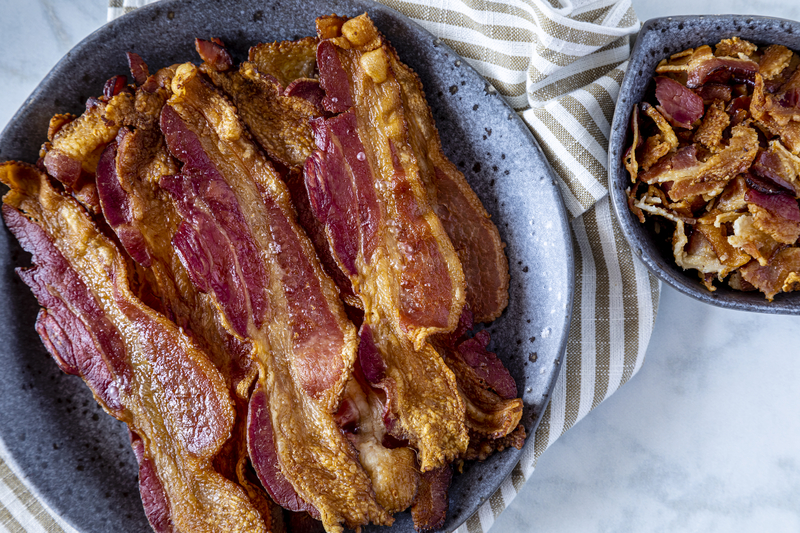


 You do not need to flip bacon in the oven to get crisp, evenly cooked strips. Unlike a stovetop skillet, an oven circulates hot air around the bacon, so flipping bacon is often unnecessary.
 Flipping bacon in the oven is not usually required, but it can help with specific issues. If your oven cooks unevenly or you’re using thick-cut bacon on a pan where grease pools, flipping once partway through may improve browning and crispness.
 How you arrange your bacon and what you place it on matter as much as oven temperature. A few simple setup choices can help you get evenly cooked bacon with less mess.
 The right oven temperature and cook time depend mostly on the thickness of your bacon. Getting these details right helps prevent strips that are overcooked at the edges and soft in the middle.
 Most common problems when cooking bacon in the oven have simple fixes. Frequent issues include oven hot spots, pooled grease, and leaving the bacon in the oven too long.
 No, you generally do not need to flip bacon when baking it in the oven. Bacon cooks evenly as the fat renders, especially when arranged in a single layer on a baking sheet.


