Why Do Ceramic Baking Dishes Crack? Understanding the Causes and Prevention
Your ceramic baking dish did not crack for no reason.
Cracks almost always come from thermal shock, hidden flaws in the ceramic, or rough handling over time.
When you understand these causes, you can spot warning signs early and avoid losing another dish.
Ceramic bakeware feels sturdy, but it has limits. Sudden temperature changes stress the material in ways you cannot see. A dish that looks fine one day can crack the next time you use it.
This guide breaks down the real reasons behind ceramic cracking. You will learn what causes it, how to spot early damage, and what steps help your dishes last longer.
The Main Cause: Thermal Shock
Thermal shock happens when your ceramic dish faces a fast temperature change it cannot handle. This sudden shift creates stress inside the material, and that stress is what leads to cracks.
How Sudden Temperature Changes Create Internal Stress
This creates a gap between the hot section and the cool section. The hot part expands while the cool part stays the same size.
That mismatch puts stress on the material. If the stress gets too strong, tiny cracks start to form. Over time, or sometimes right away, these cracks can turn into full breaks.
This is why sudden temperature changes are so damaging. Your dish simply doesn’t have time to adjust evenly.
Why Fridge-to-Oven Transfers Are Risky
Taking a dish straight from your fridge to a hot oven is one of the riskiest moves you can make. Your fridge keeps dishes cold, often near 35-40°F. A preheated oven can be well above 350°F.
That’s a huge jump in a short time. Your dish has no chance to adjust slowly.
Here’s what typically happens during a fridge-to-oven transfer:
The outer surface of the dish heats up fast.
The inside stays cold for a bit longer.
This uneven heating creates pressure inside the material.
The pressure can cause a crack or, in some cases, a sudden break.
To protect your dish, let it sit at room temperature before it goes into a hot oven. This gives the material time to adjust more evenly.
How Thermal Expansion and Uneven Heating Lead to Fractures
Every material expands when heated and shrinks when cooled. This is called thermal expansion. Ceramic has a limited ability to handle this shift.
When your dish heats unevenly, some areas expand faster than others. This mismatch creates pressure inside the ceramic structure.
Your dish’s thermal shock resistance depends on how well it manages this pressure. Lower-quality ceramic often has weaker resistance, making it more likely to crack even with small temperature shifts.
Uneven heating can happen for simple reasons, like:
Placing a dish directly on a hot oven rack instead of a middle shelf.
Setting a dish on an uneven or overly hot stovetop burner.
Over time, repeated uneven heating weakens the dish, even if you don’t see damage right away.
Material Type, Construction, and Hidden Defects
Not all ceramic bakeware is built the same way. The clay type, glaze quality, and manufacturing process all affect how well your dish handles heat and daily use.
Stoneware, Porcelain, and Earthenware Compared
Each ceramic material has a different level of durability.
Stoneware is fired at high temperatures, which makes it dense and fairly strong. It holds heat well, but it still cracks if you expose it to sudden temperature swings.
Porcelain is fired at even higher temperatures and has a tighter, less porous structure. A porcelain baking dish resists moisture better than stoneware, but it can be more brittle under sudden impact.
Earthenware is fired at lower temperatures. This leaves it more porous and less able to handle high heat or fast temperature changes.
If you want a dish built for regular oven use, stoneware or porcelain will usually outlast earthenware. Check the label or product description, since manufacturers don’t always make the material obvious.
How Glaze Crazing and Moisture Absorption Affect Durability
Glaze crazing is a network of tiny cracks that form on the surface of a glaze over time. You might notice these lines after your dish has gone through repeated heating and cooling cycles.
Crazing isn’t just a cosmetic issue. Once the glaze cracks, it lets moisture seep into the ceramic body underneath.
That trapped moisture creates a bigger problem. When you heat the dish again, the water inside tries to expand faster than the ceramic around it. This adds stress to a material that already has microscopic damage, which raises your risk of a full crack or break.
Porcelain generally resists moisture absorption better than stoneware or earthenware because of its denser structure. Lower-fired ceramics absorb more moisture, so they’re more likely to develop this kind of damage over time.
Manufacturing Defects That Create Weak Points
Some cracks trace back to how the dish was made, not how you used it. These flaws are hidden and often show up only after the dish sees regular use.
Common manufacturing defects include:
Air bubbles trapped in the clay during shaping, which create weak spots once the dish is fired
Uneven firing, where parts of the dish reach different temperatures inside the kiln
Inconsistent wall thickness, which causes uneven heat distribution and uneven expansion
Internal stress left over from cooling too quickly after firing
Quality ceramic bakeware goes through tighter quality control to catch these problems before the product reaches you. Lower-cost, mass-produced dishes are more likely to have these defects slip through, which raises your risk of cracking even under normal use.
Everyday Damage That Turns Into Cracks
Not all cracks come from heat. Small chips, scratches, and rough handling can weaken your ceramic dish over time until it finally breaks.
Chips, Scratches, and Micro-Cracks
A small chip on the edge of your dish is not just a cosmetic issue. It can create a weak point where stress builds up every time you use the dish.
Scratches on the surface do the same thing. They may look harmless, but they often turn into micro-cracks that spread deeper into the ceramic.
Over time, these micro-fractures grow into hairline cracks. You might not notice them until the dish suddenly breaks apart during baking.
Here is how small damage tends to progress:
Chip forms from an impact
Scratch weakens the glaze
Micro-crack develops under the surface
Hairline crack becomes visible
Stress fracture causes the dish to break
Physical Damage From Storage and Handling
How you store your ceramic dishes matters. Stacking heavy dishes on top of each other puts pressure on the bottom piece and can cause cracks you don’t see right away.
Bumping dishes against each other in a cabinet also creates small chips. These add up over months of use.
Dropping a dish, even from a short height, can cause physical damage that isn’t obvious at first. The crack may not show up until the dish is heated again.
Try these habits to protect your dishes:
Place a soft towel or dish liner between stacked pieces
Store dishes on a stable shelf, not a wobbly one
Avoid sliding dishes across hard counters
When Metal Utensils and Abrasive Cleaning Cause Problems
Metal utensils scrape against the glaze on ceramic dishes. Each scrape can create a small scratch that weakens the surface over time.
Abrasive cleaners and rough scouring pads do similar damage. They wear down the glaze, making the ceramic more likely to crack under heat or pressure.
Switching to gentler tools protects your dishes:
Use Instead
Avoid
Wooden utensils
Metal utensils
Silicone utensils
Sharp metal tools
Soft sponges
Abrasive scrubbers
Wooden tools and silicone utensils are gentle on the glaze. Soft sponges clean just as well without scratching the surface. These small changes help your ceramic bakeware last longer.
Safe Oven Use and Temperature Practices
Most cracks come from improper use, not bad luck. Following temperature limits, keeping ceramic away from direct flame, and placing dishes on the right oven rack all lower your risk of damage.
Following Manufacturer Temperature Limits
Every ceramic dish has a safe temperature range set by its maker. This limit depends on the clay type and how it was fired. Most ceramic cookware handles 400°F to 500°F. But some pieces, especially decorative or lower-fired ones, may only be safe up to 350°F.
Check the bottom of your dish or the box it came in. Look for words like “oven safe” and any listed temperature limit. If you don’t see this information, don’t guess. Contact the manufacturer or stick to lower heat, around 350°F, to stay safe.
Going over the stated limit puts stress on the material. This can cause cracks even without a sudden temperature change.
Avoiding Direct Flame, Broilers, and Heating Elements
Ceramic dishes are made for oven heat, not direct flame. Never place ceramic bakeware on a stovetop burner, grill, or open flame.
Direct flame heats one small area very fast. The rest of the dish stays cool, and this uneven heating often causes instant cracking. Broilers pose a similar risk. They can reach 500°F to 550°F and heat the surface of your dish much faster than the inside.
Unless your dish is rated for broiler use, keep it out from under this kind of heat. If you must use it near a broiler, place the rack farther away and warm the dish gradually first.
Also avoid setting ceramic bakeware directly on heating elements, even in electric ovens. Always use the rack as intended.
Using Oven Racks for More Even Cooking
Where you place your dish in the oven affects how evenly it heats. The middle rack usually gives the most balanced heat in both convection ovens and conventional ovens.
In a convection oven, the fan moves hot air around the dish. This can reduce hot spots, but it still helps to leave space around the dish for air to flow.
In a conventional oven, heat comes mostly from the top or bottom. Placing your dish too close to either can cause one side to heat faster than the other.
Avoid setting a ceramic dish directly against the oven wall or door. Center it on the rack when possible.
Proper handling also means using oven mitts and setting the hot dish on a dry towel or heat-safe pad, not a cold or wet counter.
Care, Cleaning, and Storage Habits That Prevent Failure
Most cracks in ceramic bakeware come from daily habits, not bad luck. If you control temperature changes, clean gently, and store your dishes with care, you can avoid most damage.
Cooling and Warming Dishes Gradually
Rapid temperature changes are the top reason ceramic baking dishes crack. Ceramic does not handle sudden shifts in heat well, so you need to warm it up and cool it down slowly.
Here are some simple rules to follow:
Let a cold dish sit at room temperature for 20-30 minutes before putting it in a hot oven.
Place hot dishes on a wood board or cloth, not a cold counter or metal surface.
Avoid adding cold liquid to a hot dish right after it comes out of the oven.
These small steps protect the material from stress that builds up inside it. Over time, that stress is what causes cracks to form.
Cleaning Without Damaging the Glaze
How you clean your ceramic bakeware matters almost as much as how you heat it. Abrasive cleaners and rough scrub pads can wear down the glaze on the surface.
Once the glaze gets scratches, the dish becomes weaker. Small scratches can turn into cracks after repeated use.
Follow these cleaning tips instead:
Use soft sponges or a soft cloth, not steel wool or scouring pads.
Choose mild dish soap over harsh chemical cleaners.
Soak stuck-on food for 15-20 minutes rather than scraping it off.
Skip the dishwasher if your dish is not labeled dishwasher-safe.
Proper handling during cleaning also matters. Set the dish down gently in the sink instead of dropping it, since a hard knock can create a crack you won’t notice right away.
Stacking and Storing Ceramic Bakeware Safely
How you store ceramic bakeware affects how long it lasts. Stacking dishes directly on top of each other can cause scratches and small chips, which weaken the material over time.
Try these storage methods to keep your dishes safe:
Storage Method
Why It Helps
Parchment paper between stacked dishes
Stops surfaces from rubbing and scratching each other
Dish separators or felt pads
Adds cushioning and reduces contact stress
Storing dishes upright in a slot
Avoids weight pressing down on lower dishes
Keeping dishes away from cabinet edges
Prevents bumps when opening doors
Check your bakeware often for chips or cracks. If you spot damage, stop using that dish for baking, since a small crack can grow and lead to a bigger break later.
When Cracked Bakeware Should Be Replaced
Not every mark on your ceramic dish means it’s unsafe, but knowing the difference between minor wear and real damage can protect your food and your kitchen. Here’s how to tell what’s safe to keep and what you need to throw out.
Distinguishing Surface Crazing From Structural Cracks
Crazing looks like a spider web of tiny lines in the glaze. It’s shallow and usually doesn’t go all the way through the dish.
Structural cracks are different. They go deep into the ceramic body, and you can often feel them with your fingernail or see light pass through if you hold the dish up.
Here’s a quick way to check:
Crazing: Fine lines only in the glaze, no rough edges, dish still feels solid
Hairline cracks: Thin lines that may extend from the rim or bottom, can grow over time
Structural cracks: Visible separation, rough edges, or pieces that move when pressed
If you’re unsure, run your dish under water. Crazing may show minor staining in the lines, but true cracks will often leak or feel weak under light pressure.
Food Safety Risks of Cracked Ceramics
Cracked ceramics create small gaps where bacteria can grow. Food particles and moisture get trapped in these cracks, and normal washing often can’t remove them.
This matters most with dishes that touch high-moisture foods like casseroles, soups, or sauces. Bacteria buildup inside a crack won’t always wash out, even with hot water or soap.
There’s also a physical risk. Heating a cracked dish can cause it to break apart in the oven, which may result in burns or spilled food.
For food safety, plan to replace any dish with a crack that goes below the glaze. This applies whether you’re cooking at home or running a commercial kitchen where food safety inspections matter.
Choosing Durable Replacements for Home and Professional Kitchens
When you’re ready to replace a cracked dish, look for quality ceramic bakeware built for consistent oven use. Check that the manufacturer states a specific temperature range and confirms thermal shock resistance.
For commercial kitchens, service life and total cost of ownership matter more than upfront price. A dish that lasts three years without cracking may cost less overall than a cheaper one you replace every few months.
Procurement teams buying in bulk should ask suppliers for crack-rate data or warranty terms. This gives you a clearer picture of how the bakeware performs under repeated heating and cooling cycles, not just how it looks on day one.
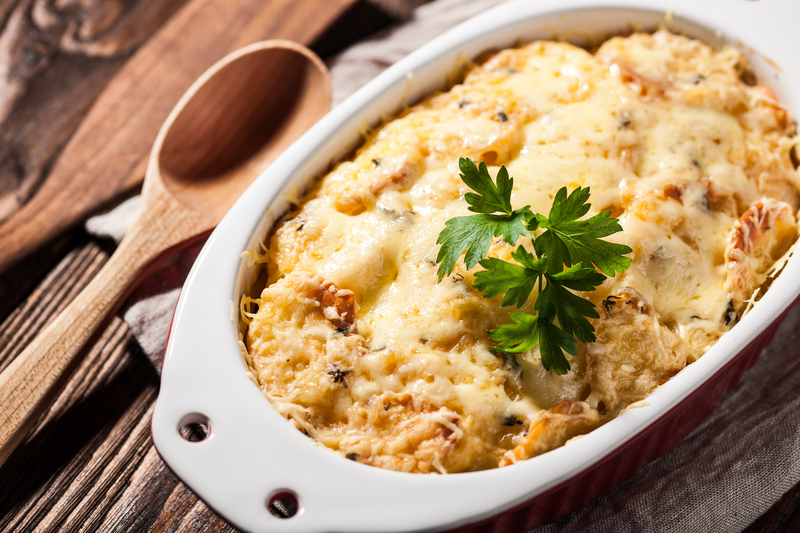
This premium ceramic baking dish is made from Burgundy clay and provides even heat distribution for consistent cooking. It is resistant to thermal shock, allowing it to safely transition between the freezer, oven, and table.
Its scratch-resistant glaze and modern design make it both durable and attractive, while its versatility makes it suitable for casseroles, lasagnas, roasted vegetables, and baked desserts.
Alternative Materials for Bakeware
Ceramic baking dishes are popular, but they are not the only option. Metal, glass, and silicone bakeware each have different properties that can affect cooking time, browning, durability, and ease of use.
Metal Baking Dishes
Metal bakeware, particularly aluminum and stainless steel, is known for efficient heat transfer. Aluminum heats quickly and evenly, making it a good choice for recipes where consistent cooking and browning are important. Stainless steel is heavier and more durable, although it generally does not conduct heat as efficiently as aluminum.
Metal dishes can also withstand high temperatures, making them suitable for roasting and broiling. However, some metals can react with acidic ingredients, and thinner aluminum pans may warp when exposed to very high heat.
Glass Baking Dishes
Glass baking dishes are a versatile alternative to ceramic. They are generally non-reactive, making them suitable for acidic foods such as tomato-based casseroles, and their transparent design allows you to see the food as it cooks.
Glass bakeware can be used for many oven dishes and is also convenient for storing leftovers. However, it can be vulnerable to thermal shock, so sudden temperature changes should be avoided. Allowing a hot glass dish to cool gradually can help reduce the risk of cracking or breaking.
Silicone Baking Molds
Silicone bakeware is valued for its flexibility, lightweight construction, and easy food release. It works particularly well for cakes, muffins, desserts, and shaped baked goods, where removing the finished food from the mold can otherwise be difficult.
Silicone can withstand a wide range of temperatures and is generally easy to clean. However, it does not transfer heat in the same way as metal, so baked goods may develop less browning and crisping. For recipes where a golden crust or crisp exterior is important, metal or glass may be a better choice.
FAQ: Why Do Ceramic Baking Dishes Crack?
Ceramic baking dishes can crack when they experience sudden or uneven temperature changes, physical damage, or excessive thermal stress. Understanding the common causes can help prevent cracking and extend the life of your bakeware.
Why Do Ceramic Baking Dishes Crack?
The most common cause is thermal shock, which occurs when a ceramic dish experiences a sudden change in temperature. Moving a cold ceramic dish directly into a very hot oven, or placing a hot dish on a cold surface, can cause it to crack.
Can a Cold Ceramic Dish Go Into a Hot Oven?
It depends on the manufacturer’s instructions. Some ceramic baking dishes are designed for use in a preheated oven, while others may require gradual heating. Always check the manufacturer’s temperature and usage guidelines.
Why Does Ceramic Crack When Heated?
Ceramic expands as it heats and contracts as it cools. If different parts of the dish change temperature at different rates, internal stress can develop and cause cracks.
Can Putting a Hot Ceramic Dish on a Cold Surface Cause It to Crack?
Yes. A sudden temperature change between the hot dish and a cold countertop, sink, or other surface can create thermal shock. Place hot ceramic cookware on a dry, heat-resistant surface instead.
Can Ceramic Baking Dishes Go From the Freezer to the Oven?
Not necessarily. Unless the manufacturer specifically states that the dish is safe for freezer-to-oven use, avoid making this temperature transition because it can cause thermal shock.
Does a Scratch Make a Ceramic Dish More Likely to Crack?
Potentially. Existing chips, cracks, or significant damage can weaken a ceramic dish and make it more vulnerable to thermal stress.
Can Ceramic Baking Dishes Crack From High Oven Temperatures?
Yes, if the temperature exceeds the dish’s rated limit. Excessive heat can increase thermal stress and may damage ceramic cookware that is not designed for high-temperature baking.
Can You Put a Hot Ceramic Dish in Cold Water?
No. Avoid placing a hot ceramic baking dish directly into cold water. The sudden temperature change can cause thermal shock and cracking.
How Can You Prevent Ceramic Baking Dishes From Cracking?
To reduce the risk:
Follow the manufacturer’s temperature guidelines.
Avoid sudden temperature changes.
Do not place hot dishes on cold or wet surfaces.
Avoid using chipped or cracked dishes.
Allow the dish to cool naturally before washing.
Is a Cracked Ceramic Baking Dish Safe to Use?
No. If a ceramic baking dish develops a crack, it is best to stop using it for baking. Heat can cause the crack to expand and potentially lead to the dish breaking while it contains hot food.


 Thermal shock happens when your ceramic dish faces a fast temperature change it cannot handle. This sudden shift creates stress inside the material, and that stress is what leads to cracks.
 Not all ceramic bakeware is built the same way. The clay type, glaze quality, and manufacturing process all affect how well your dish handles heat and daily use.
 Not all cracks come from heat. Small chips, scratches, and rough handling can weaken your ceramic dish over time until it finally breaks.
 Most cracks come from improper use, not bad luck. Following temperature limits, keeping ceramic away from direct flame, and placing dishes on the right oven rack all lower your risk of damage.
 Most cracks in ceramic bakeware come from daily habits, not bad luck. If you control temperature changes, clean gently, and store your dishes with care, you can avoid most damage.
 Not every mark on your ceramic dish means it’s unsafe, but knowing the difference between minor wear and real damage can protect your food and your kitchen. Here’s how to tell what’s safe to keep and what you need to throw out.
 Ceramic baking dishes are popular, but they are not the only option. Metal, glass, and silicone bakeware each have different properties that can affect cooking time, browning, durability, and ease of use.
 Ceramic baking dishes can crack when they experience sudden or uneven temperature changes, physical damage, or excessive thermal stress. Understanding the common causes can help prevent cracking and extend the life of your bakeware.


