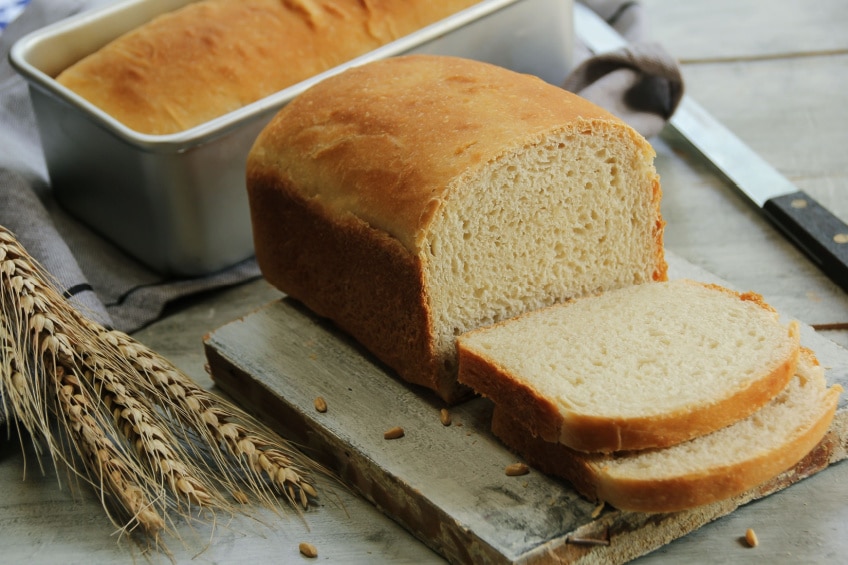

 Selecting the right loaf pan size is crucial for achieving perfectly baked bread, whether for a classic sandwich loaf, a sweet banana bread, or a savory meatloaf.
The standard size loaf pan for most recipes is 9×5 inches, as it provides an ideal balance for most bread types.
A pan of this size ensures that the crust bakes evenly, while the interior remains light and fluffy.
Different recipes may call for varying loaf pan dimensions.
It’s beneficial for baking enthusiasts to have an exploration of diverse sizes like 8×4 inches for a more compact loaf, which can often give a taller rise and denser crumb.
This smaller size might be preferred for bakers aiming to experiment with ingredients like nuts and dried fruits, leading to a more robust texture.
Materials also matter when choosing a loaf pan, as they affect the baking time and the crust’s texture.
Aluminum pans are generally recommended for their even heat distribution.
Additionally, non-stick coatings can be a great choice for easy release and cleaning, enhancing the practicality of the baking experience.
Determining the Ideal Loaf Pan Size

Choosing the right loaf pan size ensures optimal baking results.
Different recipes require specific sizes to achieve perfect texture and shape.
Measuring the volume and dimensions of pans helps in making an informed decision.
Common Loaf Pan Sizes
- 9×5 inches: Ideal for larger bread recipes.
- 8.5×4.5 inches: Works well for standard-sized recipes.
- 8×4 inches: Suitable for smaller or lighter recipes.
Considerations
- Recipe Requirements: Refer to the recipe’s specified size.
- Batter Volume: Ensure the pan can accommodate the batter without overflow.
- Material: Aluminum, stainless steel, and glass can influence cooking times and distribution of heat.
Baking Tips
- It’s best to fill pans about two-thirds full. This allows for proper rising without spilling over.
- Preheat the oven to the temperature stated in the recipe to achieve the best rise and texture.
Measuring Pan Volume
To measure volume, fill the pan with water, noting the quantity it holds.
This helps verify if the pan matches the recipe’s recommendations.
Choosing the appropriate loaf pan contributes significantly to the presentation and texture of homemade bread.
Keeping a few different sizes in the kitchen adds versatility to baking endeavors.
Material Considerations for Loaf Pans

Choosing the right material for loaf pans can significantly impact the baking experience.
Consider factors such as heat conductivity, durability, and ease of cleaning when selecting a loaf pan material.
Each type offers distinct benefits and potential drawbacks.
Aluminum Loaf Pans
Aluminum is a popular choice due to its excellent heat conductivity.
It ensures even baking, reducing the chances of undercooked centers or overbaked edges.
These pans are usually lightweight and resistant to rust.
Anodized versions offer additional durability and prevent reactions with acidic ingredients.
However, aluminum may require extra care to avoid scratching.
For bakers who value uniform baking and easy handling, aluminum pans are a reliable choice.
Glass Loaf Pans
Glass loaf pans stand out with their ability to retain heat after being removed from the oven.
This property can help maintain warmth for any post-baking processes.
The transparency allows for easy monitoring of browning and crust development.
While appealing, glass pans can be less forgiving.
They may need adjustments in baking time or temperature due to poor heat distribution.
It’s important to handle these pans with care, as they can break if exposed to sudden temperature changes.
Silicone Loaf Pans
Silicone pans are known for their flexibility and ease of release.
Bakers can effortlessly remove bread without it sticking, which simplifies cleanup.
These pans are lightweight and can be folded for compact storage.
Silicone doesn’t conduct heat as well as metals.
This can lead to uneven baking, particularly with dense bread varieties.
For those prioritizing non-stick features and ease of storage, silicone pans are a practical option.
Ceramic Loaf Pans
Ceramic loaf pans offer aesthetic appeal and even heat distribution.
They excel in creating crisp crusts and can move straight from the oven to the table for serving.
Their surface often requires minimal greasing, enhancing user convenience.
These pans can be heavier and more fragile.
They demand careful handling to prevent chips and cracks.
Baking enthusiasts fond of artisan presentations often find ceramic to be a charming choice.
Non-Stick Loaf Pans
Non-stick loaf pans simplify the release process, ensuring that the bread slides out without leaving any crumbs behind.
Cleaning becomes effortless and they offer good heat conduction, which promotes even baking.
It’s crucial to maintain the non-stick coating to avoid scratches.
Use silicone or wooden utensils for longer-lasting performance.
Non-stick pans are suitable for everyday bakers seeking convenience without sacrificing quality.
Standard Loaf Pan Dimensions

When considering loaf pans, the dimensions commonly seen in kitchens are generally 8.5 x 4.5 inches and 9 x 5 inches.
These sizes accommodate most recipes found in cookbooks and online resources.
The height of a standard loaf pan typically measures around 2.5 inches, which helps ensure even baking.
Common Pan Sizes
- 8.5 x 4.5 inches: Often considered the standard, suitable for most bread recipes.
- 9 x 5 inches: Slightly larger, perfect for bigger batches or recipes requiring more space.
Material Matters
The material of a loaf pan can also influence baking. Aluminum pans provide even heat distribution.
Glass pans might result in a different baking time compared to metal pans.
Tips for Choosing
Choose a loaf pan based on the types of breads and the quantity you plan to bake
A smaller pan might lead to overflow with denser bread recipes.
Baking Adjustments
When using different sizes, be prepared to adjust baking times slightly.
A full loaf pan requires a longer bake to ensure the center is cooked through properly.
Specialty Loaf Pans
Specialty loaf pans offer diverse options for baking enthusiasts aiming to achieve specific shapes and sizes.
These pans include mini, long, and Pullman variants, each catering to distinct baking needs and preferences.
Mini Loaf Pans
Mini loaf pans are perfect for creating individual-sized baked goods.
They are especially useful for portion control or when baking for gatherings.
These pans often come in sets, allowing the baker to produce multiple mini loaves simultaneously.
Typically made from metal or silicone, they provide good heat distribution.
Some come with non-stick coatings, which make it easier to release the loaves.
Mini loaf pans are ideal for quick breads, mini-meatloaves, or small batch recipes, offering versatility in both sweet and savory baking.
Long Loaf Pans
Long loaf pans are designed for producing slender, elongated loaves.
These pans accommodate recipes that call for extended bread shapes, such as biscotti or certain traditional European breads.
They help ensure even baking throughout the entire loaf due to their unique design.
Constructed usually from sturdy materials like steel or glass, these pans can withstand high baking temperatures.
Long loaf pans are a practical addition for bakers looking to experiment with unconventional loaf dimensions.
Pullman Loaf Pans
Pullman loaf pans feature a signature lid that creates a square, dense loaf with a soft crust.
Known for their use in making sandwich bread, these pans are perfect when uniform, flat tops are desired.
The straight sides and lid promote perfectly shaped slices, making them ideal for delicate tea sandwiches or French toast.
Made typically from heavy-duty metal, Pullman pans ensure durability and even heat distribution.
They are an excellent choice for bakers aiming for professional, bakery-style results at home.
Volume and Capacity: How Much Does It Matter?

When selecting a loaf pan, volume plays a crucial role.
The standard loaf pan measures 8.5 x 4.5 x 2.75 inches, holding about 6 cups of batter.
This size suits most recipes and ensures even baking.
Choosing a pan too small or too large can lead to undercooked or overflowed bread.
Bakers often find it helpful to see size comparisons:
| Pan Size | Volume |
|---|---|
| 8.5 x 4.5 inches | 6 cups |
| 9 x 5 inches | 8 cups |
| Mini loaf pans | 2 cups each |
Large loaf pans, such as the 9 x 5-inch, hold approximately 8 cups of batter.
Suitable for recipes requiring more volume, these pans are a go-to for dense or enriched breads.
Too much batter in a large pan, though, might cause uneven rise.
Understanding capacity is not just about fitting batter.
It affects texture and crust development.
For lighter bread, smaller pans may achieve desired rise.
In dense bread, larger pans offer robust structure.
Selecting the right pan ensures optimal results tailored to specific recipes.
To achieve consistent results, aligning pan size with recipe requirements is key.
This approach minimizes the risk of inconsistent outcomes.
By considering volume and capacity, bakers can ensure a well-baked loaf.
Loaf Pan Shapes and Their Impact on Baking

Loaf pans come in various shapes, each influencing baking results in unique ways.
Standard rectangular pans are the most popular and provide even heat distribution, which is ideal for bread and cakes.
They ensure uniform rising and prevent the batter from spilling over during baking.
Round loaf pans are less common but offer a different aesthetic for baked goods.
These pans may create a domed top, which can affect the baking time and texture of the crust.
Bakers might need to adjust baking methods or times when using these pans.
Pullman pans, with their straight sides and lids, are designed for making sandwich loaves.
The lid shapes the bread into a perfect rectangle, which is great for uniform slices.
This shape can affect the crumb texture, producing a softer crust due to restricted airflow.
Mini loaf pans are great for individual servings or gift-sized portions.
They significantly reduce baking time and are perfect for experimenting with different recipes in a single bake.
The smaller size might require adjusting ingredient quantities.
Using a pan with a patterned bottom, such as a ridged or fluted design, can impact the final look of the loaf.
While these designs create visually appealing loaves, they may also make it tricky to cleanly remove the finished product if not properly prepared with grease or a non-stick coating.
The Role of Depth in Loaf Pans

Depth plays a crucial role in the baking performance and outcome of breads.
A loaf pan’s depth impacts the texture, rise, and bake time of your bread.
For instance, a deeper pan typically yields taller loaves, which can affect the internal crumb structure.
This creates a denser loaf compared to shallower pans.
When considering depth, it’s essential to look at the type of bread being baked.
For lighter breads or quick breads, a shallower pan might be preferred, as it allows for even cooking and a light crumb.
Deeper pans are beneficial for heavier doughs that require support to rise evenly.
Depth also influences how heat is distributed within the loaf.
A deeper pan might require longer baking times, ensuring the center is cooked thoroughly without burning the crust.
Baking enthusiasts should adjust their recipes’ baking duration according to the pan’s depth to avoid undercooked centers or dried-out edges.
Standard depths typically range between 2.5 to 4 inches.
The most common loaf pan size in recipes often refers to an 8.5 x 4.5 x 2.75-inch pan.
This dimension balances depth and width, promoting even heat distribution and consistent loaf texture for many standard recipes.
Finally, depth impacts the versatility of the loaf pan.
Pans with varying depths can serve multiple purposes, from baking breads to making casseroles or pound cakes.
Selecting the right depth ensures a well-baked product tailored to the specific recipe’s needs.
Heat Conductivity and How It Affects Your Baking

Heat conductivity plays a crucial role in baking, especially when choosing a loaf pan.
The material of the pan can influence how evenly heat is distributed during baking.
Metal pans are favored for their excellent heat conductivity, allowing for even distribution and consistent results.
Aluminum, for instance, is known for its uniform heat distribution and quick cooling after baking.
Glass pans, despite being slower to heat up than metal, retain heat effectively.
This can lead to a longer baking time but helps keep the loaf warm after it’s removed from the oven.
Glass can also provide visual cues with its transparency.
Ceramic pans offer even heat distribution, but they tend to take longer to heat up.
They provide a consistent baking environment, which is beneficial for recipes requiring gentle, steady heat.
Conductivity impacts baking in various ways.
Rapid-heating pans can cause quicker crust formation, while slow-heating pans may lead to a gentler bake.
Considering these properties is essential depending on the recipe’s requirements.
Tips:
- For quick breads, choose a pan that heats evenly and rapidly, like aluminum.
- For recipes needing steady heat, ceramic or glass can be beneficial.
- Always adjust baking times and temperatures depending on the material used.
Temperature uniformity leads to even color and texture, preventing hotspots that might cause uneven baking.
Understanding these properties can guide anyone in selecting the best loaf pan for their needs.
Maintenance and Care for Longevity

Proper maintenance of a loaf pan can extend its lifespan significantly.
It ensures consistent baking results while keeping the pan in good condition.
Cleaning Guidelines:
- Always allow the loaf pan to cool before washing. Sudden temperature changes might warp metal pans.
- Use warm, soapy water and a non-abrasive sponge for cleaning.
- For stubborn residue, soak in water or use a paste of baking soda and water.
Drying and Storage:
- Thoroughly dry the pan with a towel to prevent rust, especially for metal pans.
- If space allows, store it in a dry area away from moisture or humidity.
Material-Specific Tips:
- Non-stick Pans: Avoid using metal utensils to prevent scratching. Use silicone or wooden tools instead.
- Glass Pans: Be gentle to avoid chips or cracks. Avoid drastic temperature changes that could cause the glass to shatter.
- Silicone Pans: Inspect for tears or damage regularly, as silicone is flexible but not indestructible.
Regular Inspection:
Check your loaf pans for signs of wear. Any wear may affect your baking. Replace if you notice deep scratches or rust.
Price vs. Quality in Loaf Pan Selection

Price Range
Loaf pans come in a variety of price points. From budget options under $10 to high-end models reaching $50 or more, there’s a pan to fit every budget.
Material Matters
Materials used affect both price and quality.
Aluminum and non-stick options are typically more affordable.
Cast iron and stainless steel options, while pricier, offer superior durability and heat retention.
Quality Features
Higher-priced loaf pans might offer additional features like reinforced rims or unique coatings.
These can improve baking consistency and lifespan.
Thicker material can also help prevent warping under high temperatures.
Durability and Longevity
Investing in a higher quality pan often means better durability.
Pans that resist warping and scratching may offer better value over time compared to cheaper counterparts that might need frequent replacements.
Budget Considerations
For occasional bakers, a less expensive pan might suffice.
Regular bakers might find the value in investing in a more costly, durable option.
Balancing budget and frequency of use is key.
Top Loaf Pan Brands and Their Offerings
When searching for the best loaf pan, it’s important to consider reputable brands known for their quality and durability.
USA Pan is a top choice.
Their loaf pans are made in the USA with aluminized steel and feature a unique corrugated surface that promotes even baking.
 A good example is this Seamless Nonstick Standard Bread Loaf Pan.
A must-have for perfect baking.
Made from heavy-gauge aluminized steel, it ensures even heat distribution, while its nonstick coating guarantees effortless release.
The ridged surface adds strength and improves airflow for consistent results.
Durable, easy to clean, and proudly made in the USA!
Wilton offers affordable and reliable loaf pans.
Known for their non-stick coating, these pans are easy to clean and provide consistent results.
They’re a favorite among home bakers.
 The Wilton Perfect Results Large Nonstick Loaf Pan is perfect for baking larger loaves.
Its durable steel construction ensures even heating, while the nonstick coating allows for easy release and quick cleanup.
Ideal for breads, meatloaf, and more, this pan is a versatile and reliable addition to any kitchen.
Nordic Ware designs sturdy, cast aluminum loaf pans.
With their decorative patterns and even heating, these pans provide uniform results.
They are known for their unique aesthetics and durability.
Pyrex provides glass loaf pans that are great for visibility during baking.
They offer excellent heat distribution, ensuring thorough cooking, and their clear material allows bakers to monitor progression without opening the oven.
 The Pyrex Easy Grab 1.5-Qt Glass Loaf Dish is a versatile and durable baking pan with large, easy-to-grip handles.
Made from tempered glass, it’s non-toxic and BPA-free, offering safe use in the oven, microwave, fridge, and freezer.
The included lid ensures convenient storage, while the dishwasher-safe design makes cleanup a breeze.
Perfect for baking and storing bread, casseroles, and more!
For those who prefer eco-friendly options, Emile Henry offers ceramic loaf pans.
They are made from natural materials and boast excellent heat retention which delivers even baking results.
Their elegant design can also go directly from the oven to the table.
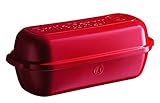 This Emile Henry Made in France Bread Loaf Baker (9.4 x 5 inches) is crafted from high-quality Burgundy clay, ensuring even heat distribution for perfect, crusty loaves.
Its natural, non-stick glaze makes for easy cleanup, while the durable construction is ideal for both baking and serving.
Oven, microwave, and dishwasher safe, this stylish and functional baker adds a touch of elegance to your kitchen.
Perfect for artisanal breads and more!
Making an Informed Purchase Decision

When choosing a loaf pan, consider the material.
Metal pans, like aluminum or steel, offer good heat conduction.
Glass pans allow you to clearly see the browning process.
Each material affects baking time and crust texture.
Think about the size and shape next.
Standard loaf pans measure 9×5 inches or 8×4 inches.
For non-traditional recipes, mini or large pans may better suit your needs.
Take note of available storage space when selecting the size.
Look at special features such as non-stick coating for easy release and cleanup.
Some pans offer silicone grips for better handling and insulation.
These extras can make baking more convenient and pleasant.
Always check the product reviews.
These provide insights into durability and performance from actual users.
Pay attention to consistent positive or negative feedback.
This helps assess potential long-term satisfaction or problems.
Budget plays a part in many buying decisions.
Compare costs across several brands.
While one pan might be more economical, another might offer better value through exceptional features or quality.
Share this:

You Might Also Like:


