Should You Cover Banana Bread When Baking? Understanding the Impact on Moisture and Texture
Banana bread can turn out differently depending on one simple choice: whether you cover it while it bakes. This small decision affects how the crust forms, how moist the inside stays, and how evenly the loaf cooks.
Covering banana bread with foil helps trap moisture and stops the top from browning too fast, while baking it uncovered gives you a firmer, darker crust.
Neither method is wrong. The best choice depends on what texture you want and how your oven bakes.
Your pan, your oven’s temperature, and even the ripeness of your bananas all play a role in how your bread turns out. Once you understand what covering banana bread actually does, you can make small adjustments that lead to better results every time you bake.
The Short Answer: Bake Uncovered First
Most banana bread recipes work best when you bake them uncovered for the majority of the baking time. This lets the crust form properly while the inside cooks through, but there is one situation where a light foil cover helps.
Why Uncovered Baking Produces a Golden Crust
When you bake banana bread without a cover, hot air moves freely around the loaf. This dries out the surface of the batter and turns it a deep golden brown.
The crust also plays a role in flavor. As the outside browns, sugars in the batter caramelize. This adds a slightly toasted taste that pairs well with the soft, moist crumb inside.
Covering banana bread from the start traps steam against the surface. This can leave you with a pale, soft crust and a gummy texture near the top of the loaf. For a standard quick bread, uncovered baking gives you the best texture and appearance.
When a Loose Foil Tent Is the Better Choice
Sometimes your banana bread browns too fast on top before the center finishes baking. This happens more often with dense batters or loaf pans that conduct heat quickly.
In this case, you can tent the loaf with aluminum foil partway through baking. Place a loose sheet of foil over the top once the crust reaches your desired color, usually after 30 to 40 minutes.
Don’t wrap the foil tightly or seal the edges. A loose tent blocks direct heat from darkening the crust further, but it still lets some steam escape.
This method protects the surface from burning while giving the inside time to cook fully. It also helps you avoid a raw or dense center, a common problem with banana bread with foil added too early in the process.
How Foil Changes Browning, Moisture, and Texture
Aluminum foil affects three things when baking banana bread: how fast the top browns, how much moisture stays inside the loaf, and whether the center cooks through properly. Knowing when to use it, and when to leave it off, helps you avoid a burnt top or a dense, undercooked middle.
Preventing Over-Browning Without Trapping Steam
Foil blocks direct heat from reaching the top of the loaf. This slows down browning, so the crust doesn’t turn dark or bitter before the inside finishes baking.
The key is to tent the foil loosely instead of wrapping it tight. A loose tent still lets some steam escape.
If you seal the foil tightly against the pan, steam gets trapped underneath. This can make the crust soft and slightly damp instead of golden.
For most loaves, adding foil about halfway through the baking time works well. This gives the top enough time to set and brown lightly before you cover it.
Moisture Retention and the Risk of a Gummy Center
Foil helps with moisture retention by trapping some heat and steam close to the bread. This can help keep banana bread moist, especially near the edges and top.
But there’s a tradeoff. If you cover the loaf too early or leave it covered for too long, the center can stay too wet.
This leads to a gummy texture instead of a tender crumb. The middle may look done on the outside but feel dense and undercooked when you cut into it.
To avoid this:
Don’t cover the bread for the first 20-30 minutes of baking
Check the center with a toothpick before deciding to add foil
Remove the foil for the last 10 minutes if the center needs more time to firm up
Protecting the Top While the Center Finishes Baking
Banana bread often needs 50 to 70 minutes to bake fully, depending on the pan size and oven. The top can brown well before the center is cooked, especially with a thick loaf.
Foil solves this by shielding the top once it reaches your preferred color. This lets the center keep baking without the crust getting darker or drying out.
This method supports even baking across the whole loaf. Instead of a burnt top and raw middle, you get a loaf that’s cooked through from edge to center.
Watch for a temperature around 200°F (93°C) in the center as a sign the bread is fully baked. At that point, you can remove the foil and take the loaf out of the oven.
When and How to Tent the Loaf With Foil
Timing matters when you cover banana bread with foil. Adding it too early or too late can affect the crust, the bake time, and the texture of your loaf.
The Best Time to Add a Foil Tent
Watch your loaf closely once it hits the 30 to 40 minute mark in the oven. This is usually when the top reaches a deep golden color but the inside still needs more time to finish baking.
If you wait until the crust looks burnt, it’s too late to fix it. Add the foil as soon as you notice the color getting darker than you want.
Most banana bread recipes need 60 to 75 minutes total at a standard oven temperature. Adding foil partway through gives the crust time to set without letting it go too dark before the center is fully cooked.
How to Tent Rather Than Seal the Loaf
Lay a sheet of foil loosely over the top of the pan. Don’t press it down or wrap it tightly around the edges.
A tight seal traps too much steam against the bread. This can make the top turn soggy or prevent it from baking through correctly.
A loose tent works differently. It blocks direct heat from darkening the crust further while still letting air move around the loaf. This balance stops over-browning without turning your golden crust into something soft or undercooked. Think of it less like wrapping the bread and more like placing a small roof above it.
When to Remove Foil Before the Loaf Is Done
Take the foil off during the last 5 to 10 minutes of baking. This gives the top a chance to finish setting without adding more color than you already have.
Removing it too early brings back the risk of over-browning. Leaving it on the entire time can leave the crust pale or slightly damp instead of firm.
Check your loaf with a toothpick after removing the foil. If it comes out clean, your banana bread is done and ready to cool.
Baking Variables That Affect the Decision
Several factors change whether covering banana bread makes sense for your loaf. Oven temperature, pan choice, and the size or ingredients of your loaf all play a role in how much heat and moisture your bread needs.
Oven Temperature and Hot Spots
Your oven temperature has a direct effect on how fast the crust forms. Most banana bread recipes call for 350°F, but ovens don’t always heat evenly.
Hot spots can cause one side of the loaf to brown faster than the other. If you notice uneven browning, rotating the pan halfway through baking helps.
Covering the loaf with foil can also protect it from an oven that runs hot. This slows down crust formation while the center continues to cook.
If your oven tends to run cool, you may not need to cover the bread at all. Check your oven’s accuracy with a separate thermometer if you’re unsure.
Loaf Pan Size, Color, and Material
The type of loaf pan you use changes how your banana bread bakes. A standard 9×5 inch pan gives you even baking and a predictable bake time.
Pan material matters too. Here’s how different options compare:
Pan Type
Effect on Baking
Dark metal pan
Absorbs more heat, browns faster
Light metal pan
Bakes more evenly, less browning
Glass or ceramic
Retains heat longer, may need extra time
A dark metal pan often needs a lower oven temperature or a foil cover to stop the top from browning before the inside finishes. Light-colored pans usually don’t need covering unless your oven runs hot.
The Amazon Basics Rectangular Nonstick Bread Loaf Pan is a practical and affordable option for everyday baking. The 9.5 × 5-inch steel pans provide even heat distribution, while the nonstick coating helps with easy food release and cleanup. Sold as a set of two, they are suitable for banana bread, cakes, bread, and meatloaf.
Deep Loaves, Mini Loaves, and Add-Ins
Loaf size changes how heat moves through the batter. Deep loaves take longer to bake, which gives the top more time to brown before the center sets. Covering a deep loaf partway through baking can help the inside catch up without burning the crust.
Mini loaves bake faster and rarely need covering, since they spend less time in the oven overall.
Add-ins also matter. Nuts and chocolate chips added to the batter can affect how heat spreads through the loaf. Chocolate chips near the top can burn if the bread bakes too long uncovered, so keep an eye on timing when using them.
Build a Batter That Bakes Evenly
Whether or not you cover your banana bread, the batter itself controls how evenly it bakes. The right mix of ripe bananas, balanced dry and wet ingredients, and gentle mixing all work together to create a moist banana bread with a tender crumb.
Use Very Ripe Bananas for Moisture and Flavor
Very ripe bananas are the base of any good banana bread recipe. Look for bananas that are brown and soft, with lots of dark spots on the peel.
The riper the banana, the more natural sugar it has. This means more moisture and a sweeter, richer flavor.
Underripe bananas have less moisture and less sweetness. This can leave your loaf dry or bland, even if you cover it while baking.
For the best texture, mash the bananas well before adding them to your batter. This helps spread the moisture evenly, so the bread bakes at the same rate throughout instead of forming wet or dry spots.
Gives structure; too much makes the loaf dense or dry
Brown sugar
Adds moisture and a deeper flavor
Granulated sugar
Sweetens and helps with browning
Eggs
Bind ingredients and add stability
Butter or oil
Adds moisture and softness; oil tends to keep bread moister longer
Baking soda or baking powder
Controls rise; too much can cause uneven baking
Measure flour with a spoon-and-level method instead of scooping directly from the bag. This keeps you from adding too much, which can throw off the balance and lead to a dry texture.
A pinch of cinnamon can also boost flavor without affecting the batter’s consistency.
Avoid Overmixing for a Tender Crumb
How you mix the batter matters as much as what’s in it. Overmixing develops the gluten in the flour, which can make the bread tough and chewy instead of soft.
A few small lumps in the batter are fine. Stirring past this point can cause the bread to rise unevenly and sink in the middle after baking.
This step affects texture more than covering the loaf does. A properly mixed batter bakes into a tender crumb whether you cover it with foil or leave it uncovered in the oven.
Check Doneness and Cool the Bread Properly
Knowing when your banana bread is done takes more than watching the clock. You need to check for visual cues, understand the difference between underbaked and moist bread, and cool it the right way to protect texture and moisture retention.
Use Visual Cues and a Toothpick Test
Start checking your banana bread around 55 minutes if you’re using a 9×5 loaf pan. Most loaves finish baking between 55 and 70 minutes at 350°F.
Look for a deep golden-brown crust with a crack down the center. The bread should also spring back slightly when you press the top with your finger.
The toothpick test is your most reliable check. Insert a toothpick into the center of the loaf.
Clean toothpick: The bread is done.
Wet batter on the toothpick: It needs more baking time.
A few moist crumbs: This is normal and expected.
For extra certainty, check the internal temperature. Banana bread is done at 200°F to 205°F.
Tell Underbaking Apart From a Moist Crumb
Banana bread often looks underdone even when it’s fully baked. This happens because the bread hasn’t cooled yet.
Like most quick breads, banana bread continues to set as it cools. The inside will look slightly wet or dense right out of the oven, but this changes as it rests.
A moist crumb is soft and holds together. Underbaked batter is wet, shiny, and sticks to your finger or toothpick.
If you cut into hot banana bread, you’ll likely see a texture that looks raw. Give it time to cool on a rack before you judge the inside. Cutting too soon often leads people to think they have a gummy texture, when the loaf actually just needed more time to cool.
Use Parchment Paper and a Rack for Clean Release
Line your loaf pan with parchment paper before baking. Leave extra paper hanging over the sides to use as handles.
This makes it easy to lift the bread out of the pan without breaking it. It also prevents sticking, so you don’t lose part of the crust or edges.
Once the bread is out of the oven, let it sit in the pan for 10 minutes. Then use the parchment paper to lift it onto a cooling rack.
A rack allows air to move around the entire loaf. This stops steam from building up on the bottom, which can make the bread soggy.
Let the banana bread cool completely before slicing. This usually takes one to two hours, depending on the size of your loaf.
FAQ: Should You Cover Banana Bread When Baking?
Banana bread is usually baked uncovered, but covering it during part of the baking process can help prevent the top from becoming too dark. The best approach depends on how quickly the crust is browning compared with the center.
Should You Cover Banana Bread When Baking?
Generally, no. Banana bread is normally baked uncovered so the loaf can brown and develop a firm crust. If the top becomes too dark before the center is fully baked, you can loosely cover it with aluminum foil during the later stages of baking.
Why Would You Cover Banana Bread With Foil?
Covering the loaf with foil helps protect the top from excessive browning while allowing the center more time to finish cooking.
When Should You Cover Banana Bread?
If the top is becoming dark before the center is done, loosely place foil over the loaf during the last 15–20 minutes of baking. Avoid covering it tightly, as this can trap moisture against the crust.
Can You Cover Banana Bread From the Beginning?
You can, but it is usually unnecessary. Covering banana bread from the start can limit browning and may result in a softer, paler crust.
What Happens If Banana Bread Gets Too Brown?
A dark top does not necessarily mean the loaf is burned inside. If the crust is browning quickly while the center remains wet, loosely covering the loaf with foil can slow further browning.
What Temperature Should You Bake Banana Bread At?
Most banana bread recipes are baked at approximately 350°F (175°C). The exact temperature and baking time depend on the recipe, pan size, and oven.
How Long Does Banana Bread Take to Bake?
A standard banana bread loaf commonly takes 50–65 minutes to bake. Larger or deeper loaves may require additional time.
How Do You Know When Banana Bread Is Done?
Insert a toothpick or skewer into the center of the loaf. It should come out clean or with a few moist crumbs, rather than wet batter.
Why Is My Banana Bread Brown on Top but Raw in the Middle?
This usually means the outside is cooking and browning faster than the center. Lowering the oven temperature slightly or loosely covering the top with foil during the latter part of baking can help.
Should Banana Bread Cool Before Cutting?
Yes. Allow banana bread to cool before slicing so the crumb can finish setting. Cutting it while very hot can make the interior appear gummy or compressed.
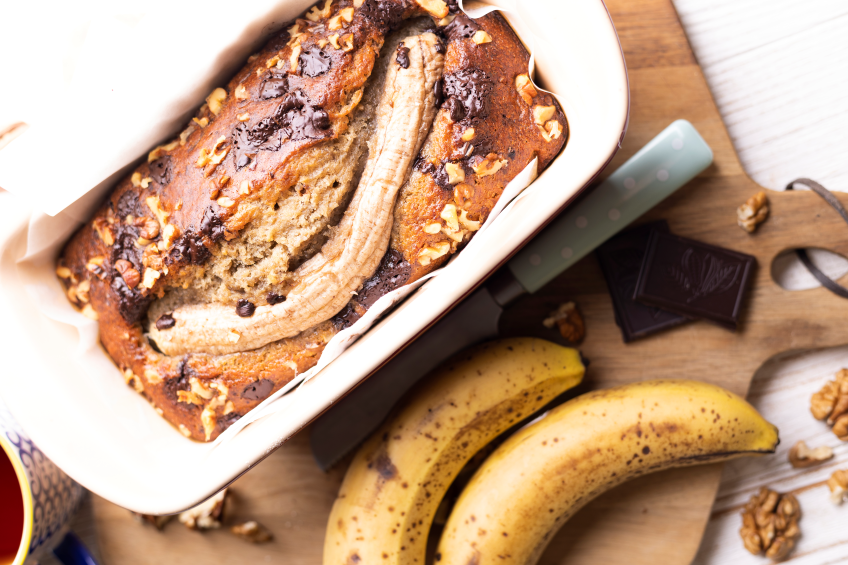


 Most banana bread recipes work best when you bake them uncovered for the majority of the baking time. This lets the crust form properly while the inside cooks through, but there is one situation where a light foil cover helps.
 Aluminum foil affects three things when baking banana bread: how fast the top browns, how much moisture stays inside the loaf, and whether the center cooks through properly. Knowing when to use it, and when to leave it off, helps you avoid a burnt top or a dense, undercooked middle.
 Timing matters when you cover banana bread with foil. Adding it too early or too late can affect the crust, the bake time, and the texture of your loaf.
 Several factors change whether covering banana bread makes sense for your loaf. Oven temperature, pan choice, and the size or ingredients of your loaf all play a role in how much heat and moisture your bread needs.
 Whether or not you cover your banana bread, the batter itself controls how evenly it bakes. The right mix of ripe bananas, balanced dry and wet ingredients, and gentle mixing all work together to create a moist banana bread with a tender crumb.
 Knowing when your banana bread is done takes more than watching the clock. You need to check for visual cues, understand the difference between underbaked and moist bread, and cool it the right way to protect texture and moisture retention.
 Banana bread is usually baked uncovered, but covering it during part of the baking process can help prevent the top from becoming too dark. The best approach depends on how quickly the crust is browning compared with the center.


