Do You Eat Carrot Cakes Warm or Cold? Exploring the Best Serving Temperature
Carrot cake is best served slightly chilled or at cool room temperature, while warming is strictly reserved for unfrosted slices. Traditional cream cheese frosting melts quickly when heated, so keeping the cake cool preserves both its structure and signature tang.
Allowing a chilled slice to sit on the counter for 20 to 30 minutes relaxes the crumb of this spiced cake. It also releases warm spices like cinnamon, nutmeg, and ginger, delivering an exceptionally moist cake.
The Best Temperature Depends on the Frosting and Your Preference
Carrot cake is traditionally served chilled or at cool room temperature because classic cream cheese frosting liquefies under heat. The ideal serving temperature depends on whether the cake has a dairy-based topping and your preference for a firm, dense crumb versus a soft, aromatic texture.
When Chilled Carrot Cake Is the Better Choice
Serving cold carrot cake is the best choice if you prefer a firm slice and neat presentation. Cold temperatures stabilize cream cheese frosting, preventing it from weeping, melting, or sliding off layered cakes.
When thoroughly chilled, the dense crumb takes on a satisfying, fudge-like texture that many dessert lovers prefer.
Serving cold also accentuates the pleasant, tangy contrast between rich cream cheese and the sweet spiced sponge. A chilled cake is ideal for outdoor gatherings, buffets, or warm climates where room-temperature frosting easily turns soft and runny.
Cold slices are also far easier to portion cleanly. If sharp, bakery-style presentation matters, keep the assembled cake thoroughly chilled until slicing.
When Room-Temperature Carrot Cake Tastes Best
Enjoying carrot cake at room temperature delivers a particularly pleasant combination of flavor and texture. Letting a chilled slice sit on the counter for about 20 to 30 minutes allows it to warm up, while the vegetable oil remains liquid at room temperature, helping the cake stay supple and tender.
King Arthur Baking specifically notes that oil-based cakes remain supple at room temperature because oil stays liquid rather than becoming firm like butter.
Aromatic spices such as cinnamon, nutmeg, clove, and ginger become much more pronounced as the chill fades. Cold dulls human taste receptors, while room temperature allows the complex sweet and earthy notes of shredded carrots, raisins, shredded coconut, toasted nuts, and spices to shine.
Unfrosted carrot cakes or loaves topped with simple powdered sugar glazes are especially well-suited to room-temperature serving. The tender crumb and crunchy nuts release their full fragrance when served without a heavy chill.
Why Cream Cheese Frosting Changes the Answer
Rich cream cheese icing influences both how carrot cake should be stored and how it should be served. Because cream cheese is a perishable dairy product, it should be kept refrigerated at 40°F (4.4°C) or below. According to the USDA Food Safety and Inspection Service, perishable foods such as dairy products should be refrigerated at 40°F or below because refrigeration slows bacterial growth.
Temperatures between 40°F and 140°F (4.4°C and 60°C) are considered the food-safety “Danger Zone,” where bacteria can grow rapidly. Many bakers blend cream cheese with unsalted butter and powdered sugar to create a sturdy base.
Others mix in sour cream or Greek yogurt to balance sweetness with a refreshing tang. These dairy additions soften quickly at warmer temperatures, increasing the need for proper chilling.
Buttercream frostings hold their shape through solid fats, but cream cheese contains excess moisture that weakens structural stability when warm. Heating a fully frosted cake causes the frosting to break, separate into fat and liquid, and slide off.
For safety and texture, keep cream cheese-frosted cakes in the refrigerator right up until 20 to 30 minutes before serving.
How to Serve Carrot Cake at Its Best
To serve carrot cake at its best, pull refrigerated slices 20 to 30 minutes prior to eating so the crumb softens while the frosting stays intact. This brief tempering period warms the spices and oils without melting the topping.
Letting Refrigerated Slices Sit Before Serving
Avoid serving carrot cake directly out of a 37°F (3°C) refrigerator. A brief 20- to 30-minute rest on the counter allows the dense crumb to relax into a moist, melt-in-your-mouth texture.
This resting window softens the chilled frosting just enough to make it silky rather than firm and waxy. It also revives the aromatic bouquet of warm baking spices without warming the dairy to unsafe levels.
Serving a Freshly Baked Cake Without Melting the Frosting
Most traditional recipes blend all-purpose flour with baking soda and baking powder to lift the heavy batter during baking. Whisking fresh eggs into the sugar and oil creates a sturdy emulsion that traps moisture. The leavening from baking soda prevents dense all-purpose flour from feeling heavy, while kosher salt, ground cinnamon, and ground turmeric balance the golden crumb.
Fold finely grated fresh carrots, plump raisins, and chopped walnuts into the batter alongside whole eggs to bind moisture. Lining each 9-inch cake pan with parchment paper ensures the delicate layers release cleanly after baking at 350°F.
A classic layered 9-inch cake holds residual heat deep inside the crumb once out of the oven. Never apply cream cheese frosting to a warm cake straight from the oven. Even lingering warmth in the center of the sponge will melt the frosting into a watery glaze.
Allow the baked cake layers to cool completely on a wire rack before assembling and frosting. Cook’s Illustrated recipes commonly specify allowing cakes to cool completely before frosting; in one of its chocolate sheet cake recipes, the cake is cooled on a wire rack for 1 to 2 hours before frosting.
For a particularly neat crumb coating, you can also chill the completely cooled cake layers briefly before frosting. Chilling firms the cake, making the layers easier to handle and the frosting easier to spread without pulling at the crumb.
Slicing and Plating for the Ideal Texture
For pristine slices, slice your carrot cake while it is still chilled from the refrigerator. Use a long, sharp chef’s knife or slicing knife rather than a serrated blade to avoid tearing the crumb.
Dip the knife into hot water and wipe it completely dry with a clean towel before every single cut. The heated blade glides through the chilled cream cheese frosting without dragging it into the layers.
Plate slices flat or upright without stacking, and garnish with toasted chopped pecans, walnuts, or pistachios just before serving for fresh textural crunch. Pressing crunchy nuts against the frosted sides also adds an appealing visual contrast.
Safe Storage Rules for Frosted and Unfrosted Cakes
Mastering how to store carrot cake properly ensures both optimal safety and fresh texture. If you are wondering does carrot cake need to be refrigerated, the short answer is yes whenever frosting is involved.
Any carrot cake finished with cream cheese frosting should be refrigerated within two hours to reduce the risk of foodborne illness. The USDA Food Safety and Inspection Service advises that perishable foods should not remain in the temperature “Danger Zone” between 40°F and 140°F (4.4°C and 60°C) for more than two hours, or one hour when the temperature is above 90°F (32.2°C).
An unfrosted carrot cake does not necessarily require the same refrigeration as one covered with cream cheese frosting. However, the appropriate storage time depends on the recipe and ingredients, so a blanket statement that all unfrosted carrot cakes are safe at room temperature for 24 to 48 hours should be avoided.
Why Cream Cheese Frosting Requires Refrigeration
Cream cheese frosting requires refrigeration because cream cheese is a high-moisture dairy ingredient that can support microbial growth. The FDA Food Code provides the food-safety framework for identifying foods that require time and temperature control, while FDA research has specifically evaluated cream cheese as a product that may require refrigeration to control microbial growth.
While the high sugar content in confectioners’ sugar can reduce available water and slow microbial growth, it does not necessarily make traditional cream cheese frosting shelf-stable. Iowa State University Extension and Outreach explains that frostings made with cream cheese require refrigeration despite their high sugar content, because the dairy and available water can still support microbial growth.
Refrigerating below 40°F (4°C) halts pathogen growth and preserves the fresh dairy flavor.
Short-Term Room-Temperature Storage Limits
Follow the standard two-hour rule for any frosted carrot cake sitting at room temperature. If ambient temperatures exceed 90°F (32°C), that window drops to one hour.
Here is a quick comparison of safe room-temperature storage limits:
Cake Type
Maximum Room Temp Time
Recommended Environment
Frosted (Cream Cheese)
2 hours maximum
Cool, shaded counter (under 70°F / 21°C)
Unfrosted Sponge
24 to 48 hours
Airtight cake dome or container
Hot Weather (Over 90°F)
1 hour maximum
Keep chilled until immediate service
How to Cover Carrot Cake to Prevent Dryness
Refrigerators circulate dry air that rapidly pulls moisture out of baked goods. To keep carrot cake moist, seal exposed cut surfaces with plastic wrap pressed directly against the sponge.
For whole frosted cakes, chill the cake uncovered for 20 minutes until the frosting firms up, then tent plastic wrap loosely over the surface or store it inside an airtight cake dome.
For leftover individual slices, wrap each piece tightly in plastic wrap and place them in an airtight container to block refrigerator odors. You can also layer parchment paper between unwrapped slices to keep them separated.
Carrot Cake Shelf Life in the Fridge, Freezer, and at Room Temperature
Carrot cake lasts up to 2 days at room temperature (unfrosted only), 5 to 7 days in the refrigerator when frosted, and up to 3 months in the freezer. Because carrot cake is oil-based and packed with grated carrots, it retains moisture better than butter-based sponges.
Emulsifying whole eggs with vegetable oil creates an exceptionally tender crumb that stays soft even when chilled. Batters prepared with light brown sugar and applesauce alongside olive oil retain even more moisture over time. Adding a spoonful of sour cream or sweet applesauce yields a rich, moist cake with long-lasting freshness.
Incorporating chopped Medjool dates also locks in tenderness and adds rich, caramel notes. This helps the cake stay remarkably soft whether enjoyed chilled or at room temperature.
How Long Refrigerated Carrot Cake Stays Fresh
Refrigerated carrot cake maintains peak quality and flavor for 5 to 7 days when sealed properly. The moisture from shredded carrots and vegetable oil keeps the crumb succulent throughout the week.
Keep the cake enclosed in an airtight container to shield it from strong refrigerator aromas like onions or garlic, which dairy frosting readily absorbs.
Freezing Whole Cakes and Individual Slices
Both frosted and unfrosted carrot cakes freeze exceptionally well for up to 3 months without significant loss of texture. Storing carrot cake in the freezer is simple when done carefully.
To freeze a frosted cake or slice, place it on a baking sheet lined with parchment paper in the freezer for 1 hour until the frosting is frozen solid.
Once firm, wrap the cake tightly in multiple layers of plastic wrap, followed by a protective layer of heavy-duty aluminum foil. The National Center for Home Food Preservation recommends moisture-vapor-resistant packaging for frozen foods and notes that heavy-weight aluminum foil and plastic freezer wrap are suitable materials.
Proper wrapping limits exposure to air and helps protect the cake from freezer burn and moisture loss, helping preserve its texture and quality during storage.
An airtight seal of aluminum foil is crucial to block dry circulating air. Without adequate protection, ice crystals lead to freezer burn that ruins the delicate crumb and dairy frosting.
Thaw frozen carrot cake overnight in the refrigerator while still wrapped. This prevents condensation from forming directly on the frosting and making it soggy.
Signs That Carrot Cake Has Spoiled
Discard carrot cake immediately if you detect any indicators of spoilage. Spoilage typically appears first in the dairy frosting rather than the cake crumb.
Odor: A sour, tangy, or yeasty smell indicates bacterial growth or fermented frosting.
Appearance: Any visible mold spores, fuzzy green or white patches, or dark discoloration mean the entire portion must be thrown out.
Texture: Slimy frosting, weeping liquid, or a gummy, sour crumb indicate that the cake has broken down.
Warming Chilled Carrot Cake Without Drying It Out
Only warm unfrosted carrot cake, using gentle microwave intervals of 10 to 15 seconds at 50% power under a damp paper towel. Frosted carrot cake should never be heated in an oven or microwave, as cream cheese frosting separates and melts into an oily puddle.
Bringing a Slice to Room Temperature
The safest and most reliable way to warm a frosted carrot cake slice is passive tempering on your kitchen counter. Place your cold slice on a plate and leave it undisturbed for 20 to 30 minutes.
Passive tempering allows the sponge to warm evenly to room temperature while preserving the structural integrity of the cream cheese frosting.
Enjoying carrot cake at room temperature ensures the texture remains cloud-soft while retaining the frosting’s creamy balance. This gentle rest revives the crumb without risking dairy spoilage.
Using a Microwave for an Unfrosted Slice
Microwaving works wonderfully for plain carrot bread, muffins, or unfrosted cake slices when done gently. High heat boils off moisture and toughens the wheat gluten, resulting in a rubbery texture.
Place the unfrosted slice on a microwave-safe dish and drape a slightly damp paper towel loosely over the top to create a steam barrier.
Microwave at 50% power (medium) in 10- to 15-second intervals. Stop as soon as the slice is barely warm to the touch, and enjoy it immediately.
You can also warm an unfrosted slice in an oven heated to 350°F. Tent the piece in aluminum foil and warm it for 5 to 8 minutes so it heats through evenly without scorching.
Why Fully Frosted Cake Is Usually Best Not Reheated
Reheating a fully frosted carrot cake ruins its appearance and texture. Cream cheese frosting has a low melting point, causing it to liquefy long before the center of the chilled cake warms up.
If you crave warm cake with frosting, gently scrape the cold frosting off the slice onto a side plate. Warm the sponge alone in the microwave for 10 seconds, then spread the tempered frosting back over the top.
For most occasions, serving carrot cake slightly chilled or at cool room temperature delivers the perfect contrast between silky frosting and tender cake.
Serving Ideas That Complement Carrot Cake
Carrot cake pairs best with beverages and accompaniments that balance its rich sweetness and warm baking spices. Bitter coffees, spiced teas, and tart fruit preparations create a harmonious balance with dense sponge and sweet cream cheese.
Coffee, Tea, and Dessert Wine Pairings
Freshly brewed black coffee, Americanos, and espresso provide a pleasant roasted bitterness that cuts straight through the richness of cream cheese frosting.
Chai tea makes a natural pairing because its blend of cardamom, cinnamon, and cloves mirrors the spice profile baked into the cake. Lightly astringent green tea or Earl Grey provides an elegant, palate-cleansing contrast.
For an evening treat, pour a glass of sweet dessert wine like late-harvest Riesling or Sauternes. The honeyed fruit notes in dessert wine complement the spices while cutting through buttery frosting.
Ice Cream, Fruit, and Sauce Additions
Classic vanilla bean ice cream complements room-temperature carrot cake, while candied ginger ice cream enhances the cake’s spicy undertones.
A dollop of fresh whipped cream also softens the bold spices, while salted caramel balances sweetness with savory depth. Lightly scented vanilla whipped cream also pairs wonderfully with warm unfrosted slices.
Tart fruit elements cut through the richness of the cake.
Consider these complementary sides:
Berry compote: Simmered raspberries, blackberries, or cranberries with minimal sugar to provide bright acidity.
Poached pears: Gently cooked with cinnamon and orange peel for a tender, aromatic accompaniment.
Pineapple curd or compote: A tangy tropical contrast that echoes traditional pineapple-laced carrot cake recipes.
Toasted nuts: Pan-toasted walnuts or pecans to add warm aroma and crunchy texture.
Choosing Cold or Room-Temperature Pairings
Pairing temperature contrasts elevates the overall tasting experience. Serve cold carrot cake slices alongside piping-hot coffee or spiced tea so the hot beverage melts the cool frosting on your tongue.
Conversely, serve room-temperature carrot cake with cold sides like chilled fruit compotes or a scoop of firm ice cream. Offering both warm beverages and cool accompaniments ensures every guest finds their ideal flavor balance.
FAQ: Do You Eat Carrot Cake Warm or Cold?
Carrot cake is usually served cool or at room temperature, especially when it is topped with cream cheese frosting. Cooling allows the cake to firm up and gives the frosting a better consistency.
Can You Eat Carrot Cake Warm?
Yes, you can eat carrot cake warm, particularly if it is unfrosted. However, warm carrot cake is softer and more delicate, so it may not slice as cleanly.
Should Carrot Cake Be Refrigerated?
If the carrot cake has cream cheese frosting, it should generally be refrigerated. Allowing it to sit at room temperature briefly before serving can make the frosting softer and improve the texture.
Is Carrot Cake Better Cold or at Room Temperature?
This depends on personal preference. Chilled carrot cake is firmer, while room-temperature cake tends to have a softer texture and allows the flavors to come through more easily.
How Long Should Carrot Cake Cool Before Eating?
Allow freshly baked carrot cake to cool completely before adding cream cheese frosting. For the best texture, let the frosted cake cool in the refrigerator before serving.
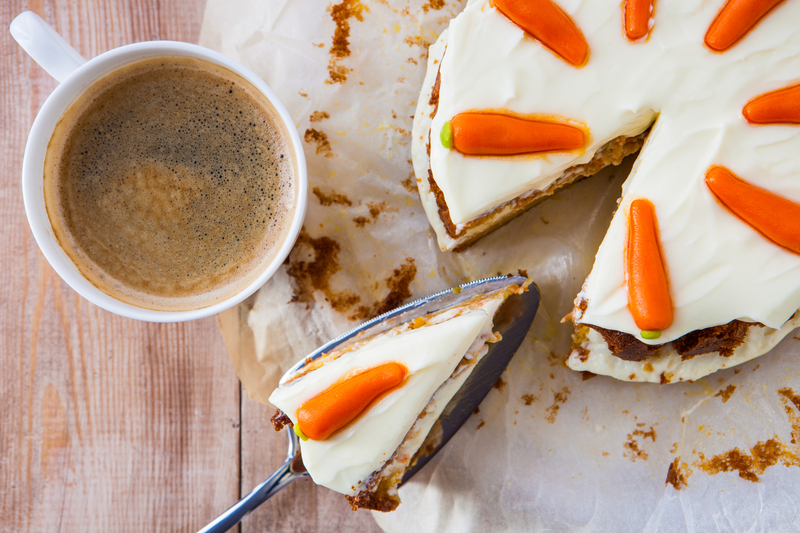


 Carrot cake is traditionally served chilled or at cool room temperature because classic cream cheese frosting liquefies under heat. The ideal serving temperature depends on whether the cake has a dairy-based topping and your preference for a firm, dense crumb versus a soft, aromatic texture.
 To serve carrot cake at its best, pull refrigerated slices 20 to 30 minutes prior to eating so the crumb softens while the frosting stays intact. This brief tempering period warms the spices and oils without melting the topping.
 Mastering how to store carrot cake properly ensures both optimal safety and fresh texture. If you are wondering does carrot cake need to be refrigerated, the short answer is yes whenever frosting is involved.
 Carrot cake lasts up to 2 days at room temperature (unfrosted only), 5 to 7 days in the refrigerator when frosted, and up to 3 months in the freezer. Because carrot cake is oil-based and packed with grated carrots, it retains moisture better than butter-based sponges.
 Only warm unfrosted carrot cake, using gentle microwave intervals of 10 to 15 seconds at 50% power under a damp paper towel. Frosted carrot cake should never be heated in an oven or microwave, as cream cheese frosting separates and melts into an oily puddle.
 Carrot cake pairs best with beverages and accompaniments that balance its rich sweetness and warm baking spices. Bitter coffees, spiced teas, and tart fruit preparations create a harmonious balance with dense sponge and sweet cream cheese.
 Carrot cake is usually served cool or at room temperature, especially when it is topped with cream cheese frosting. Cooling allows the cake to firm up and gives the frosting a better consistency.


