What is the Rule of Thumb for Baking Fish? A Simple Guide
Baking fish does not need to be complicated.
The most common rule of thumb is to bake fish for 10 minutes per inch of thickness at 400°F.
This simple method works for most fillets and steaks, and it helps you avoid the two most common mistakes: dry, overcooked fish or fish that is still raw in the middle.
Oven-baked fish can turn out perfectly tender when you know how thickness, temperature, and fish type affect cooking time. A thin tilapia fillet will cook much faster than a thick salmon steak, so understanding how to measure and adjust matters more than following a single fixed number.
Whether you are new to baking fish or want to improve your results, this guide breaks down how long to bake fish, what temperature works best for different types, and simple tips to help you get moist, flaky results every time.
Use the 10-Minute-Per-Inch Starting Point
The 10-minute rule gives you a simple starting point for baking fish at 400°F. You measure the fish, then bake it 10 minutes per inch of thickness, adjusting slightly based on size and shape.
Measure Thickness at the Thickest Point
Before you set a timer, measure your fish fillet or whole fish at its thickest part. This is usually the center, not the thin edges near the tail.
Use a ruler to get an accurate number. A half-inch fillet needs about 5 minutes. A full inch needs 10 minutes.
If you’re baking a stuffed or rolled fish, measure it after you’ve stuffed or rolled it. The added thickness changes your cook time.
Quick reference:
Thickness
Approximate Bake Time
1/2 inch
5 minutes
1 inch
10 minutes
1 1/2 inches
15 minutes
2 inches
20 minutes
Adjust the Estimate for Thin, Thick, and Uneven Pieces
Thin fillets under 1/2 inch cook fast. Check them a minute or two early to avoid drying them out.
Thick cuts, like a 2-inch salmon fillet or a whole fish, need more time and steady heat. Add a few extra minutes and check the center with a fork. The fish should flake easily and look opaque all the way through.
Uneven pieces are trickier. If one end is thin and the other is thick, base your time on the thickest part. Check the thin end early so it doesn’t overcook while you wait for the rest.
A meat thermometer helps too. Fish is done at 145°F internal temperature, no matter what the timer says.
Select an Oven Temperature That Fits the Fish
Fish is not all the same, so it does not all bake the same way. The right oven temperature depends on the type of fish you are using and how thick the cut is.
Bake Most Fillets at 400°F (204°C)
For most fish fillets, 400°F (204°C) works well. This temperature cooks the fish fast enough to lock in moisture, but not so fast that the outside dries out before the inside is done.
At this heat, a standard fillet takes about 10 to 12 minutes to bake. You will know it is ready when the fish flakes easily with a fork.
This setting works for many common types of fish, including:
Cod
Tilapia
Haddock
Halibut
Stick with 400°F if you are unsure which temperature to use. It is a safe middle point that works for most white fish and other everyday fillets.
Use Moderate Heat for Delicate Fish
Delicate, lean fish needs a gentler touch. Lean fish has very little fat, so it dries out faster than fattier cuts.
For these fish, lower your oven to 350°F (177°C) or 375°F (190°C). This slower heat gives the fish time to cook through without losing moisture too quickly.
Sole, flounder, and other thin, delicate fillets do well at this lower range. These fish are often thin, so they cook fast even at a lower temperature.
Check your fish a few minutes early. Thin, delicate fillets can go from moist to dry in a short amount of time, even at moderate heat.
Use Higher Heat for Richer, Thicker Cuts
Fatty fish and thicker cuts can handle more heat. Fish like salmon, mackerel, and tuna have higher fat content, which helps keep them moist even at higher temperatures.
For these fish, set your oven to 425°F (218°C) or 450°F (232°C). The higher heat sears the outside while the fat inside keeps the fish moist.
This range also works well for thick fillets or whole fish. A thicker cut needs stronger heat to cook through in a reasonable amount of time.
Watch the fish closely near the end of cooking. Higher heat cooks fish faster, so a few extra minutes can lead to overcooked results.
Adjust Time by Fish Type and Cut
Fish type affects cooking time because fat content and density change how heat moves through the flesh. You also need to adjust for cut, since a steak, fillet, or whole fish will not cook at the same rate even at the same thickness.
Lean White Fish and Delicate Fillets
Lean fish like cod, tilapia, sole, flounder, and haddock have low fat content and thin, even fillets. This means they cook fast and can dry out if you leave them in too long.
Stick close to the 10-minute-per-inch rule with these fish, but check them a minute or two early. Sole and flounder are especially thin, so they often finish in under 10 minutes total.
Here’s a quick guide for lean white fish fillets:
Tilapia: 8-10 minutes at 400°F
Cod: 10-12 minutes at 400°F
Sole or flounder: 6-8 minutes at 400°F
Haddock: 10-12 minutes at 400°F
You’ll know these fillets are done when the flesh turns opaque and flakes easily with a fork.
Fatty Fish, Steaks, and Dense Portions
Salmon, tuna, swordfish, mackerel, and halibut fall into a different category. These fish are thicker, denser, and have higher fat content, which helps them stay moist even with a slightly longer cook time.
Salmon fillets usually need close to the full 10 minutes per inch, sometimes a bit more if the cut is thick. Tuna and swordfish steaks are often cut thick, so measure at the center before setting your timer.
Fish Type
Typical Thickness
Estimated Bake Time (400°F)
Salmon
1 inch
12-15 minutes
Tuna steak
1 inch
10-12 minutes
Swordfish
1 inch
12-15 minutes
Halibut
1 inch
12-15 minutes
Mackerel
3/4 inch
8-10 minutes
Trout falls somewhere in between lean and fatty fish, so treat it similarly to salmon but check it a few minutes early.
Whole Fish and Skin-On Portions
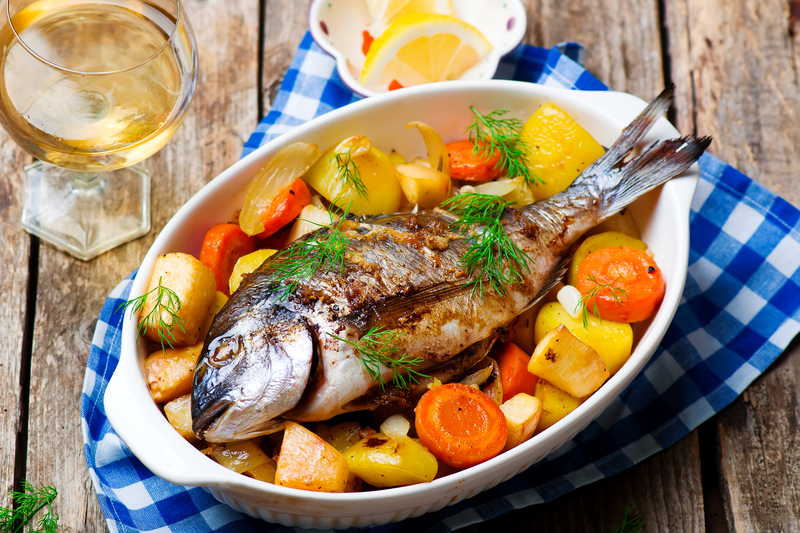
Whole fish takes longer to cook than fillets because heat has to travel through bone and a thicker body. Add extra time compared to what you’d use for a fillet of the same fish.
A good rule is to add 5 to 10 minutes beyond the standard per-inch estimate for a whole fish. Measure thickness at the thickest part, usually near the head or middle of the body.
Skin-on portions also behave differently than skinless fillets. The skin adds a layer that slows heat slightly but helps hold the flesh together and keeps moisture in.
For whole fish or skin-on cuts, bake at a higher temperature, around 425°F to 450°F, to help the skin crisp while the inside cooks through.
Confirm Doneness With Temperature and Texture
The safest way to know your fish is done is to check the internal temperature and look at how the flesh appears and separates. Both checks work together, so use them side by side instead of relying on just one.
Check for a Safe Internal Temperature
Your fish is done when it reaches 145°F (63°C) at the thickest part of the fillet. This is the safe temperature set by food safety guidelines, and it applies no matter how you cook the fish.
Use an instant-read thermometer or digital thermometer to check. A meat thermometer works too, as long as it gives a fast, accurate reading.
Slide the probe in from the side of the fillet so the tip lands in the center. Avoid pushing it through to the pan or baking sheet below, since that will give you a false reading.
Undercooked fish will read below 145°F and should go back in the oven. Check the thickest spot, not the thin edges, since edges cook faster and can mislead you.
Read Opaque Flesh and Flaking Cues
If you don’t have a food thermometer handy, you can judge doneness by sight and touch. Raw fish looks wet and see-through. As it cooks, it turns opaque, meaning the flesh becomes solid and no longer see-through.
Cut into the thickest part with a knife to check the center. It should look opaque all the way through, with maybe a thin line of slightly translucent flesh left in the very middle.
Next, press the fish gently with a fork. Done fish flakes apart easily along its natural lines. If it feels rubbery or won’t separate, it needs more time. If it falls apart in dry pieces, it’s overcooked.
Account for Carryover Cooking
Fish keeps cooking for a few minutes after you take it out of the oven or off the heat. This is called carryover cooking, and it happens because the outer layers are hotter than the center and continue to pass heat inward.
Because of this, many cooks pull fish out at 140°F instead of waiting for 145°F. The temperature will rise a few more degrees while it rests, landing right at the safe mark.
If you wait until the fish reads exactly 145°F before removing it, serve it right away. Letting it rest under foil at that point will push it past 145°F and dry it out.
Prepare Fish for Even, Moist Baking
The right setup before baking helps your fish cook at the same rate all the way through and keeps it from drying out. This means picking the right pan, adding fat and seasoning, and starting with thawed fish instead of frozen.
Choose a Pan or Lined Sheet
A baking dish or baking sheet with low sides gives heat room to move around the fish. This helps it cook evenly instead of steaming in one spot.
Line your pan with parchment paper or aluminum foil to stop the fish from sticking. Foil also traps in steam, which keeps the flesh moist as it bakes.
If you want a hands-off method, try wrapping the fish in parchment paper for an en papillote style bake. This traps steam around the fish and locks in moisture without added fat.
Here’s a quick comparison:
Pan Type
Best For
Baking dish
Thicker cuts, sauces
Baking sheet
Quick, even browning
Parchment packet
Moisture retention, easy cleanup
Use Fat, Seasoning, and Aromatics
A light coat of olive oil or melted butter keeps the surface of the fish from drying out in the oven. It also helps seasoning stick evenly.
Salt and pepper should go on both sides for balanced flavor. Add lemon slices or a squeeze of lemon juice to brighten the taste and cut through the richness of the fish.
Garlic, dill, rosemary, and thyme all pair well with baked fish and add flavor without covering up its natural taste. Use fresh herbs when you can for the best result.
For added texture, sprinkle breadcrumbs on top before baking. This creates a light crust that holds in juices while giving each bite a bit of crunch.
Bake From Thawed Rather Than Frozen When Possible
Thawed fish cooks more evenly than frozen fish. Frozen fish often needs extra time in the oven, and this can dry out the outer edges before the inside finishes cooking.
To thaw fish safely, move it from the freezer to the refrigerator the night before you plan to cook it. If you’re short on time, place it in a sealed bag and submerge it in cold water for about an hour.
Avoid thawing fish at room temperature, since this can lead to uneven texture and food safety issues. Once thawed, pat the fish dry with a paper towel before seasoning. This step removes extra moisture so your seasoning sticks and the fish bakes with better texture.
Avoid Common Causes of Dry or Uneven Fish
Most dry or unevenly cooked fish comes down to three problems: too much heat, poor timing, and skipping steps that lock in moisture. You can fix all three with small changes to your prep and oven habits.
Prevent Overcooking and Tough Texture
Overcooked fish is the top reason fillets turn dry and tough. Fish has very little fat compared to other meats, so its protein tightens up fast once it passes the right internal temperature.
Pull your fish out of the oven once it hits 145°F internally, or when it flakes easily with a fork. Don’t wait for it to look “done” by color alone, since fish keeps cooking a bit after you remove it from heat.
Undercooked fish is a real food safety risk, so don’t go too far the other way.
A digital thermometer is the easiest way to hit the right window without guessing:
Avoid Timing Errors From Cold Fish or an Unheated Oven
Putting cold fish into a cold or partially heated oven throws off your cook time and leads to uneven results. The outside can overcook while the center stays underdone.
Always preheat your oven fully before the fish goes in. This usually takes 10 to 15 minutes, depending on your oven and the target temperature.
Let fish sit at room temperature for about 10 minutes before baking. This helps it cook more evenly from edge to center, instead of the outer layer drying out while it waits for the middle to catch up.
Thicker cuts need more time, but don’t just guess based on size alone. Check your fish a few minutes before the recipe’s suggested end time, since ovens vary and thickness isn’t always consistent across a fillet.
Balance Browning With Moisture Retention
A light golden top through the Maillard reaction adds flavor, but too much focus on browning can dry out the fish underneath. High heat browns the surface quickly, but it also pulls moisture out faster than gentler heat does.
Keep your oven temperature between 300°F and 375°F for most fillets. Anything above 400°F speeds up browning but raises your risk of drying out the flesh before the inside finishes cooking.
If you want more color without sacrificing moisture, try one of these methods:
Baste with melted butter or olive oil two to three times while baking
Use a broiler for the final 1-2 minutes only, watching closely to avoid burning
Add a light layer of oil or marinade before baking to help the surface brown without losing internal moisture
Bottom Line – What Is the Rule of Thumb for Baking Fish?
The simple 10-minutes-per-inch rule at 400°F is a useful starting point for baking fish, but it should not replace checking the fish itself. Thickness, fish type, oven temperature, and whether you are cooking a fillet, steak, or whole fish can all affect the final cooking time.
For the best results, measure the fish at its thickest point, preheat the oven, and start checking a few minutes before the estimated cooking time is complete. Most importantly, use an instant-read thermometer and make sure the thickest part reaches 145°F (63°C) for safe, properly cooked fish.
With the right temperature, accurate timing, and a little attention to thickness, you can consistently bake fish that is moist, tender, flaky, and evenly cooked without relying on guesswork.
FAQ: What Is the Rule of Thumb for Baking Fish?
A simple rule of thumb can help estimate how long fish needs to bake, although the exact time depends on the type and thickness of the fish.
What Is the Rule of Thumb for Baking Fish?
The traditional rule of thumb is to bake fish for about 10 minutes per inch of thickness at around 400°F (200°C). For example, a 1-inch-thick fillet may take approximately 10 minutes, while a 2-inch-thick piece may need around 20 minutes.
Does the 10-Minute Rule Work for All Fish?
It is a useful starting point rather than an exact formula. Different fish varieties, oven temperatures, cooking dishes, and starting temperatures can change the required baking time.
What Temperature Should Fish Be Baked At?
Many fish recipes work well at 375–425°F (190–220°C). Around 400°F (200°C) is a common choice because it cooks fish relatively quickly while allowing the surface to brown.
What Temperature Is Baked Fish Done?
For food safety, fish should reach an internal temperature of 145°F (63°C). Measure the temperature at the thickest part of the fish with a food thermometer.
How Long Does a 1-Inch Fish Fillet Take to Bake?
At approximately 400°F (200°C), a 1-inch-thick fillet may take about 10 minutes. Start checking it toward the end of this time rather than relying solely on the clock.
How Long Does a 2-Inch Fish Fillet Take to Bake?
A 2-inch-thick piece may take around 20 minutes at 400°F (200°C), although the actual time can vary considerably depending on the fish and oven.
Should You Bake Fish Covered or Uncovered?
Either method can work. Uncovered fish tends to develop more surface browning, while covering it can help retain moisture, particularly with lean fish.
How Do You Know When Baked Fish Is Done?
The flesh should be opaque and flake easily with a fork, and the center should reach 145°F (63°C). A thermometer is the most reliable way to check doneness.
Does Frozen Fish Follow the 10-Minute Rule?
Not exactly. Frozen fish generally takes longer to cook than thawed fish, so additional baking time may be needed. Follow the package instructions when available and check the internal temperature.
What Is the Most Important Factor When Baking Fish?
Thickness is one of the most important factors. Measuring the thickest part of the fish gives you a much better indication of cooking time than simply considering the weight of the fillet.


 The 10-minute rule gives you a simple starting point for baking fish at 400°F. You measure the fish, then bake it 10 minutes per inch of thickness, adjusting slightly based on size and shape.
 Fish is not all the same, so it does not all bake the same way. The right oven temperature depends on the type of fish you are using and how thick the cut is.
 Fish type affects cooking time because fat content and density change how heat moves through the flesh. You also need to adjust for cut, since a steak, fillet, or whole fish will not cook at the same rate even at the same thickness.
 The safest way to know your fish is done is to check the internal temperature and look at how the flesh appears and separates. Both checks work together, so use them side by side instead of relying on just one.
 The right setup before baking helps your fish cook at the same rate all the way through and keeps it from drying out. This means picking the right pan, adding fat and seasoning, and starting with thawed fish instead of frozen.
 Most dry or unevenly cooked fish comes down to three problems: too much heat, poor timing, and skipping steps that lock in moisture. You can fix all three with small changes to your prep and oven habits.
 The simple 10-minutes-per-inch rule at 400°F is a useful starting point for baking fish, but it should not replace checking the fish itself. Thickness, fish type, oven temperature, and whether you are cooking a fillet, steak, or whole fish can all affect the final cooking time.


