Does It Take Longer to Bake in Stoneware? How It Affects Baking Results
Yes, baking in stoneware typically takes 5 to 15 minutes longer than baking in metal pans. Stoneware is dense and heats up slowly, creating an initial baking lag. However, because it retains heat exceptionally well, food also experiences significant carryover cooking once removed from the oven.
Most standard recipes are written for metal bakeware. For authoritative guidance, consider citing manufacturer instructions or university extension resources on ceramic bakeware, alongside these sources. Some sources note that stoneware loaf pans can take slightly longer than metal ones, while others argue the slower baking idea is not entirely accurate once the dish is fully hot.
So which is it for your recipe? Below, you will find out how heat moves through stoneware, when to lower your oven temperature, which foods need a closer eye, and simple ways to check for doneness so nothing comes out raw or burned.
Quick Answer: Why Stoneware Changes Baking Times
Stoneware heats up more slowly than metal, then holds that heat for a long time. That means your food may start baking later but keep cooking longer, so the total baking time and the way you check for doneness both shift.
When Stoneware May Need Extra Minutes
There is no set rule for converting a recipe, but you can plan on a few extra minutes of baking time when you swap a metal pan for stoneware or ceramic.
Some bakes need more of a cushion than others:
Item
What to expect
Loaf cakes and quick breads
Often the biggest delay; centers set slowly
Pies
Bottom crust takes longer to firm up
Cinnamon rolls
Usually close to metal, plus a few minutes
Brownies and bars
Edges keep cooking while the center catches up
Keep the oven temperature the same as the recipe says at first. A thicker, heavier stoneware dish will bake more slowly and gently, which is not the same problem as an oven that runs cold.
Preheating your oven fully matters more here, since the dish itself has to warm up too.
Why Doneness Matters More Than the Timer
Start checking about 5 minutes before the recipe’s earliest time, then check again every few minutes after that. The timer is a starting point, not an answer.
Use real signs of doneness instead:
A toothpick or skewer comes out with moist crumbs, not wet batter
The center springs back when you press it gently
Edges pull slightly away from the sides of the dish
An instant-read thermometer hits your target for breads and custards
Remember that stoneware keeps cooking food after you pull it from the oven. Brownies left to cool in a hot stoneware pan can turn cakey instead of gooey, so remove bars and cakes from the dish sooner when the recipe allows it.
How Stoneware Changes Heat in the Oven
Stoneware is made of dense, kiln-fired clay. In culinary physics, it features low thermal conductivity paired with high thermal mass (volumetric heat capacity).
While aluminum conducts heat roughly 10 to 15 times faster than ceramic clay, stoneware stores significantly more thermal energy once saturated. That explains why food starts baking later but continues cooking long after removal.
Slower Initial Heating Than Metal Pans
Metal pans warm up fast. Aluminum or steel picks up oven heat in just a few minutes, so your batter starts cooking almost right away.
Stoneware does not work that way. The thick ceramic walls act as an insulating barrier before they become a radiant heat source.
That initial thermal lag adds 5 to 15 minutes to the front end of your bake. Cold ingredients, such as milk, eggs, or chilled dough, amplify this delay by pulling heat away from the dish.
Bringing chilled ingredients to room temperature before assembling casseroles or batters shortens this lag and protects your dish from thermal shock.
Heat Retention, Heat Distribution, and Carryover Cooking
Once stoneware is hot, it stays hot. That steady warmth spreads across the whole dish, which gives you more even baking and fewer scorched edges.
Metal behaves differently. It heats quickly but also cools quickly, so opening the oven door causes bigger temperature swings in metal pans than in stoneware.
The catch is carryover cooking. Your food keeps baking after you pull the dish out, because the clay is still radiating heat into it.
For that reason, experienced bakers often lower the oven temperature by about 25°F for delicate bakes and check for doneness 5 to 10 minutes early.
To prevent carryover heat from drying out brownies or sponge cakes, line your stoneware pan with an overhanging parchment sling. This allows you to lift the bake out cleanly onto a wire rack as soon as it clears the oven.
How Thickness, Size, and Glaze Affect Results
Not every piece of stoneware bakes the same way.
A few details make a real difference:
Thickness. Heavier pieces hold heat better, while thin ones lose it too fast. Thicker stoneware also improves conduction to the center of the food, which helps with underbaked middles.
Size and shape. A pan that is too large spreads batter thin and speeds up browning. A pan that is too small leaves the center wet while the edges set.
Glaze and color. Dark, glazed surfaces absorb more radiant heat and brown food faster. Pale or unglazed clay browns more gently and often gives a drier, crisper crust.
Watch the bottom of your food, too. If it darkens too fast, move the dish to a higher rack.
How to Adjust Baking Time and Temperature for Stoneware
To convert a recipe from metal to stoneware, add 5 to 15 minutes to the bake time or lower the temperature by 25°F for dense items. The best method depends on whether your dish needs gentle internal cooking or a crisp, browned crust.
Stoneware holds heat longer than metal, so your baking time and oven temperature often need small adjustments. Start with the recipe baseline, monitor the center, and verify doneness with a thermometer.
Use the Recipe Time as a Starting Point
Bake your cakes, bread, or casseroles for the time the recipe lists. Then add extra minutes only if the food still looks underdone.
Most recipes are written for metal pans. Since stoneware warms up slowly, you may need a few extra minutes for the food to finish baking.
A good rule of thumb:
Food
Extra time to expect
Cakes and quick breads
5–10 minutes
Casseroles
5–15 minutes
Yeast bread
5–10 minutes
Set a timer for the shortest time in the recipe. Check the food, then add 5 minutes at a time until it is done. This keeps you from drying out the edges while you wait on the center.
When to Lower the Oven Temperature
Sometimes the problem is not time but heat. Stoneware keeps its heat well, and some bakers drop the oven temperature by 25°F to keep the outside from browning too fast.
Lower the temperature when:
The top or edges brown before the middle sets
You are baking a deep casserole or a dense cake
Your stoneware dish is very thick and heavy
Keep the temperature the same when you want a crisp crust on bread or pizza.
If you lower the heat by 25°F, plan on adding a few more minutes to the total baking time. Never lower the heat and shorten the time at the same time.
Check Centers, Edges, and Internal Temperature
Looks can fool you with stoneware, so test the food itself.
Slide a toothpick or thin knife into the center of a cake. It should come out with a few dry crumbs, not wet batter.
For breads, custards, and casseroles, use a digital probe thermometer in the geometric center of the food:
Casseroles with poultry, meat, or eggs: 165°F minimum for food safety
Baked custards and quiches: 170–175°F (pull before 180°F to prevent weeping)
Also look at the edges. If they are pulling away from the dish and the center still jiggles, cover the top loosely with foil and keep baking.
Take the food out a minute or two early. Hot stoneware keeps cooking after it leaves the oven, so the center will firm up as it rests.
Baking Times and Adjustments by Food Type
Stoneware shines with foods that need steady heat and a browned bottom, like bread, casseroles, and pie crusts. It works less well for quick bakes such as thin cookies, where the slow warm-up can leave you guessing about timing.
Bread, Artisanal Bread, and Crisp Crusts
Bread is where stoneware earns its keep. The thick walls hold heat, so the loaf keeps baking steadily even after you open the oven door.
For artisanal bread, preheat the stone or covered baker for 30 to 45 minutes at your target temperature. That stored heat gives the dough a strong push upward in the first few minutes, which helps the loaf open up.
A crisp crust comes from that same trapped heat plus the way the porous surface handles moisture, pulling steam away from the bottom instead of letting it pool.
Quick tips:
Slide dough onto a preheated surface, never a cold one.
Add steam for the first 10 minutes if you want a shiny, blistered crust.
Expect the bottom to brown faster than the top.
Casseroles, Lasagna, and Baked Pasta
These dishes benefit most from slow, even heat. Cheese melts without scorching, and the edges of lasagna stay soft instead of drying into hard ridges.
The trade-off is time. Casseroles in stoneware often need a few extra minutes compared to the same recipe in a metal pan, since the dish itself has to warm up first.
Plan on 5 to 15 extra minutes for a standard 9×13 casserole. Check the center with a thermometer; 165°F is a safe target for most reheated or meat-based fillings. USDA Food Safety and Inspection Service.
One more habit worth keeping: let the dish rest on the counter for 10 minutes before serving. Stoneware keeps radiating heat, so lasagna sets up cleanly instead of sliding apart.
Cakes, Quiches, and Pie Crusts
Pie crust does well here. The heavy base browns the bottom, which helps prevent the soggy layer that plagues glass and thin metal pans.
Quiches follow the same pattern. The custard sets gently from the outside in, so you get fewer cracks and less rubbery texture near the rim.
Cakes need more care. Because the pan holds heat after you pull it out, a cake can keep cooking and turn dry at the edges.
Item
Adjustment
Pie crust
Blind bake 5 minutes less; the base browns fast
Quiche
Same temp, check 5-8 minutes later
Cake
Lower temp by 25°F; remove from pan after 10 minutes
Use a toothpick or cake tester rather than the clock, and start checking for doneness a little early.
Cookies and Other Short Bakes
Cookies are the trickiest fit. A cold stoneware baking sheet takes several minutes to reach temperature, so the first batch often spreads more and browns unevenly.
Preheating the stone solves part of this, but dropping dough onto a hot surface changes how the cookie spreads. Many bakers accept a slightly thicker, chewier cookie as the trade-off.
Bottoms also brown quickly. Pull cookies when the edges are set and the centers still look soft, since the retained heat finishes them on the pan.
Well-seasoned stoneware becomes naturally nonstick over time, and its heat retention gives cookies an even color once the pan is broken in. For thin, crisp cookies or anything baking under 10 minutes, a metal sheet still gives you more control.
Stoneware vs. Metal Baking Pans: Key Differences
Metal pans heat up in a few minutes and start browning food right away, while stoneware needs longer to warm but holds that heat well after you turn off the oven. Both work well, just for different recipes.
Speed of Heating and Browning
Metal, especially aluminum, has high heat conductivity, so heat moves through the pan fast. Stoneware moves heat much more slowly. That gap shows up in your bake time. A recipe written for metal often needs about 5 to 10 extra minutes in stoneware.
Browning changes too. Metal gives you crisp, dark edges quickly. Dark metal pans brown even faster than light ones. Stoneware browns more gradually and more evenly. You get fewer burnt corners, but also less of that sharp golden edge.
Quick comparison:
Metal
Stoneware
Preheat speed
Fast
Slow
Bake time
Baseline
Add 5–10 min
Edge browning
Strong, quick
Gentle, even
Heat after oven
Drops fast
Stays hot
When Metal Is the Better Choice
Reach for metal when you want speed and crisp edges.
Cookies are the clearest example. Metal sheets are thin, flat, and heat quickly, which helps cookies spread and set properly. Stoneware takes longer to preheat and is heavier to handle.
Metal also wins for:
Pie crusts — quick bottom heat means a flakier, drier crust
Muffins and quick breads — fast heat helps them rise
Brownies and bars — you get firm, chewy edges
Layer cakes — light metal gives predictable, even baking
Metal cools down fast too. That matters when you need a cake to stop cooking right when it leaves the oven.
When Stoneware Is Worth the Extra Time
Stoneware pays off for dishes that cook slowly and taste better with steady heat.
Casseroles, lasagna, and baked pasta are good matches. Metal can overcook the edges before the middle is hot, while stoneware spreads heat evenly across the whole dish.
Custards, flan, and bread pudding also do better here. Gentle heat keeps them from cracking or curdling.
Heat retention is the other benefit. A stoneware dish stays hot at the table for a long time, so dinner does not go cold in ten minutes.
One thing to plan for: that same heat retention means food keeps cooking after you pull the dish out. Pull it slightly early and let it finish on the counter.
Safe Practices That Prevent Cracking and Uneven Results
Stoneware takes longer to heat than metal, so how you handle it matters as much as the recipe timing. A few simple habits protect your bakeware and keep your food cooking evenly.
Preheating and Using a Baking Sheet When Needed
Baking stones and covered bread cloches should preheat empty with the oven for 45 to 60 minutes to store sufficient radiant heat for crust spring.
However, never preheat an empty glazed casserole dish or loaf pan and then pour in room-temperature batter or cold fillings. That localized temperature difference triggers severe thermal stress.
Key guidelines for kitchen safety and equipment longevity:
Fill evenly: Distribute batter or casserole filling across the entire dish to avoid hot spots.
Center the rack: Keep at least 2 inches of clearance from oven walls and heating elements.
Skip broilers and burners: Direct stovetop flames, induction coils, and broilers generate localized thermal shock that shatters stoneware.
Tent with foil: If crusts brown before the core hits temperature, tent loosely with aluminum foil around minute 35 to deflect radiant heat.
Avoiding Thermal Shock and Sudden Temperature Changes
Thermal shock is the main reason stoneware breaks. When one part of the dish expands faster than another, stress builds until the material cracks. That means no fridge-to-hot-oven moves. Let a chilled casserole sit on the counter for 30 minutes before it goes in.
The same rule applies in reverse:
Don’t do this
Do this instead
Pour cold liquid into a hot dish
Use room-temperature or warm liquid
Set hot stoneware on a wet counter
Use a dry wooden board or cloth trivet
Run cold water over a hot pan
Wait until it cools to the touch
Add frozen food to preheated stoneware
Thaw first, or start in a cold oven
Small chips and hairline cracks also make ceramic bakeware more likely to fail, so inspect your dish before each use.
Cooling, Cleaning, and Following Manufacturer Limits
Let stoneware cool on a rack or towel until it’s just warm. Full cooling can take 30 to 45 minutes because the material holds heat so well.
Wash by hand with warm water and a nylon scraper. Harsh soap can soak into unglazed stoneware and affect the flavor of your next bake.
Check the label for your dish’s maximum temperature. Many pieces top out around 450°F, and some brands set the limit lower. For authoritative guidance, cite the manufacturer’s care instructions and, where relevant, the U.S. Fire Administration’s home-fire safety guidance.
Also skip the microwave-to-oven shuffle and never use stoneware on a stovetop burner unless the maker says it’s rated for it.
FAQ: Does It Take Longer to Bake in Stoneware?
Yes, food baked in stoneware can sometimes take slightly longer than food baked in metal because stoneware heats more gradually. The difference is not always significant, but it may affect how quickly the centre cooks and how much browning develops on the surface. Baking time can also vary depending on the recipe, the thickness of the stoneware, and the size of the dish.
Should You Increase the Oven Temperature When Using Stoneware?
No. It is generally best to use the temperature stated in the recipe rather than increasing the heat. If the food is not fully baked when the recommended time has passed, allow it to continue baking for a few additional minutes and check it regularly.
Does Stoneware Affect Browning?
Yes. Stoneware may produce less browning than metal because it transfers heat differently. This can be helpful for foods that need to cook gently, but it may not create as dark or crisp a crust. If browning is important, monitor the food during the final part of baking.
Can You Use the Same Baking Temperature for Stoneware?
Yes, most oven-safe stoneware can be used at the same temperature specified in the recipe. However, always follow the manufacturer’s instructions, especially regarding maximum temperatures, preheating, and whether the dish can be placed into a fully preheated oven.
Is Stoneware Better Than Metal for Baking?
Neither material is universally better. Metal heats quickly and generally promotes stronger browning, while stoneware heats more gradually and retains heat well. Stoneware can be useful for casseroles, cobblers, breads, and dishes that benefit from steady, even heating.
How Do You Know When Food Baked in Stoneware Is Done?
Use the recipe’s recommended doneness tests rather than relying only on the stated baking time. Depending on the food, this may involve inserting a toothpick, checking that the centre is set, measuring an internal temperature, or looking for a properly browned surface.
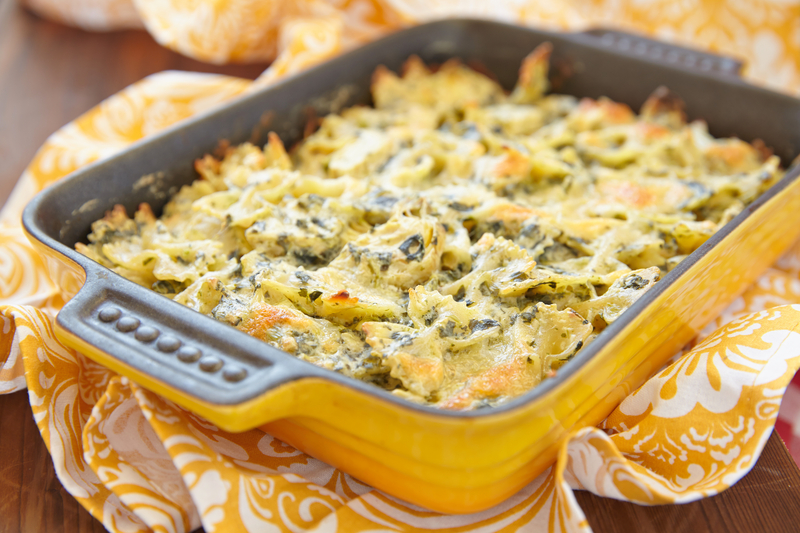


 Stoneware heats up more slowly than metal, then holds that heat for a long time. That means your food may start baking later but keep cooking longer, so the total baking time and the way you check for doneness both shift.
 Stoneware is made of dense, kiln-fired clay. In culinary physics, it features low thermal conductivity paired with high thermal mass (volumetric heat capacity).
 To convert a recipe from metal to stoneware, add 5 to 15 minutes to the bake time or lower the temperature by 25°F for dense items. The best method depends on whether your dish needs gentle internal cooking or a crisp, browned crust.
 Stoneware shines with foods that need steady heat and a browned bottom, like bread, casseroles, and pie crusts. It works less well for quick bakes such as thin cookies, where the slow warm-up can leave you guessing about timing.
 Metal pans heat up in a few minutes and start browning food right away, while stoneware needs longer to warm but holds that heat well after you turn off the oven. Both work well, just for different recipes.
 Stoneware takes longer to heat than metal, so how you handle it matters as much as the recipe timing. A few simple habits protect your bakeware and keep your food cooking evenly.
 Yes, food baked in stoneware can sometimes take slightly longer than food baked in metal because stoneware heats more gradually. The difference is not always significant, but it may affect how quickly the centre cooks and how much browning develops on the surface. Baking time can also vary depending on the recipe, the thickness of the stoneware, and the size of the dish.


