Is it Better to Bake Bread at 350 or 375? Understanding the Ideal Baking Temperature
Baking bread can feel tricky when you’re not sure about the right temperature. The oven setting you choose affects how your bread turns up, from the crust color to the inside texture.
Bread with more than half a cup of sugar bakes best at 350°F, while bread with less sugar works better at 375°F.
The higher temperature helps create a better crust and allows the bread to rise properly before the outside sets. The lower temperature keeps sweeter breads from burning on the outside while the inside finishes cooking.
This guide will walk you through how these two temperatures compare in real baking, what happens inside your bread at different heat levels, and how to pick the right setting for what you’re making. You’ll learn the science behind why temperature matters and get tips to fix common problems.
Comparing Baking Outcomes: 350°F vs 375°F
The temperature you choose affects three main areas: the color and crispness of your crust, the internal crumb structure, and how flavors develop during baking.
Crust Color and Texture Differences
At 350°F, your bread develops a light golden crust that stays softer. The lower heat means the Maillard reaction happens more slowly, giving you less browning and a thinner crust layer. This works well for sandwich breads and enriched doughs where you want a tender exterior.
Baking at 375°F creates a darker, crunchier crust. The higher temperature speeds up the Maillard reaction, producing more complex browning compounds. Your crust will form faster and become thicker, which is ideal for artisan loaves and sourdough.
The difference shows up clearly in timing. At 375°F, your crust browns 5-10 minutes faster than at 350°F. If you’re not careful at the higher temperature, you might get a dark crust before the inside finishes baking.
How Internal Structure Is Affected
Your bread’s crumb structure changes based on temperature. At 350°F, heat penetrates slowly, allowing for more even cooking throughout. This creates a uniform, fine-textured crumb with smaller air pockets. Dense breads like whole wheat benefit from this gentle approach.
The 375°F temperature promotes better oven spring. Your dough rises faster in the first few minutes of baking, creating a lighter, airier interior. The rapid heat causes yeast to produce gas quickly before the proteins set, resulting in larger air pockets.
Moisture retention differs between temperatures. Lower heat gives moisture more time to distribute evenly, while 375°F can dry out the outer layers faster. For large loaves, this means 350°F helps ensure the center cooks through without over-drying the edges.
Flavor Development at Each Temperature
Baking at 350°F produces milder, sweeter flavors. The extended baking time allows sugars to caramelize gradually without burning. Your bread will taste less complex but more balanced, with the natural wheat flavors coming through clearly.
The 375°F temperature creates richer, more developed flavors through increased caramelization. The faster, hotter bake generates more flavor compounds from the Maillard reaction. You’ll notice deeper, slightly nutty notes in the crust and a more pronounced bread flavor overall.
Quick breads and cakes need 350°F to prevent the sugars from browning too quickly. Lean doughs without added fats handle 375°F better and actually improve in flavor from the enhanced browning reactions.
Choosing the Right Temperature for Bread Types
Different bread styles need different temperatures to turn out properly. Sandwich breads bake best at moderate heat to stay soft, while artisan loaves need high heat for a crisp crust, and sweet doughs require gentle temperatures to avoid burning.
Best Temperatures for Sandwich and White Bread
Bake sandwich bread and white loaves at 350–375°F. This moderate range gives the dough time to rise fully before the crust sets and browns.
The lower temperature prevents the exterior from hardening too quickly while the center is still cooking. You want an internal temperature of 190–195°F when you pull the loaf from the oven.
At 350°F, your bread will have a softer, lighter crust that stays tender. At 375°F, you’ll get slightly more color and a firmer exterior while keeping the inside fluffy. Dark pans absorb more heat than shiny ones, so drop your temperature by 25°F if you’re using darker metal.
Most pan loaves take 30–40 minutes at this range. Check the center with a thermometer rather than relying only on color, since a golden crust doesn’t always mean the middle is fully baked.
Rustic, Artisan, and Sourdough Choices
Artisan loaves and sourdough need 425–475°F to develop a thick, crackling crust and open crumb. Start at the higher end to encourage strong oven spring in the first 15–20 minutes.
Cover your loaf with a Dutch oven lid or add steam during this initial blast. The moisture keeps the surface flexible so the bread can expand before the crust hardens. After that first stage, reduce the heat to around 425°F to finish baking without burning.
Target an internal temperature of 205–210°F for these loaves. The higher reading drives off more moisture and creates the chewy texture that defines crusty bread. Preheat your baking stone or steel for at least 30 minutes so the bottom gets immediate heat when the dough hits the surface.
Enriched and Sweet Dough Recommendations
Enriched breads with butter, eggs, and sugar bake at 325–350°F. The lower temperature prevents the sugars from caramelizing too fast and burning before the center cooks through.
Brioche, challah, and cinnamon rolls brown quickly on the surface because of their rich ingredients. You need a gentler heat to give the interior time to reach 185–195°F without over-darkening the crust.
If the top is browning faster than the inside is cooking, tent it loosely with foil. These doughs are wetter and denser than lean breads, so they need longer bake times at controlled temperatures. Check doneness with a thermometer inserted into the thickest part, avoiding any filling pockets.
Scientific Principles Behind Bread Baking
When you bake bread, specific chemical reactions happen at different temperatures that affect texture, color, and taste. The Maillard reaction creates flavor and brown color, while caramelization develops crust, and oven spring gives your bread its final volume.
The Role of the Maillard Reaction
The Maillard reaction starts when your bread reaches around 280°F to 330°F. This chemical process happens when proteins and sugars in the dough react under heat, creating hundreds of flavor compounds and the brown color on your crust.
At 350°F, this reaction occurs more slowly and evenly throughout the baking process. Your bread develops a lighter golden color with milder flavor notes. At 375°F, the Maillard reaction speeds up, producing a darker crust with more complex, robust flavors in less time.
The reaction works best when your dough surface is dry. Steam in your oven during the first few minutes keeps the crust soft, delaying browning until the bread has expanded fully.
Caramelization and Crust Formation
Caramelization begins at higher temperatures than the Maillard reaction, starting around 330°F to 350°F. This process breaks down sugars in your dough into new compounds that taste sweet and slightly bitter.
Your crust thickness depends directly on baking temperature. At 350°F, you get a thinner, softer crust because heat penetrates slowly. At 375°F, the outer layer sets faster, creating a thicker, crunchier exterior while keeping moisture inside.
The contrast between these temperatures affects crust-to-crumb ratio. Higher heat produces more dramatic texture differences between the crispy outside and soft inside.
Oven Spring and Final Rise
Oven spring is the rapid expansion your bread undergoes in the first 10 to 15 minutes of baking. When dough hits high heat, yeast activity increases sharply until it dies at 140°F, while water and alcohol in the dough turn to steam and expand.
At 375°F, you get faster and more dramatic oven spring. The crust sets quickly, trapping gases inside and pushing your loaf upward. At 350°F, the rise happens more gradually with less dramatic height increase.
Your bread’s internal temperature must reach 190°F to 210°F for proper doneness. Lower baking temperatures take longer to reach this point, giving enzymes more time to break down starches into sugars and develop flavor.
Factors Impacting Optimal Baking Temperature
The right baking temperature for your bread depends on what’s in your dough, what you’re baking it in, and where you live. These factors work together to determine whether 350°F or 375°F will give you better results.
Dough Composition and Hydration
High-fat and high-sugar doughs need lower temperatures to prevent burning. Enriched breads like brioche or milk bread contain butter, eggs, and sugar that brown quickly at high heat. Bake these at 350°F to avoid a dark crust while the inside finishes cooking.
Lean doughs with just flour, water, yeast, and salt can handle 375°F or higher. The lack of enrichments means the crust won’t brown too fast. Higher temperatures help create the crispy exterior many bakers want on sourdough or French bread.
Dough hydration also matters. Wetter doughs with more water benefit from slightly higher temperatures because the extra moisture takes longer to evaporate. A 75% hydration dough might bake better at 375°F, while a drier 60% hydration dough could succeed at 350°F.
Pan Type and Oven Calibration
Dark metal pans absorb more heat than light-colored or glass pans. If you use a dark pan, reduce your temperature by 25°F to prevent over-browning on the bottom. A loaf that should bake at 375°F in a light pan needs only 350°F in a dark one.
Your oven’s actual temperature often differs from what the dial shows. Use an oven thermometer to check accuracy. Many home ovens run 25°F hotter or cooler than the setting. If your oven runs hot, set it to 350°F when your recipe calls for 375°F.
Dutch ovens and covered baking vessels trap steam and heat differently than open pans. These typically require starting at 450°F or higher, then reducing temperature partway through baking.
Effects of Humidity and Altitude
High altitude affects baking because lower air pressure makes bread rise faster and dry out quicker. At elevations above 3,000 feet, increase your baking temperature by 15-25°F to set the structure before the bread over-expands. This means using 375°F instead of 350°F.
Humid climates add moisture to flour, making dough wetter than intended. Your bread may need an extra 5-10 minutes at the same temperature, or you can raise the heat slightly to 375°F to compensate. Dry climates have the opposite effect and may require the lower 350°F setting to prevent excessive crust formation.
Room temperature during proofing also influences your choice. Dough that fermented in a warm kitchen may benefit from 350°F to slow down the baking process.
Techniques for Achieving Consistent Results
Using a thermometer to check internal temperature is the most reliable way to ensure your bread is fully baked. Preheating your oven properly and adding steam during the first few minutes improves crust quality and oven spring.
Using a Thermometer to Check Doneness
An instant-read thermometer removes guesswork from bread baking. Insert it into the center of your loaf to check the internal temperature.
Most bread is done when it reaches 190°F to 210°F internally. Enriched breads with butter, eggs, or milk finish at the lower end (190°F to 200°F). Lean breads like baguettes or sourdough need higher temperatures (200°F to 210°F).
Visual cues like crust color can mislead you. A loaf may look golden on the outside but remain doughy inside. The thermometer gives you accurate information every time.
Check the temperature in multiple spots if you’re baking a large loaf. The center takes longest to reach the target temperature.
Importance of Preheating and Steam
Preheat your oven for at least 20 minutes before baking. This ensures the entire oven chamber reaches the set temperature, not just the air inside.
Steam in the first 10 to 15 minutes of baking keeps the crust soft initially. This allows the bread to expand fully before the exterior hardens. Place a metal pan on the bottom rack and add one cup of boiling water right when you put the bread in.
Remove the steam source after 10 to 15 minutes for crusty breads. The dry heat from that point forward creates a crisp, golden crust. Skip steam for soft sandwich breads that don’t need a hard exterior.
Adapting Baking Time to Oven Performance
Ovens often run 25°F hotter or cooler than the display shows. Use an oven thermometer placed on the center rack to verify actual temperature.
If your oven runs hot, reduce the set temperature by 25°F and monitor your bread closely. Breads may brown too quickly on the outside while staying raw inside. If your oven runs cool, increase the temperature by 25°F and expect slightly longer baking times.
Convection ovens bake faster than conventional ones. Reduce your temperature by 25°F or shorten baking time by 5 to 10 minutes when using the convection setting.
Check your bread 5 minutes before the recipe’s recommended time. Oven hot spots can cause uneven browning, so rotate your pan halfway through baking for even results.
Troubleshooting and Common Mistakes
Temperature-related baking problems often stem from inconsistent oven heat, incorrect timing, or choosing the wrong temperature for your bread type. Understanding how 350°F and 375°F affect common issues helps you fix problems before they ruin your loaf.
Dense or Gummy Centers
A dense or gummy center means your bread’s interior didn’t bake through. This happens most often at 375°F when the crust browns too quickly, tricking you into removing the bread before the center reaches 190-200°F internally.
Use an instant-read thermometer to check the internal temperature. Your bread needs to reach at least 190°F in the center, regardless of crust color. If baking at 375°F causes this problem repeatedly, switch to 350°F for a slower, more even bake.
Large loaves over 1.5 pounds need extra attention. Drop your temperature to 350°F after the first 15 minutes at 375°F to prevent the outside from overcooking while the inside finishes. Cover the top with foil if the crust darkens too fast.
Overly Thick or Thin Crusts
Crust thickness depends directly on baking temperature and moisture. At 375°F, you’ll get a thicker, crunchier crust because higher heat evaporates surface moisture faster and triggers stronger browning reactions.
For softer sandwich breads, bake at 350°F and brush the top with butter immediately after removing from the oven. This keeps the crust tender. For crusty artisan loaves, 375°F works better, but add steam during the first 10 minutes by placing a pan of hot water on the bottom rack.
If your crust is too thin and pale at 350°F, your oven may run cool. Verify the actual temperature with an oven thermometer. You might need to increase the setting to 360-365°F to compensate.
Uneven Baking and Color
Uneven browning signals hot spots in your oven or poor heat circulation. This problem appears at both temperatures but worsens at 375°F because the faster baking time gives you less room for error.
Rotate your bread pan 180 degrees halfway through baking. Place your bread on the center rack, not too close to the top or bottom heating elements. Dark pans absorb more heat and cause over-browning on the bottom, so reduce your temperature by 25°F when using them.
If one side consistently browns more than the other, your oven needs calibration. Check the door seal for gaps and verify your oven temperature with a thermometer placed in the center of the oven during preheating.
FAQ: Is It Better to Bake Bread at 350°F or 375°F?
The best bread baking temperature depends on the type of bread, desired crust, and texture. Both 350°F and 375°F are commonly used, but they produce slightly different results.
Is It Better to Bake Bread at 350°F or 375°F?
It depends on the bread type.
350°F: softer crust, slower baking
375°F: firmer crust, more browning, slightly faster baking
What Happens When You Bake Bread at 350°F?
Baking at 350°F generally creates:
Softer crust
More even interior baking
Lighter browning
This temperature is often used for sandwich bread or enriched doughs.
What Happens When You Bake Bread at 375°F?
Baking at 375°F typically results in:
Darker crust
Faster rise and browning
Slightly crispier exterior
Which Temperature Is Better for Crusty Bread?
375°F is usually better for crustier bread because the higher heat encourages browning and crust formation.
Is 350°F Better for Soft Bread?
Yes, 350°F is often preferred for softer breads like sandwich loaves or milk bread.
Does Bread Bake Faster at 375°F?
Yes, bread generally bakes faster at 375°F due to the higher oven temperature.
Can Bread Dry Out at 375°F?
Yes, if baked too long, higher temperatures can dry out the bread or create an overly thick crust.
What Temperature Do Most Bread Recipes Use?
Most bread recipes fall between 350°F and 425°F, depending on the bread style and ingredients.
Does Dough Type Affect Baking Temperature?
Yes:
Lean doughs (basic flour-water-yeast breads) often use higher heat
Rich doughs with butter, milk, or sugar often use lower temperatures
How Do You Know Bread Is Fully Baked?
Bread is usually done when:
The crust is golden brown
It sounds hollow when tapped
The internal temperature reaches about 190–210°F depending on the bread type
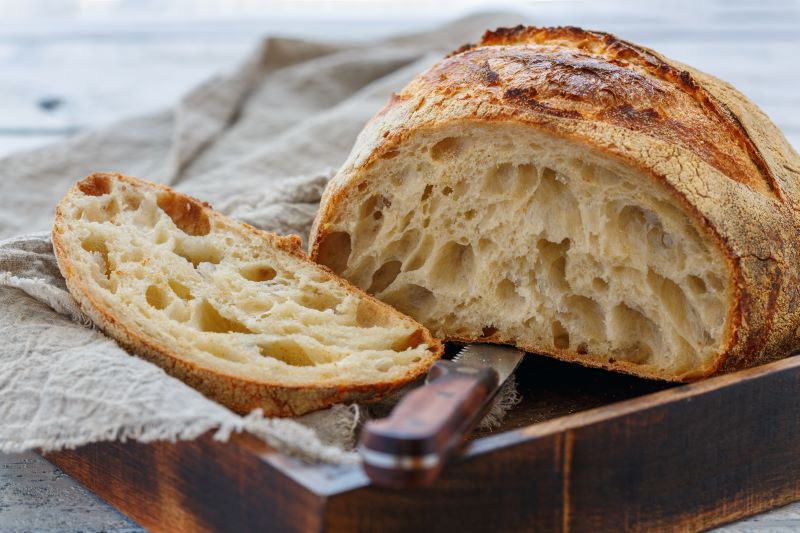


 The temperature you choose affects three main areas: the color and crispness of your crust, the internal crumb structure, and how flavors develop during baking.
 Different bread styles need different temperatures to turn out properly. Sandwich breads bake best at moderate heat to stay soft, while artisan loaves need high heat for a crisp crust, and sweet doughs require gentle temperatures to avoid burning.
 When you bake bread, specific chemical reactions happen at different temperatures that affect texture, color, and taste. The Maillard reaction creates flavor and brown color, while caramelization develops crust, and oven spring gives your bread its final volume.
 The right baking temperature for your bread depends on what’s in your dough, what you’re baking it in, and where you live. These factors work together to determine whether 350°F or 375°F will give you better results.
 Using a thermometer to check internal temperature is the most reliable way to ensure your bread is fully baked. Preheating your oven properly and adding steam during the first few minutes improves crust quality and oven spring.
 The best bread baking temperature depends on the type of bread, desired crust, and texture. Both 350°F and 375°F are commonly used, but they produce slightly different results.


