Baking is one of the oldest ways to cook food. It uses dry heat, usually inside an oven, to turn simple ingredients into bread, cakes, cookies, and other baked goods.
The five main types of baking are bread baking, cake baking, pastry baking, cookie baking, and pie baking.
Each type uses its own mix of ingredients and steps. Learning the differences will help you pick the right method for whatever you want to make.
Once you understand these five types, you can plan your baking process with more confidence. You will know what to expect from your oven, your ingredients, and your final result.
The Five Main Categories at a Glance
Every baked good falls into one of five categories based on how it rises and what technique shapes it. Once you know these categories, you can pick the right method for whatever you want to bake.
Yeast-Leavened Bread Baking
Bread baking relies on yeast, a living organism that eats sugar and releases carbon dioxide gas. This gas gets trapped in the dough, which makes it rise slowly over hours instead of minutes.
You’ll need to knead the dough to build gluten strength. Gluten forms a stretchy network that holds the gas bubbles in place as the bread proofs.
This category includes sandwich loaves, bagels, dinner rolls, and pizza dough. The process takes patience, but the payoff is a chewy texture and complex flavor that quick methods can’t match.
Temperature matters here. Yeast works best between 75°F and 78°F, so a warm kitchen speeds up proofing.
Quick Baking With Chemical Leaveners
Quick baking skips yeast entirely. Instead, it uses chemical leavening agents like baking soda and baking powder to create lift almost instantly.
Baking soda needs an acidic ingredient, such as buttermilk or lemon juice, to activate. Baking powder already contains its own acid, so it works on its own once mixed with liquid.
This method suits recipes you want to finish fast. Muffins, banana bread, and pancakes all fall into this group.
You mix the batter, pour it into a pan, and bake right away. There’s no waiting for dough to rise, which makes this the go-to choice for weekday breakfasts or last-minute treats.
Cake and Sponge Baking
Cake baking depends on air and structure rather than yeast. You whip eggs, cream butter and sugar, or fold in whipped egg whites to trap air in the batter.
That trapped air expands in the oven’s heat, giving cakes their light, fluffy texture. Some cakes, like sponge cakes, rely almost entirely on beaten eggs for lift instead of chemical leaveners.
Common types include:
Butter cakes – made by creaming butter and sugar together
Sponge cakes – leavened mainly by whipped eggs
Chiffon cakes – combine oil with whipped egg whites for a light crumb
Precise measuring matters more here than in bread baking, since small changes in ratios can throw off the texture.
Pastry and Laminated Dough Baking
Pastry baking centers on layering fat and dough to create flaky, crisp textures. The fat melts during baking and leaves behind pockets of air between thin layers of dough.
Laminated dough, used for croissants and puff pastry, takes this further. You fold butter into dough repeatedly, building dozens of thin layers that puff up in the oven.
Other pastry styles include shortcrust, used for pie crusts and tarts, and choux pastry, which forms the base for eclairs and cream puffs. Each type uses a different ratio of flour, fat, and liquid to control how flaky or sturdy the final product turns out.
Keeping the fat cold throughout the process is key to getting distinct layers instead of a greasy, dense result.
Cookie, Biscuit, and Scone Baking
This category covers small, dense baked goods that use less liquid than cakes or bread. Cookies rely on butter and sugar for structure, while biscuits and scones use a coarser mixing method that keeps the fat in small chunks.
You typically use baking powder or baking soda here too, but in smaller amounts since you’re not aiming for a big rise. The goal is a tender or crumbly texture rather than height.
Scones often include cream or buttermilk for richness. Biscuits stay simple with flour, fat, and a leavening agent.
Cookies vary widely, from soft and chewy to crisp, depending on how much sugar, fat, and flour you use.
Yeast-Leavened Bread Baking
Yeast-leavened baking uses live yeast to turn simple ingredients into a risen loaf with structure and flavor. You’ll rely on flour, water, salt, and yeast working together through fermentation, kneading, and proofing before the bread ever reaches the oven.
How Yeast, Gluten, and Fermentation Build Structure
When you mix flour and water, proteins in the flour form gluten. This creates a stretchy network that traps gas and holds the dough’s shape.
Yeast is a living organism. Once you add it to the dough, it feeds on sugars in the flour and produces carbon dioxide gas and alcohol. This process is called fermentation.
The gas gets trapped inside the gluten network you built during mixing. That’s what causes your dough to rise.
Salt plays a supporting role here too. It slows down yeast activity slightly and strengthens the gluten, which gives you better control over how the dough develops.
Fermentation also builds flavor. The longer your dough ferments, the more complex the taste becomes, since yeast and bacteria break down starches and release byproducts that affect aroma and taste.
Kneading, Proofing, and Oven Spring
Kneading develops the gluten in your dough. You work the dough by hand or with a mixer until it becomes smooth and elastic.
This step matters because strong gluten holds gas bubbles from fermentation without collapsing. Under-kneaded dough tends to produce a dense, flat loaf.
Proofing comes next. This is the resting period where you let the dough rise, either once or twice depending on your recipe.
During proofing, yeast keeps producing gas, and the dough expands. You’ll often test readiness with a simple poke: if the dough springs back slowly, it’s ready to bake.
Once your dough hits the oven, it experiences oven spring. This is a quick burst of rising caused by heat, which activates the yeast one final time before it dies off and the crust sets.
Common Examples: Sourdough, Baguette, and Artisan Bread
Different yeast breads highlight different techniques and ingredients.
Sourdough: Uses a natural starter instead of commercial yeast. Wild yeast and bacteria in the starter ferment the dough slowly, giving it a tangy flavor and chewy crumb.
Baguette: A lean dough made with just flour, water, salt, and yeast. It’s shaped into a long loaf and baked at high heat for a crisp crust and open crumb.
Artisan bread: Often made with minimal ingredients and longer fermentation times. This method builds flavor without needing added fats or sugars.
Each of these breads depends on the same core steps: building gluten, fermenting the dough, and controlling proofing time to get the texture and taste you want.
Quick Bakes and Cake Batters
Quick baking relies on chemical leavening instead of yeast, so you can mix your batter and get it in the oven within minutes. Your results depend on picking the right leavening agent, mixing method, and technique for the specific cake or bake you want.
Baking Powder and Baking Soda Explained
Baking soda and baking powder both create rise, but they work in different ways. Baking soda is pure sodium bicarbonate. It needs an acid, like buttermilk, yogurt, or lemon juice, to activate and produce carbon dioxide gas.
Baking powder already contains an acid mixed in with the soda. This means it can react on its own once it gets wet. Most baking powder sold today is “double-acting.” It reacts once when mixed with liquid, then again when heated in the oven.
You should never swap these two ingredients evenly in a recipe. Baking soda is about three times stronger than baking powder. Using too much of either can leave a bitter or soapy taste in your finished cake or muffins.
The Creaming and All-in-One Methods
The creaming method is the classic approach for many cake recipes. You beat butter and sugar together first until the mixture turns pale and fluffy. This step traps tiny air pockets that help your cake rise and stay tender.
After creaming, you add eggs one at a time, then mix in dry ingredients like flour and your leavening agent. This method gives you a fine, even crumb. It works well for pound cakes, birthday cakes, and many cookie recipes.
The all-in-one method skips the separate creaming step. You combine butter, sugar, eggs, flour, and leavening agent in one bowl and mix until smooth.
Method
Steps
Best For
Creaming
Cream fat and sugar, add eggs, fold in dry ingredients
Pound cakes, layer cakes
All-in-one
Combine all ingredients at once
Simple sheet cakes, quick weeknight bakes
All-in-one saves time, but it usually needs softened butter and a strong mixer to get a smooth batter.
Whisking and Folding for Light Sponge Cakes
Sponge cakes get their lift from whipped eggs instead of butter and chemical leaveners. You whisk whole eggs or egg whites with sugar until the mixture turns thick, pale, and roughly triples in volume. This traps air that expands in the oven and gives the cake its light structure.
Meringues use this same whisking principle, but with egg whites and sugar alone. Once you build volume through whisking, you fold in flour by hand using a spatula. Folding means turning the batter over gently instead of stirring in circles.
This gentle motion keeps the air bubbles you built while whisking. If you stir too hard, you knock out the air and your cake turns dense instead of light. A well-folded sponge batter should look streaky at first, then come together into a smooth, airy mixture right before you pour it into the pan.
Pastry, Pies, and Laminated Doughs
This type of baking relies on how you combine fat and flour. The method you choose decides whether you get a crumbly pie crust or the flaky layers found in croissants and puff pastry.
The Rubbing-In Method for Shortcrust Pastry
Shortcrust pastry is the base for most pies and tarts. You make it by rubbing cold butter into flour with your fingertips until the mix looks like coarse crumbs.
This is called the rubbing-in method. It coats the flour with fat, which blocks gluten from forming. Less gluten means a tender, crumbly texture instead of a chewy one.
Once you reach the crumb stage, add cold water a little at a time. Mix just enough to bring the dough together.
Basic shortcrust pastry uses this ratio:
Ingredient
Amount
Flour
2 cups
Cold butter
1 cup
Cold water
3-4 tablespoons
Salt
1/2 teaspoon
Lamination for Puff Pastry and Croissants
Lamination is the process used to make puff pastry, croissants, and danishes. You roll a block of butter into dough, then fold and roll it several times.
Each fold creates thin layers of butter between layers of dough. Puff pastry can end up with over 700 layers by the time you finish laminating.
When the pastry bakes, water in the butter turns to steam. That steam pushes the layers apart, which is what gives puff pastry and croissants their flaky, airy rise.
Keeping the butter cold throughout this process matters. If the butter softens or melts into the dough, the layers merge together and you lose the flaky texture.
Preventing Tough Dough and Soggy Pie Crusts
Overmixing is the main reason pastry dough turns out tough instead of tender. Once you overwork flour and water together, gluten builds up and the dough gets chewy and dense.
Mix pie crust and shortcrust dough only until the ingredients hold together. Stop as soon as you no longer see dry flour.
Soggy pie crusts happen when liquid from the filling soaks into the base before baking finishes. A few fixes can help:
Blind bake the crust partway before adding a wet filling.
Brush the base with egg wash or melted chocolate to create a barrier.
Chill the dough before baking so the butter stays solid longer in the oven.
Cold butter and cold water matter for both pies and laminated pastries. Warm fat blends into the flour too fast, which leaves you without the separate layers that flaky pastry needs.
Cookies, Biscuits, Scones, and Rich Desserts
Each of these baked goods relies on a specific mixing method to get the right texture. If you use the wrong technique, you can end up with tough cookies, flat biscuits, or a cracked cheesecake.
Choosing Mixing Methods for Cookies and Biscuits
Cookies and biscuits need different mixing methods, even though both start with flour, butter, and sugar.
For cookies, you usually cream the butter and sugar together first. This step adds air to the dough and helps your cookies spread and rise a little. After that, you mix in eggs, then fold in the dry ingredients.
Biscuits work differently. You cut cold butter into the flour until you get small pea-sized pieces. This creates pockets of fat that melt during baking, giving you flaky layers.
Product
Mixing Method
Key Step
Cookies
Creaming
Beat butter and sugar until fluffy
Biscuits
Cutting-in
Keep butter cold and in small pieces
Overmixing either dough activates too much gluten in the flour. This makes your final product dense and tough instead of light.
Making Tender Scones Without Overworking the Dough
Scones need a light touch if you want a tender texture. The biggest mistake you can make is handling the dough too much.
Start by mixing your dry ingredients in one bowl. Then cut in cold butter, just like you would for biscuits. Add your wet ingredients, including eggs and cream, and stir only until the dough comes together.
You should still see small streaks of butter in the dough. Don’t try to smooth them out. When you knead scone dough, do it gently and only a few times.
If you overwork the dough, you’ll activate the gluten in the flour. This makes your scones dense and chewy instead of soft and crumbly. Once you shape the dough, bake it right away for the best rise.
Special Considerations for Cheesecake and Frosting
Cheesecake and frosting depend on careful mixing, but for different reasons than cookies or scones.
With cheesecake, you want to blend your ingredients until smooth, but you should avoid adding too much air. Extra air in the batter can cause your cheesecake to puff up too fast, then crack as it cools. Mix your eggs in last, and only until they’re just combined.
Frosting works the opposite way. You want to beat butter and sugar for several minutes to add air and create a light, fluffy texture. This is especially true for buttercream frosting.
Room temperature ingredients matter for both. Cold butter or eggs can cause your frosting or cheesecake batter to look curdled or lumpy instead of smooth.
Heat, Equipment, and Reliable Results
Getting consistent baked goods depends on more than a good recipe. Your oven settings, the tools you use, and how you adjust for different flours all affect the final result.
Conventional and Convection Oven Settings
Conventional ovens heat food using still, hot air that rises from the bottom. This can create uneven hot spots, so you may need to rotate pans halfway through baking.
Convection ovens use a fan to move hot air around the oven. This spreads heat more evenly and often cooks food faster.
If you’re using a convection oven, lower the temperature by about 25 degrees Fahrenheit or check your food a few minutes early. This helps prevent overbaking, especially with cookies and pastries.
Here’s a quick comparison:
Feature
Conventional Oven
Convection Oven
Heat source
Still air
Fan-circulated air
Cooking speed
Standard
Faster
Browning
Uneven
Even
Best for
Cakes, custards
Cookies, roasted items
An oven thermometer helps you confirm your oven is actually at the temperature you set. Many ovens run hotter or cooler than their display shows.
Essential Tools for Mixing and Handling Dough
The right tools make dough easier to prepare and more consistent to work with.
A sturdy mixing bowl gives you room to combine wet and dry ingredients without spilling. Glass or stainless steel bowls work well because they don’t absorb odors or stains.
A wooden spoon is useful for folding in ingredients like chocolate chips or nuts without overworking the dough. It’s gentler than a metal spoon and won’t scratch nonstick bowls.
A spatula, especially a rubber one, helps you scrape every bit of batter from the bowl. This reduces waste and keeps measurements accurate.
For larger batches, a stand mixer saves time and effort. Hand mixers work fine for smaller recipes like cookie dough or quick cake batters.
Other helpful tools include:
Bench scraper for handling sticky dough
Rolling pin for even thickness
Kitchen scale for precise ingredient amounts
How to Adapt Methods for Gluten-Free Baking
Gluten-free baking requires some changes to standard methods because gluten-free flours behave differently than wheat flour.
Gluten gives dough its stretch and structure. Without it, baked goods can turn out dense or crumbly if you don’t adjust your approach.
Many gluten-free recipes call for a blend of flours, such as rice flour, almond flour, and tapioca starch. This mix helps mimic the texture that gluten normally provides.
Adding a binding agent like xanthan gum or psyllium husk can also help hold the dough together. Without one of these, your baked goods may fall apart easily.
Mixing times matter too. Overmixing gluten-free batter won’t cause toughness like it does with wheat flour, but it can still affect texture, so follow recipe instructions closely.
Baking times may need slight adjustments as well. Gluten-free baked goods often bake a few minutes longer since the batter tends to hold more moisture.
FAQ: What Are the 5 Types of Baking?
Baking includes several techniques that are used to produce different textures, shapes, and types of baked goods. While classifications can vary, five common types are traditional baking, steam baking, blind baking, hot-and-fast baking, and slow baking.
What Are the 5 Types of Baking?
The five commonly discussed types of baking are:
Traditional baking – cooking food in a preheated oven using dry heat.
Steam baking – using moisture and steam to influence texture and crust.
Blind baking – partially or fully baking a pastry crust before adding its filling.
Hot-and-fast baking – using a higher temperature for a shorter baking time.
Slow baking – using a lower temperature for a longer period to cook food gently.
What Is Traditional Baking?
Traditional baking uses dry, circulating oven heat to cook foods such as bread, cakes, cookies, pastries, and pies. It is the most familiar form of baking used in home kitchens.
What Is Steam Baking?
Steam baking introduces moisture into the oven during baking. The steam can help keep certain foods moist and is particularly useful when making breads with crisp, developed crusts.
What Is Blind Baking?
Blind baking means baking a pastry crust before adding its filling. It is commonly used for pies and tarts when the filling does not require the same amount of cooking time as the crust.
What Is Hot-and-Fast Baking?
Hot-and-fast baking uses a relatively high oven temperature to produce rapid cooking and browning. This technique is useful for foods where a crisp exterior or strong rise is desired.
What Is Slow Baking?
Slow baking uses a lower oven temperature over a longer period. It allows food to cook more gradually and can be useful when gentle, even cooking is important.
Is Convection Baking a Type of Baking?
Yes, convection baking is an oven method that uses a fan to circulate hot air. The moving air can promote more even cooking and faster browning than conventional oven baking.
Which Type of Baking Is Best?
There is no single best method. The ideal technique depends on the food being prepared, the desired texture, and the recipe’s temperature and moisture requirements.
Why Are Different Baking Methods Important?
Different baking methods control heat, moisture, cooking speed, and browning. Choosing the appropriate technique can make a significant difference to the final texture and appearance of baked food.
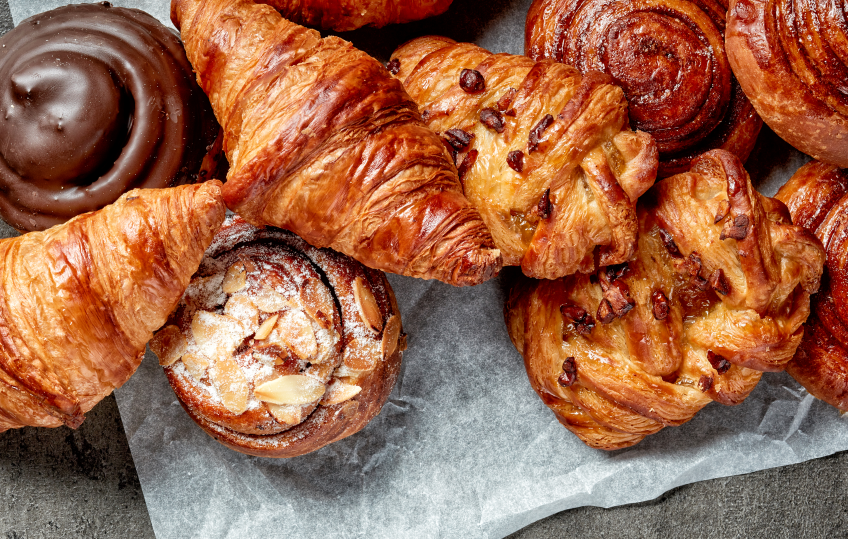


 Every baked good falls into one of five categories based on how it rises and what technique shapes it. Once you know these categories, you can pick the right method for whatever you want to bake.
 Yeast-leavened baking uses live yeast to turn simple ingredients into a risen loaf with structure and flavor. You’ll rely on flour, water, salt, and yeast working together through fermentation, kneading, and proofing before the bread ever reaches the oven.
 Quick baking relies on chemical leavening instead of yeast, so you can mix your batter and get it in the oven within minutes. Your results depend on picking the right leavening agent, mixing method, and technique for the specific cake or bake you want.
 This type of baking relies on how you combine fat and flour. The method you choose decides whether you get a crumbly pie crust or the flaky layers found in croissants and puff pastry.
 Each of these baked goods relies on a specific mixing method to get the right texture. If you use the wrong technique, you can end up with tough cookies, flat biscuits, or a cracked cheesecake.
 Getting consistent baked goods depends on more than a good recipe. Your oven settings, the tools you use, and how you adjust for different flours all affect the final result.
 Baking includes several techniques that are used to produce different textures, shapes, and types of baked goods. While classifications can vary, five common types are traditional baking, steam baking, blind baking, hot-and-fast baking, and slow baking.


