How Long Do You Bake Bread and at What Temperature?
Baking bread at home takes some know-how, but it does not have to be complicated.
Most bread bakes at 350°F to 425°F (175°C to 220°C) for 25 to 40 minutes, depending on the type of loaf you are making.
Getting the time and temperature right is the difference between a loaf with a golden crust and soft center, and one that comes out dense or undercooked.
The right settings depend on what kind of bread you are baking. A basic white loaf needs different heat than a crusty artisan bread or a dense whole wheat loaf. Your oven, the size of your loaf, and even your kitchen’s altitude can also change how long your bread needs to bake.
This guide breaks down the exact temperatures and times for different bread types, plus how to check for doneness using a thermometer and simple visual cues. By the end, you will know exactly what to look for so your next loaf comes out right every time.
Quick Bread Baking Temperature and Time Chart
Most bread bakes somewhere between 325°F and 500°F, and the right number depends on the bread type, not guesswork. Here’s how the main categories break down so you can set your oven with confidence.
Everyday Loaves, Rolls, and Buns
Standard loaves bake at moderate heat for even cooking. This range works well for white bread, whole wheat bread, and most home-style loaves.
Bread Type
Temperature
Time
White sandwich bread
350°F
30-35 min
Whole wheat bread
375°F
30-40 min
Rye bread / pumpernickel
350°F
35-45 min
Dinner rolls
350°F
20-25 min
Burger buns
400°F
15-25 min
Hot dog buns
400°F
20 min
Potato bread
350°F
35 min
Your sandwich bread is done when it sounds hollow when tapped on the bottom. Rolls and buns should be golden brown on top with no pale, doughy spots.
Lean Artisan and Hearth Breads
Artisan breads need higher heat to form a thick, crisp crust. This group includes baguettes, sourdough boules, ciabatta, and other hearth-style loaves.
Bread Type
Temperature
Time
Baguette
450°F
30-35 min
Sourdough boule
450°F
35-45 min
Rustic no-knead round
450°F
35-45 min
Ciabatta / focaccia
425-450°F
20-25 min
Flatbread
450-500°F
8-12 min
Bagels (after boiling)
425°F
25 min
Pizza
500°F
8-15 min
Many sourdough and no-knead recipes call for a Dutch oven. You bake with the lid on for the first 20-30 minutes, then remove it so the crust can brown fully.
Enriched, Sweet, and Quick Breads
Enriched doughs, like brioche and challah, contain butter, eggs, or sugar. These ingredients make the bread bake faster and burn more easily, so the oven runs a bit cooler.
Bread Type
Temperature
Time
Brioche loaf
350°F
30-35 min
Challah
350°F
25-35 min
Sweet rolls
350°F
20-25 min
Croissants
375-400°F
15-20 min
Banana bread
350°F
60-65 min
Zucchini bread
350°F
50-60 min
Quick breads like banana bread rely on baking powder or baking soda instead of yeast. Check them with a toothpick in the center. If it comes out clean, the loaf is ready.
Choose the Right Oven Setting for the Dough
Different types of bread need different oven temperatures. A soft sandwich loaf, a crusty artisan boule, and a rich brioche all bake best under different conditions, so matching your oven setting to your dough type makes a real difference in the final loaf.
Moderate Heat for Soft Pan Breads
Soft sandwich bread bakes best at 350°F to 375°F. This includes white sandwich bread and other yeast bread baked in a loaf pan.
Moderate heat lets the dough cook through slowly. This gives you a soft crust and an even crumb.
A preheated oven is still important here. Put your loaf in cold, and the outside can overcook before the inside finishes.
Bake times usually run 30 to 35 minutes at this temperature range. Check your bread by tapping the bottom or using a thermometer. The internal temperature should read close to 190°F for this style.
Pan breads don’t need the high heat that rustic bread requires. The pan itself shields the dough and helps create that soft, tender texture people expect from sandwich bread.
High Heat for Crusty Artisan Loaves
Rustic bread and crusty bread need much higher heat, usually 450°F to 475°F. This includes sourdough, no-knead bread, and French bread.
High heat does two things fast. It sets the crust quickly, and it pushes moisture inside the dough into steam. That steam is what makes your loaf rise and open up in the oven.
Preheat your oven fully before baking, and preheat any baking vessel too, like a dutch oven or baking stone. This step usually takes 30 to 45 minutes and cannot be skipped.
Bake covered or with steam for the first part of the bake. Then finish uncovered so the crust can darken.
Internal temperature for these loaves should reach 205°F to 210°F. That’s higher than pan breads because rustic loaves have a drier crumb structure.
Lower Heat for Rich and Sweet Doughs
Enriched bread bakes at lower temperatures, usually 325°F to 350°F. This group includes brioche and challah, both made with butter, eggs, and sugar in the dough.
These added ingredients change how the dough browns. Sugar and butter caramelize fast, so high heat can burn the crust before the inside finishes cooking.
Lower heat gives the loaf more time to bake through evenly. This protects the delicate crumb that enriched doughs are known for.
Watch your loaf closely near the end of baking. If the top browns too fast, tent it loosely with foil.
Internal temperature for enriched bread should reach about 190°F. Flour type also matters here. Enriched doughs often use all-purpose flour instead of bread flour, which affects both texture and how the dough responds to heat.
Use Internal Temperature and Doneness Cues
A timer only gives you an estimate. To know for sure that your bread is done, you need to check the internal temperature, look at the crust, and listen for the right sound.
Internal Temperature Targets by Bread Style
An instant-read thermometer is the most reliable tool for checking if your bread is baked all the way through. Insert it into the center of the loaf for the most accurate reading.
Different breads have different target temperatures:
Lean breads (baguettes, sandwich loaves): 190°F to 210°F
Sourdough: 205°F to 210°F
Whole wheat bread: 195°F to 205°F
Rye bread: 195°F to 200°F
Brioche loaf: 190°F to 200°F (lower due to higher fat and egg content)
Dinner rolls: 190°F to 200°F
If your bread reads below these ranges, put it back in the oven. Pulling it too early can leave you with a gummy center caused by incomplete starch gelatinization.
Reading Crust Color, Shape, and Sound
Your eyes and ears can back up what the thermometer tells you. A finished loaf should have a golden-brown crust, not a pale or dark crust that signals underbaking or overbaking.
The shape also matters. A well-baked loaf holds its structure and doesn’t collapse or look sunken in the middle.
The thump test is a classic trick bakers use. Tap the bottom of the loaf with your knuckle. A hollow sound means the bread is done. A dull or thud-like sound often means it needs more time, and you may end up with dense bread if you skip this step.
Why Cooling Completes the Crumb
Baking doesn’t fully stop the moment you pull bread from the oven. The loaf keeps cooking a little as it cools, and the internal moisture keeps settling.
Cutting into bread too soon traps steam and can make the crumb feel wet or gummy, even if the bread was fully baked. Water inside the loaf needs time to redistribute evenly.
Let loaves cool on a wire rack for at least 20 minutes before slicing. Larger loaves, like sourdough, benefit from cooling for an hour or more to let the crumb fully set.
Adjust Timing for Loaf Size, Shape, and Dough
Your bread’s shape, size, and ingredients all change how fast it bakes. A small dinner roll and a large boule need very different amounts of time in the oven, even at the same temperature.
Loaf Pans, Boules, and Baguettes
The shape of your loaf changes how heat moves through it.
A standard loaf pan holds heat close to the dough, so a sandwich loaf usually bakes in 30 to 40 minutes at 350°F. The metal walls help the sides and bottom cook evenly.
A boule sits directly on a baking stone or sheet with no pan around it. This shape needs a hotter oven, often 425°F to 450°F, and takes 35 to 45 minutes because heat has to reach the center from all sides.
Baguettes are thin and long, so they bake fast. Most baguettes finish in 20 to 25 minutes at a high temperature, around 450°F, since there’s less dough for the heat to reach.
Hydration, Flour, and Dough Density
The amount of water in your dough changes the bake time.
High-hydration doughs, like ciabatta and focaccia, have more water and bake faster on the outside but need enough time for steam to escape. These breads often bake at 425°F to 450°F for 20 to 30 minutes.
Flour type matters too:
Whole wheat bread absorbs more water and can take slightly longer to bake through than white flour bread.
Rye bread and pumpernickel are denser and often need lower temperatures with longer bake times to avoid a burnt crust before the center finishes.
Potato bread stays moist longer, so it may need a few extra minutes to fully set.
Dense bread with less water needs more time at a lower temperature so the inside cooks without the crust burning.
Small Rolls and Large Loaves
Size has the biggest effect on bake time.
Dinner rolls, burger buns, hamburger buns, and sweet rolls are small, so they bake quickly. Most finish in 15 to 20 minutes at 375°F to 400°F.
Larger loaves need more time for heat to reach the center. A big sourdough boule or a thick sandwich loaf can take 45 to 50 minutes, even at the same temperature as a smaller loaf.
Use this quick guide:
Bread Type
Typical Bake Time
Typical Temp
Dinner rolls, buns
15–20 min
375–400°F
Standard loaf pan
30–40 min
350°F
Boule
35–45 min
425–450°F
Baguette
20–25 min
450°F
Always check internal temperature instead of relying on time alone, since size changes the clock more than any other factor.
Set Up the Oven for Reliable Results
Your oven setup has as much impact on your bread as the recipe itself. A hot, accurate oven with the right tools helps your dough rise properly and gives you a crust that looks and tastes the way it should.
Preheating and Checking Oven Accuracy
Always give your oven at least 20 minutes to preheat before your bread goes in. This lets the walls and floor of the oven heat up fully, not just the air inside.
A cold or half-heated oven slows down oven spring. Your dough needs strong, immediate heat in the first few minutes to rise well. If the oven is too cool, the yeast slows down before the loaf reaches full size.
Many ovens don’t heat to the exact temperature shown on the dial. An oven thermometer placed inside solves this problem. Check it after preheating and adjust your dial up or down based on what it reads. This small step prevents a lot of guesswork when your bread turns out too pale or too dark.
Dutch Ovens, Baking Stones, and Steam
Steam matters most in the first 10 to 15 minutes of baking. It keeps the crust soft so your loaf can expand fully before it hardens.
A Dutch oven works well for a sourdough boule or any round rustic bread. Preheat it empty for 30 minutes, then place your dough inside and cover it. The lid traps steam released by the dough itself. Remove the lid for the last 15 to 20 minutes so the crust can brown.
A baking stone suits flatter shapes like a baguette, pizza, or focaccia. Preheat it on a low shelf for at least 30 minutes so it stores enough heat. The hot surface gives the base of the bread a quick burst of heat, which helps with browning and a crisp bottom crust.
For no-knead bread, either method works, since the dough is usually high in moisture already.
Convection Oven Adjustments
Convection ovens use a fan to move hot air around, which dries out the surface of dough faster than a standard oven. This can limit oven spring and leave you with a tougher crust.
Lower the temperature by about 20°C (or roughly 35°F) compared to what a recipe lists for a standard oven. Add steam during the first part of the bake to help offset the drying effect.
Convection heat works well when baking several items at once, since it spreads heat evenly across shelves. It’s a good choice for rolls, buns, or a batch of focaccia, where even color across multiple pieces matters more than maximum rise.
Troubleshoot Common Baking Problems
Most bread problems come from an oven temperature that’s too high, too low, or uneven. You can fix nearly every issue below by adjusting your baking time or checking your dough hydration before it goes in the oven.
Dark Crust With an Undercooked Center
If your crust is dark brown or almost black but the middle is still doughy, your oven is likely running too hot. This causes the outside to bake fast while the inside doesn’t get enough time to cook through.
Check your oven with an oven thermometer. Many home ovens run 25 to 50 degrees hotter than the dial shows.
Try these fixes:
Lower your oven temperature by 25°F
Tent the loaf with foil halfway through baking
Move your bread to a lower oven rack
Bake a few extra minutes at the lower temperature
Always check doneness with an instant-read thermometer instead of relying on crust color alone. Yeast bread is done at 190°F to 200°F internally. Quick breads are usually done between 200°F and 210°F.
Pale, Dense, or Dry Bread
A pale crust often means your oven isn’t hot enough, or your bake time was cut short. Bread needs enough heat to trigger oven spring, which is the quick rise that happens in the first few minutes of baking.
Dense bread has a few common causes:
Problem
Likely Cause
Dense, heavy loaf
Not enough proofing time or weak dough hydration
Gummy center
Underbaked, or sliced before cooling
Dry, crumbly texture
Overbaked, or too much flour in the recipe
Use the thump test as a quick check. Tap the bottom of the loaf. A hollow sound means it’s done. A dull thud means it needs more time.
For homemade bread, a golden-brown crust is a good visual sign the bake is close to finished.
When to Extend or Reduce the Bake
Bread recipes give a starting point, not a fixed rule. Your baking time will shift based on your oven, your loaf size, and your dough hydration.
Extend your bake time if:
The crust is pale after the recipe’s suggested time
The internal temperature is under 190°F for yeast bread
The loaf sounds dull when thumped
Reduce your bake time if:
The crust is already dark before the timer goes off
The internal temperature passes 210°F
You’re baking a smaller loaf than the recipe describes
Always trust an instant-read thermometer over the clock. It gives you a clear, accurate answer regardless of your oven’s quirks.
FAQ: How Long Do You Bake Bread and at What Temperature?
Bread baking time and temperature vary depending on the type and size of the loaf. Getting both right is essential for a well-risen loaf with a fully cooked center and properly developed crust.
How Long Do You Bake Bread and at What Temperature?
Most bread is baked at around 350–450°F (175–230°C) for approximately 20–45 minutes. Smaller loaves and rolls usually bake more quickly, while large or dense loaves require more time.
What Temperature Is Best for Baking Bread?
For many standard loaves, 375°F (190°C) is a useful starting point. Artisan breads often require higher temperatures, while enriched breads containing ingredients such as milk, butter, or sugar may bake at lower temperatures.
How Long Does Bread Take to Bake at 350°F?
At 350°F (175°C), a standard loaf may take approximately 30–45 minutes. The exact time depends on the size, shape, ingredients, and type of bread.
How Long Does Bread Take to Bake at 400°F?
At 400°F (205°C), many loaves take around 25–35 minutes. The higher temperature encourages faster browning and crust development.
How Do You Know When Bread Is Fully Baked?
A loaf is generally ready when the crust is well browned and the bread sounds hollow when tapped. For greater accuracy, an instant-read thermometer can be used to check the internal temperature.
What Internal Temperature Should Bread Reach?
Most lean breads are fully baked when the center reaches approximately 190–210°F (88–99°C). The ideal temperature varies depending on the specific type of bread.
Should You Preheat the Oven Before Baking Bread?
Yes. A fully preheated oven provides the consistent heat needed for proper oven spring, crust development, and even cooking.
Does Bread Bake Faster at a Higher Temperature?
Generally, yes. A higher oven temperature can shorten baking time, but it can also cause the crust to brown before the center has finished cooking.
Why Is My Bread Brown on the Outside but Raw Inside?
This can happen when the oven temperature is too high, the loaf is too large, or the bread has not been baked long enough. Lowering the temperature slightly and extending the baking time can help with larger loaves.
Should You Let Bread Cool After Baking?
Yes. Allow bread to cool before slicing so the interior structure can finish setting. Cutting into a loaf too early can result in a gummy or compressed crumb.
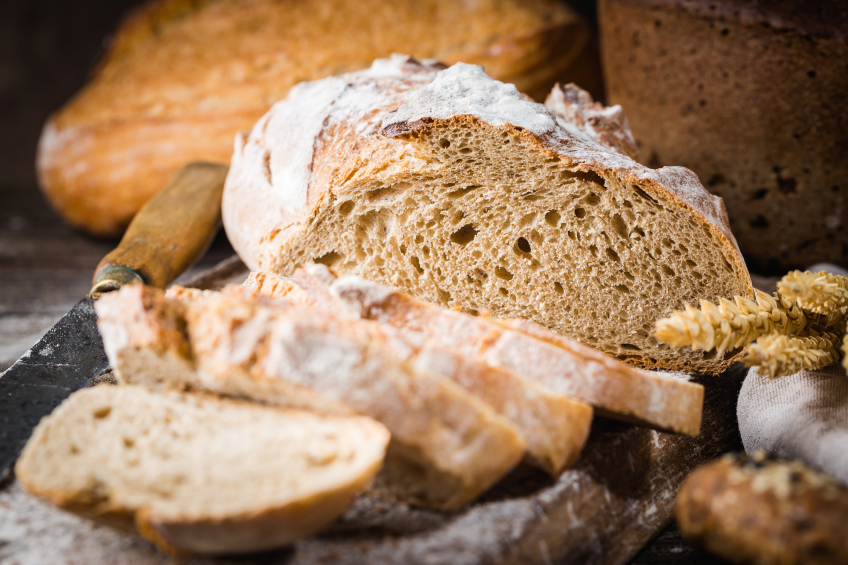

 Baking bread at home takes some know-how, but it does not have to be complicated.
 Most bread bakes somewhere between 325°F and 500°F, and the right number depends on the bread type, not guesswork. Here’s how the main categories break down so you can set your oven with confidence.
 Different types of bread need different oven temperatures. A soft sandwich loaf, a crusty artisan boule, and a rich brioche all bake best under different conditions, so matching your oven setting to your dough type makes a real difference in the final loaf.
 A timer only gives you an estimate. To know for sure that your bread is done, you need to check the internal temperature, look at the crust, and listen for the right sound.
 Your bread’s shape, size, and ingredients all change how fast it bakes. A small dinner roll and a large boule need very different amounts of time in the oven, even at the same temperature.
 Your oven setup has as much impact on your bread as the recipe itself. A hot, accurate oven with the right tools helps your dough rise properly and gives you a crust that looks and tastes the way it should.
 Most bread problems come from an oven temperature that’s too high, too low, or uneven. You can fix nearly every issue below by adjusting your baking time or checking your dough hydration before it goes in the oven.
 Bread baking time and temperature vary depending on the type and size of the loaf. Getting both right is essential for a well-risen loaf with a fully cooked center and properly developed crust.


